
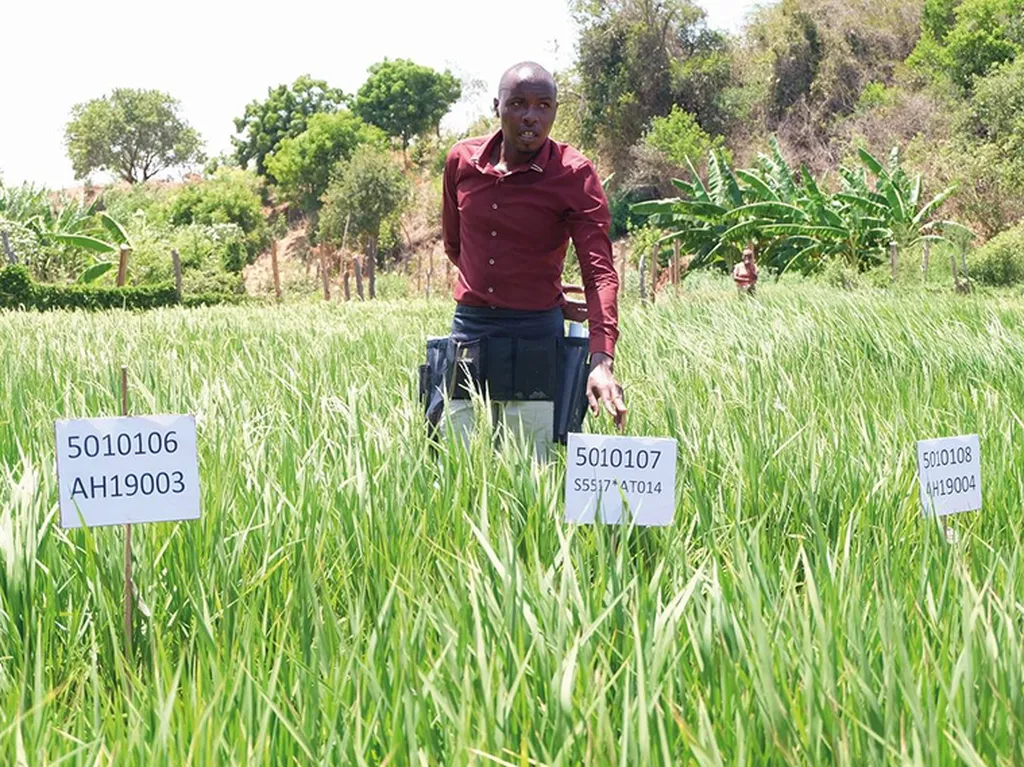
In the heart of Nigeria’s Jigawa State, a critical examination of water use in rice production is shedding light on the economic and environmental stakes of irrigation practices. A recent study published in the *Journal of Agriculture and Rural Development in the Tropics and Subtropics* reveals that the current pricing model for irrigation water in the Hadejia Valley Irrigation Scheme (HVIS) is woefully inadequate, potentially undermining both sustainability and profitability.
The research, led by Yasir Adamu of Jigawa State College of Education, Gumel, employed the residual value method (RVM) to estimate the true economic value of irrigation water in rice farming. The findings are striking: the economic value of irrigation water stands at ₦228 ($0.76) per cubic meter, significantly higher than what farmers currently pay under the existing flat-rate system. This pricing discrepancy is not just a financial oversight; it’s a call to action for more sustainable and efficient water use in agriculture.
“Water is a vital resource, and its efficient use is crucial for sustainable food production,” Adamu emphasized. “Our study shows that the current pricing model does not reflect the true value of water, which can lead to inefficiencies and potential environmental degradation.”
The study’s findings highlight a critical gap in the current irrigation pricing structure. By charging farmers a flat rate based on cultivated area rather than actual water usage, the system fails to incentivize water conservation. This inefficiency is particularly concerning given the increasing threats of population growth and climate change on water resources.
The economic implications are substantial. With a technical productivity of 0.79 kg per cubic meter among rice farmers under HVIS, the study suggests that adopting a volumetric pricing model could promote more efficient water use while ensuring affordability for farmers. “Pricing should remain below the residual value to preserve farmer profitability,” Adamu noted, underscoring the need for a balanced approach that supports both sustainability and economic viability.
The commercial impacts of this research could be far-reaching. For the agriculture sector, the shift towards volumetric pricing could drive innovation in water management technologies and practices. Farmers may invest in more efficient irrigation systems, such as drip irrigation, to reduce water waste and lower costs. This could lead to increased productivity and profitability, benefiting both individual farmers and the broader agricultural economy.
Moreover, the study’s findings could influence policy decisions at both the regional and national levels. By highlighting the economic value of irrigation water, the research provides a compelling case for reforming water pricing policies to promote sustainable agriculture. This could lead to the development of new regulations and incentives that encourage water conservation and efficient use.
The research also raises important questions about the future of irrigation practices in Nigeria and beyond. As climate change continues to exacerbate water scarcity, the need for efficient and sustainable water use will only grow. The study’s findings suggest that volumetric pricing could be a key tool in this effort, but further research and policy development will be necessary to fully realize its potential.
In the meantime, the study serves as a wake-up call for the agriculture sector. By recognizing the true economic value of irrigation water, farmers, policymakers, and industry leaders can take steps to promote more sustainable and efficient water use. This could not only benefit the environment but also drive economic growth and food security in the region.
As the world grapples with the challenges of water scarcity and climate change, the insights from this study offer a valuable contribution to the ongoing conversation about sustainable agriculture. By highlighting the economic and environmental stakes of irrigation practices, the research provides a roadmap for a more sustainable and prosperous future for the agriculture sector.