
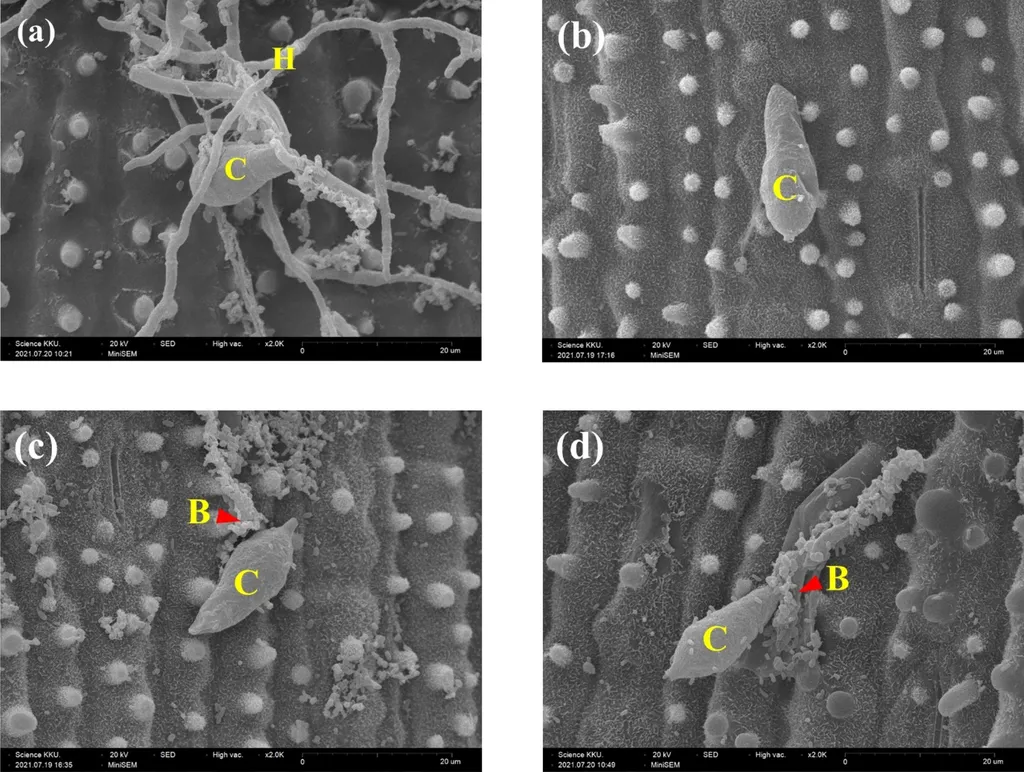
In the ongoing battle against rice blast, a disease that threatens global food security, scientists have discovered a promising ally: a bacterium named Kosakonia oryziphila NP19. This dual-function biocontrol agent not only suppresses rice blast but also promotes rice growth, offering a sustainable solution for farmers worldwide.
Rice blast, caused by the fungus Pyricularia oryzae, can devastate rice crops, leading to significant yield losses. Current control methods often rely on chemical fungicides, which can have environmental and health implications. The discovery of K. oryziphila NP19, detailed in a study published in *Plant Stress*, presents a more sustainable alternative.
The bacterium was found to reduce disease severity by 16.5% and increase shoot height by 12–17% and total biomass by up to 23% in fungus-inoculated seedlings. “This is a significant finding,” said Lalita Thanwisai, lead author of the study from the Department of Microbiology at Khon Kaen University in Thailand. “Not only does NP19 suppress the disease, but it also promotes plant growth, making it a multifaceted tool for sustainable agriculture.”
The protective effects of NP19 are attributed to its ability to prime the plant’s antioxidant system and alter the expression of defense-related genes. The bacterium upregulates OsALD1 early in the infection process and pathogenesis-related genes later, enhancing the plant’s defense mechanisms.
Moreover, NP19 produces diverse bioactive compounds that likely contribute to disease suppression and growth promotion. “The timing of these defense responses is crucial,” Thanwisai explained. “NP19 seems to modulate this timeline, enhancing the plant’s ability to fend off the pathogen.”
The commercial implications of this research are substantial. With the global population expected to reach 9.7 billion by 2050, the demand for rice will continue to rise. A sustainable and effective biocontrol agent like NP19 could help meet this demand by reducing yield losses and promoting plant growth.
This research could shape future developments in the field by encouraging further exploration of beneficial plant-microbe interactions. As Thanwisai noted, “Understanding these interactions can lead to the development of more effective and sustainable biocontrol agents.”
In conclusion, the discovery of Kosakonia oryziphila NP19 offers a promising solution for controlling rice blast and promoting rice growth. As the agricultural sector continues to seek sustainable solutions, this bacterium could play a pivotal role in securing global food supplies.