
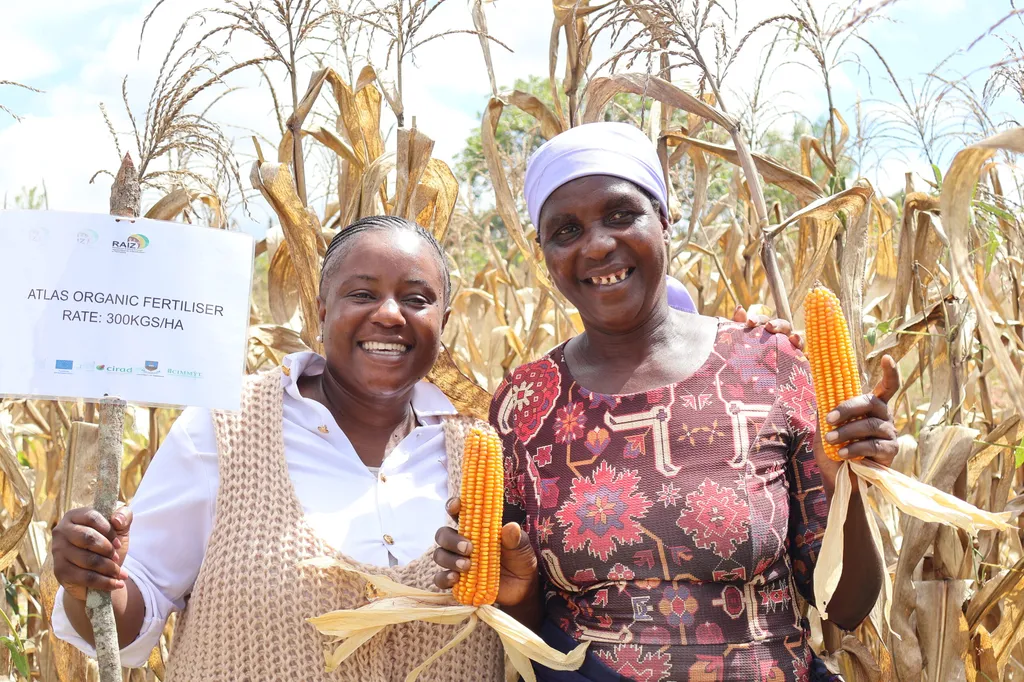
In the heart of sub-humid Zimbabwe, a groundbreaking study is challenging conventional wisdom about rainfed maize productivity, offering a beacon of hope for farmers grappling with declining yields and soil degradation. The research, led by Connie Madembo of the International Maize and Wheat Improvement Center (CIMMYT), and published in *Agricultural Water Management*, underscores the critical role of soil fertility in boosting maize yields, even in the face of water scarcity.
For decades, farmers and researchers alike have focused on water management as the key to improving cereal yields in sub-Saharan Africa. However, Madembo’s study reveals that integrated water and nutrient management may not always be the silver bullet. “Our findings suggest that in sub-humid environments, integrating organic and inorganic fertility inputs should be prioritized over water management interventions to sustainably improve maize productivity,” Madembo asserts.
The study, conducted at the Domboshawa Training Centre, evaluated the effects of various tillage systems and fertility regimes on maize grain yield, plant health, and soil moisture content across multiple seasons. The results were clear: grain yield was significantly influenced by fertility regime and seasonal rainfall, but not by water conservation practices. In fact, the highest yields—peaking at 4.6 tonnes per hectare—were achieved with a combination of manure and basal fertiliser, averaging an impressive 4.3 tonnes per hectare.
This research has profound implications for the agriculture sector, particularly in regions where rainfall is erratic and soil fertility is poor. By prioritizing soil fertility, farmers can potentially increase yields without relying solely on water management interventions, which can be costly and labor-intensive. “This study challenges us to rethink our approach to agriculture in sub-Saharan Africa,” says Madembo. “It’s not just about conserving water; it’s about nourishing the soil to nourish the crops.”
The findings also highlight the importance of tailored solutions for different environments. While water management may be crucial in arid regions, the study suggests that in sub-humid areas with annual rainfall between 600 and 800 millimeters, soil fertility should be the primary focus. This nuanced understanding could shape future agricultural policies and practices, leading to more sustainable and productive farming systems.
As the world grapples with the challenges of climate change and food security, Madembo’s research offers a timely reminder of the power of soil. By investing in soil fertility, farmers can not only boost yields but also contribute to environmental sustainability. After all, as the study shows, the key to unlocking Africa’s agricultural potential may lie not in the skies, but in the soil.