
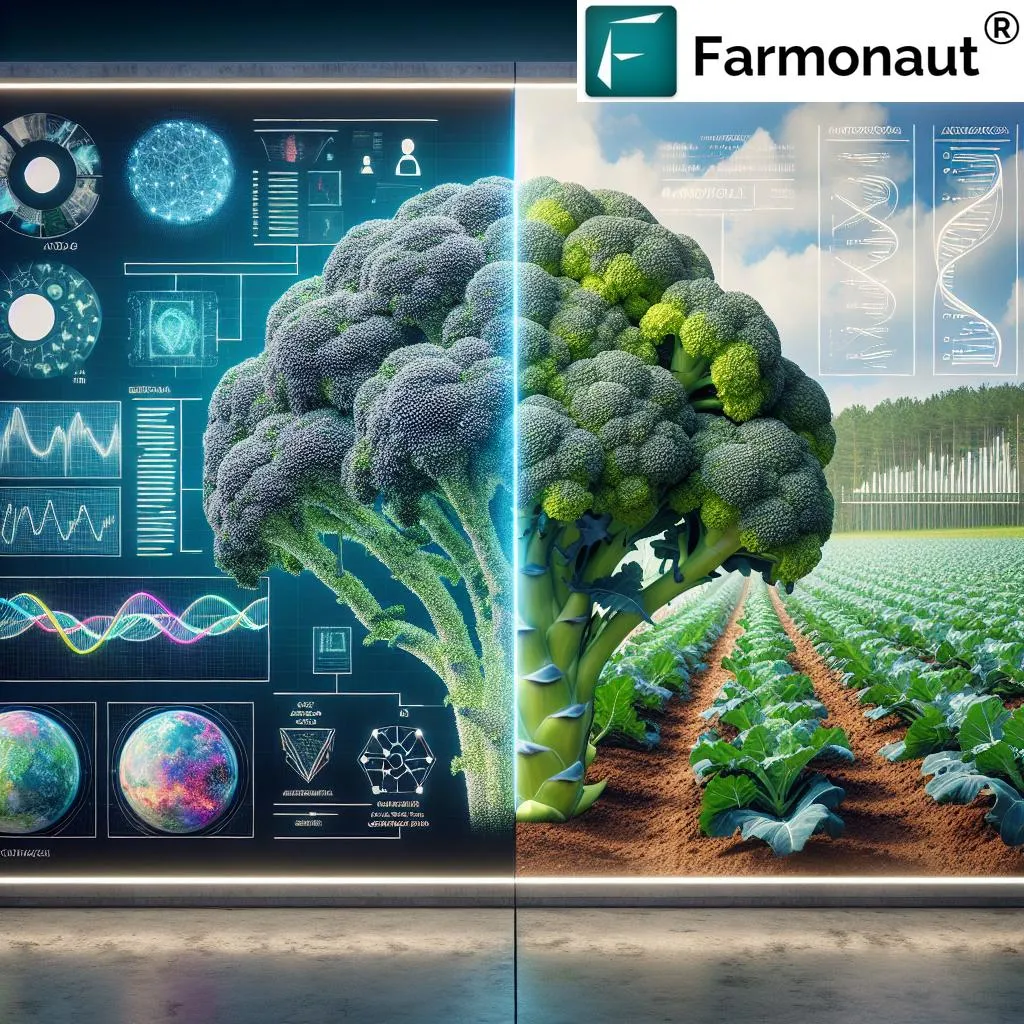
In the face of climate change and a burgeoning global population, the agricultural sector is under immense pressure to innovate and adapt. A recent review published in *Agronomy* sheds light on how artificial intelligence (AI) and machine learning (ML) are revolutionizing plant breeding, offering a beacon of hope for sustainable and efficient farming practices. Led by Ana Luísa Garcia-Oliveira of the Instituto Nacional de Investigação Agrária e Veterinária in Portugal, the research explores how these technologies can accelerate the development of climate-resilient crop varieties, ultimately reshaping the future of agriculture.
The review highlights the critical role of smart farming (SM) in modern plant breeding. By leveraging real-time data acquisition and predictive models, farmers and breeders can make more informed decisions, reducing inputs and increasing outputs. “Smart farming applied to plant breeding can improve efficiency by adopting digital and data-driven technologies,” Garcia-Oliveira explains. This includes investing in common ontologies and metadata standards for phenotypes and environments, standardizing high-throughput (HTP) protocols, and integrating prediction outputs into breeding databases and selection workflows.
One of the most promising applications of AI and ML in plant breeding is genomic selection (GS) and genetic algorithms (GAs). These technologies enable breeders to predict the performance of new crop varieties with greater accuracy, speeding up the breeding process and enhancing the likelihood of developing climate-resilient crops. The review also emphasizes the importance of building multi-partner field networks that collect diverse envirotypes, further enriching the data pool for more robust predictive models.
The commercial impacts of these advancements are profound. As the global population continues to grow, the demand for food will inevitably rise. By integrating AI and ML into plant breeding, the agricultural sector can meet this demand more sustainably, reducing the need for extensive land use and minimizing biodiversity loss. “These technologies offer a strategic landscape by enhancing breeding efficiency,” Garcia-Oliveira notes, underscoring the potential for these tools to transform the industry.
Moreover, the review bridges the gap between smart farming and smart breeding, providing a comprehensive overview of how these domains can work together to create a more sustainable and efficient agricultural system. This holistic approach is crucial for addressing the complex challenges facing modern agriculture, from soil fertility decline to changes in water cycles.
As the agricultural sector continues to evolve, the integration of AI and ML into plant breeding practices will likely become a cornerstone of sustainable farming. The research led by Garcia-Oliveira not only highlights the current advancements in this field but also paves the way for future developments, offering a roadmap for breeders, farmers, and policymakers to navigate the complexities of modern agriculture. With the right tools and strategies, the future of farming looks brighter and more resilient than ever before.