
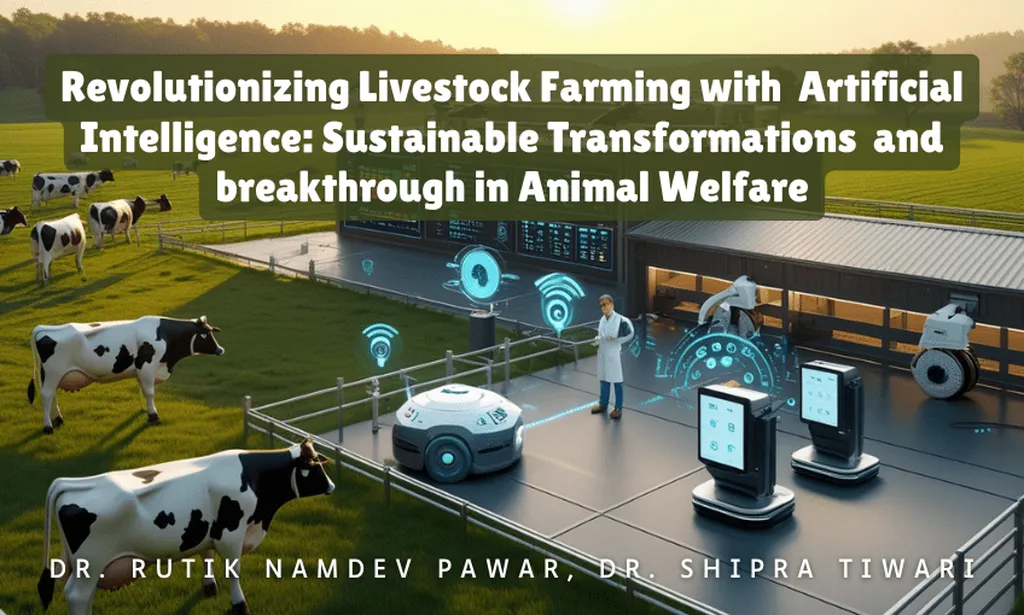
In the vast, rugged landscapes of Qinghai’s pastoral areas, a technological revolution is quietly unfolding, one that promises to reshape the future of animal husbandry. A recent study published in *Frontiers in Sustainable Food Systems* sheds light on the adoption of artificial intelligence (AI) in these regions, offering insights that could have significant commercial impacts for the agriculture sector.
The research, led by Jiajin Zhang from the Academy of Animal Science and Veterinary at Qinghai University, explores the factors influencing pastoralists’ intentions to adopt AI technologies. By integrating technological innovation characteristics, technological commitment, and the Technology Acceptance Model (TAM), the study provides a nuanced understanding of how AI can be effectively integrated into smart animal husbandry.
The findings reveal that technological innovation characteristics such as mobility, interactivity, and autonomy play a crucial role in shaping perceived usefulness and ease of use of AI technologies. “Mobility, interactivity, and autonomy are not just buzzwords; they are critical factors that influence how pastoralists perceive and adopt AI technologies,” Zhang explains. These characteristics directly enhance the perceived usefulness and ease of use of AI, making them more appealing to users.
Technological commitment, particularly technological interest, also emerges as a significant driver. Pastoralists who are interested in technology are more likely to perceive AI as useful and easy to use. However, the study found that competence and control beliefs did not have a significant impact, suggesting that while interest is key, confidence in one’s ability to use the technology may need to be cultivated separately.
The study also highlights the moderating effects of animal husbandry type and breeding scale. For instance, animal husbandry type positively moderates the relationship between autonomy and perceived ease of use, as well as technological interest and perceived usefulness. Conversely, it negatively moderates the relationship between interactivity and perceived usefulness. Breeding scale, on the other hand, positively moderates the effects of technological interest on both perceived usefulness and ease of use.
These findings offer valuable insights for the agriculture sector. By understanding the specific factors that influence AI adoption, companies can design more targeted and effective technologies. “Our research provides a theoretical basis for developing targeted strategies that can optimize AI design based on animal husbandry type and deliver hierarchical training based on breeding scale,” Zhang notes. This could lead to more widespread and sustainable adoption of AI technologies in pastoral areas, ultimately enhancing productivity and efficiency.
The study also underscores the importance of strengthening technological competence and control belief cultivation. By addressing these areas, the adaptability and sustainability of AI technologies can be significantly improved, paving the way for a more technologically advanced and resilient agriculture sector.
As the world grapples with the challenges of feeding a growing population, the adoption of AI in animal husbandry offers a promising solution. The insights from this study not only shape future developments in the field but also highlight the need for a more nuanced understanding of technological adoption in diverse and complex environments. With targeted strategies and a focus on cultivating technological competence, the future of smart animal husbandry looks brighter than ever.