
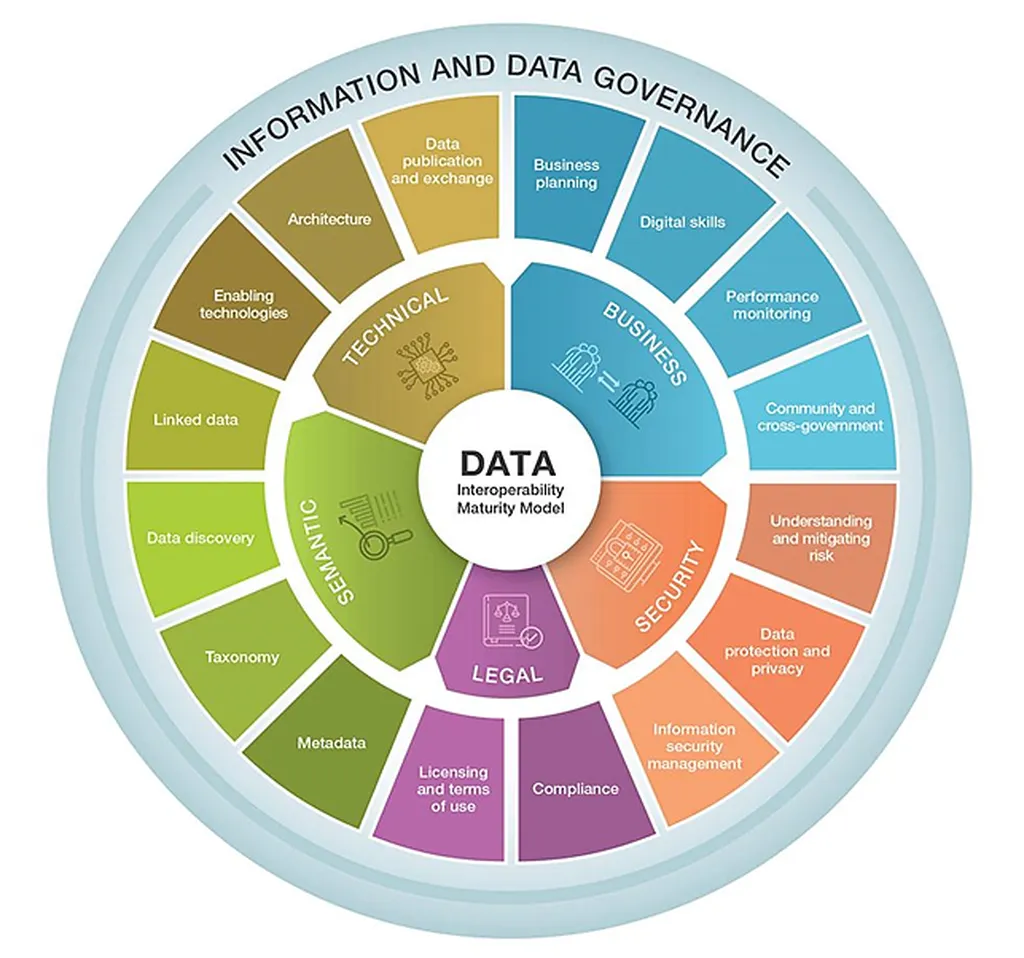
In the rapidly evolving digital economy, the seamless and secure flow of data across borders has become a linchpin for global industrial coordination and regional cooperation. Yet, this flow is fraught with challenges, from balancing sovereign security with efficiency to navigating the complexities of international regulations. A recent roundtable discussion published in *Nongye tushu qingbao xuebao* brings together experts from academia and industry to dissect these issues and propose a roadmap for the future of cross-border data governance, with significant implications for the agriculture sector.
The discussion, led by ZHAO Hui, CHEN Jinghao, GUO Sha, LI Zhixing, and YAN Longfei, delves into the underlying logic of cross-border data flow, driven by economic interests, technological innovation, and international cooperation. The experts highlight the core contradictions in this landscape, such as the tension between sovereign security and flow efficiency, and the fragmentation of rules versus institutional coordination. “We need to establish a governance philosophy of ‘dynamic balance’ to shift from fragmented rule-based games to systematic coordination,” says one of the experts, underscoring the need for a multilateral co-governance system.
The roundtable proposes a collaborative mechanism that integrates policy, technology, and industry. At the policy level, regulatory sandbox pilots, standard mutual recognition, and compliance infrastructure sharing are suggested to address regulatory barriers. Technically, the experts advocate for scenario-specific solutions based on a maturity gradient, promoting integrated innovation of “technology + management.” Industry-wise, the self-regulatory role of professional fields like library and information science (LIS) is emphasized to compensate for policy rigidity and build a closed-loop governance structure.
Looking ahead, the experts predict that cross-border data flow will exhibit structural growth and domain differentiation over the next 3 to 5 years. Smart manufacturing and digital trade are expected to drive large-scale growth, while smart healthcare and modern agriculture will emerge as core sectors. “It is imperative to address bottlenecks in infrastructure upgrading and the impact of ‘black swan’ events,” notes another expert, stressing the need for a risk resilience system that encompasses technical, governance, and strategic dimensions.
For the agriculture sector, these developments could revolutionize data-driven practices, from precision farming to supply chain management. The integration of cross-border data flow could enhance the efficiency and sustainability of agricultural operations, fostering innovation and competitiveness. However, challenges such as data security compliance, standard discrepancies, and high technical costs need to be addressed to fully realize these benefits.
The roundtable also explores China’s path for cross-border data flow, highlighting the country’s hierarchical and classified governance framework centered on fundamental laws. Institutional innovations like the negative list system in free trade pilot zones are seen as practical paths forward. To tackle discrepancies in legal compliance requirements and technical barriers, the experts suggest strengthening legal synergy, advancing infrastructure construction, and improving the compliance service support system.
In the realm of cross-border data circulation, the mutual recognition of credit products is identified as a strategic value driver for international trade facilitation and enterprise development. The experts call for improving the legal and regulatory framework, strengthening technical infrastructure, and deepening international cooperation and mutual recognition mechanisms.
As the world grapples with the complexities of cross-border data governance, this roundtable discussion offers a comprehensive and forward-looking perspective. The insights and recommendations put forth by the experts could shape future developments in the field, paving the way for a more efficient, secure, and compliant global data flow ecosystem. The research, published in *Nongye tushu qingbao xuebao*, brings together expertise from the School of Economics and School of Public Administration at Guangxi University, Shenzhen Xingsheng Digital Technology Co., Ltd., Far East Credit Rating Co., Ltd., and Shiyuan Digital Technology Co., Ltd., underscoring the interdisciplinary nature of this critical issue.