
In the rapidly evolving world of unmanned aerial vehicles (UAVs), a groundbreaking study published in *Applied Sciences* is set to revolutionize energy management, with significant implications for the agriculture sector. Led by Sunisa Kunarak from the Department of Electrical Engineering at Srinakharinwirot University in Thailand, the research delves into the transformative potential of deep learning in optimizing UAV performance, particularly in hybrid energy systems that combine fuel cells with lithium batteries.
UAVs have become indispensable in various fields, from military operations to disaster relief and agriculture. However, their effectiveness is often hampered by energy management challenges. Kunarak’s study addresses this critical issue by exploring how deep learning can adaptively forecast and optimize energy use in real-time. The research introduces smart algorithms designed to balance energy efficiency and communication performance in heterogeneous wireless networks, a feature particularly relevant for agricultural applications where UAVs are increasingly used for crop monitoring, pesticide spraying, and data collection.
The simulation results are promising, demonstrating significant improvements in energy consumption, flight altitudes, and spectral efficiency compared to traditional methods like Fixed Weight and Fuzzy Logic Weight schemes. At peak user densities, the model achieves up to 42% lower energy consumption and 54% higher throughput. This efficiency is crucial for agricultural UAVs, which often operate in vast, remote areas where energy conservation and reliable communication are paramount.
“Our predictive models, based on recurrent and transformer-based deep networks, allow UAVs to anticipate energy requirements across various mission and environmental contexts,” Kunarak explains. “This shift from reactive to proactive control is a game-changer for the agriculture sector, where UAVs need to operate autonomously and efficiently over long periods.”
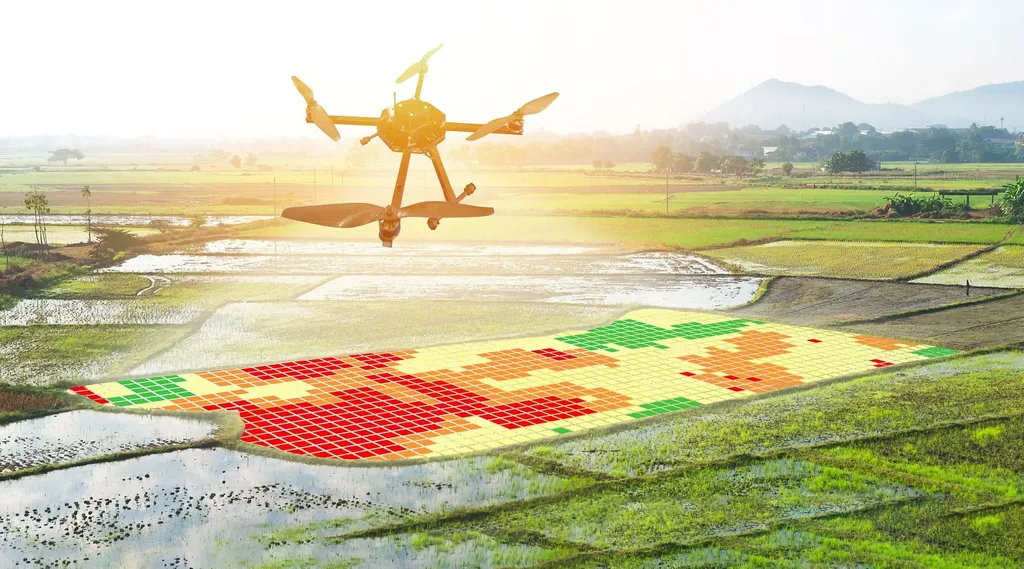
The implications for agriculture are substantial. With optimized energy management, UAVs can extend their operational endurance, enabling more extensive and detailed monitoring of crops. This can lead to early detection of pests, diseases, and nutrient deficiencies, allowing farmers to take timely action and improve yields. Additionally, the enhanced communication performance ensures seamless data transmission, facilitating real-time decision-making and precision agriculture practices.
Looking ahead, the adoption of these deep learning methods in UAV-aided beyond-5G (B5G) and future 6G network scenarios could further enhance mission connectivity and reliability in challenging environments. The research lays the foundation for an all-aspect framework to control and manage UAV energy in the 5G era, leveraging deep learning, edge computing, and hybrid power systems.
As the agriculture sector continues to embrace technological advancements, the integration of deep learning in UAV energy management represents a significant step forward. It not only addresses the immediate challenges of energy efficiency but also paves the way for more sustainable and autonomous agricultural practices. With the potential to prolong UAV endurance and improve mission reliability, this research is poised to shape the future of agricultural technology, making it more efficient, resilient, and responsive to the needs of modern farming.