
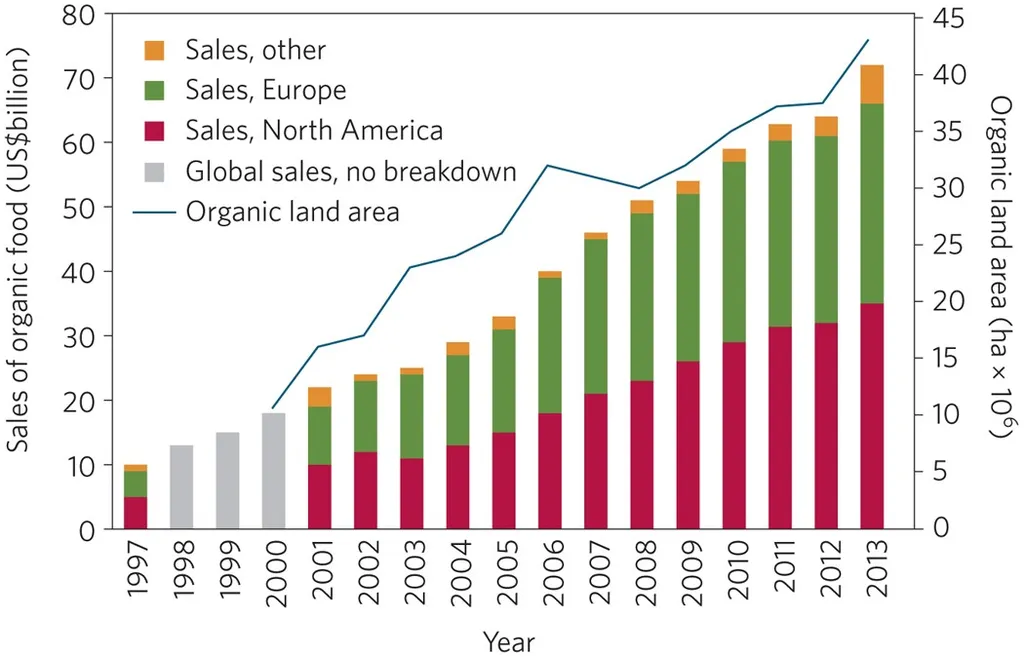
In the ever-evolving landscape of agriculture, organic farming is emerging as a beacon of sustainability, offering a compelling alternative to conventional practices. A recent review published in *Frontiers in Plant Science* sheds light on the latest advancements, challenges, and opportunities in organic agriculture across four major regions: India, Europe, Malaysia, and the United States. The study, led by Shweta Meshram from the Department of Plant Pathology at Lovely Professional University in India, provides a comprehensive analysis of how policy contexts, certification schemes, and technological innovations are shaping the future of organic farming.
Organic agriculture, with its emphasis on biodiversity, healthy soils, and minimal pesticide use, is gaining traction worldwide. The review highlights that policy-based models, such as the EU’s Green Deal, which aims to have 25% of agricultural land under organic farming by 2030, have significantly accelerated the adoption of organic practices. In contrast, the United States, with its market-led approach, has seen higher profitability in organic farming despite lower yields. “The U.S. systems, although yielding 10–18% less, have 22–35% higher profitability due to market incentives and USDA programs,” notes the study.
In India, indigenous practices and Participatory Guarantee Systems (PGS) provide crucial support to smallholder farmers, fostering a unique model of organic farming. Europe, with its overarching policy interventions, stands in stark contrast to the U.S. market-driven approach. Meanwhile, Malaysia is integrating government incentives, urban agriculture, and private-public partnerships to boost organic vegetable production, particularly in highland regions like the Cameron Highlands.
Despite these advancements, organic agriculture faces several challenges, including regulatory complexity, the cost of certification, and yield gaps. However, emerging technologies such as artificial intelligence and precision agriculture offer promising solutions. “Emerging evidence on artificial intelligence and precision technologies suggests enhanced efficiency in nutrient and pest management in organic systems,” the study observes.
The commercial impacts of these findings are substantial. As consumer demand for organic products continues to rise, farmers and agribusinesses are increasingly investing in sustainable practices. The integration of AI and precision technologies could further enhance efficiency and profitability, making organic farming a more viable option for a broader range of producers.
This research underscores the potential of organic agriculture to shape the future of the agriculture sector. By addressing key challenges and leveraging technological innovations, organic farming can become a cornerstone of sustainable agriculture, benefiting both the environment and the economy. As Shweta Meshram and her colleagues highlight, the future of organic agriculture lies in low-cost biocontrols, climate-resilient varieties, and AI-based precision tools, paving the way for a more sustainable and profitable agricultural landscape.
Published in *Frontiers in Plant Science*, this study provides a crucial roadmap for policymakers, farmers, and agribusinesses to navigate the complexities of organic farming and harness its full potential.