
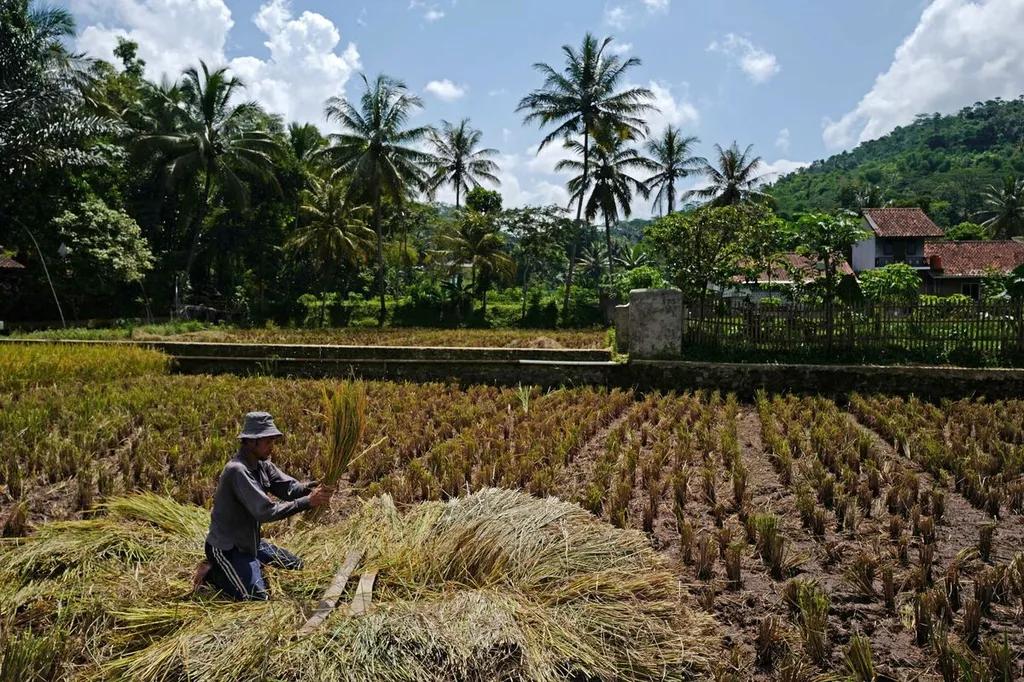
In the heart of Indonesia, a critical examination of shallot farming in Bantul Yogyakarta is shedding light on the financial and environmental challenges faced by local farmers. A recent study published in *BIO Web of Conferences* delves into the income risks and sustainability of shallot farming in Srigading Village, offering insights that could reshape agricultural practices and policies in the region.
The research, led by Triyono from the Center for Study of Sustainable Development Goals (SDGs) at Universitas Muhammadiyah Yogyakarta, reveals that while the average income for shallot farmers stands at IDR 9,589,576 per season, the income risk is alarmingly high. With a coefficient of variation of 1.16 (116%), the study highlights extreme seasonal volatility and substantial uncertainty for farmers. “The high income risk indicates that farmers are navigating a highly unpredictable environment,” Triyono explains. “This volatility can deter investment and innovation, stifling the sector’s growth potential.”
The study identifies several key factors influencing farmer income, including the costs of KCl fertilizer, organic fertilizer expenditure, and labor inputs. Income risk, on the other hand, is affected by the costs of KCl fertilizer, labor, NPK fertilizer, and organic fertilizers. These findings underscore the delicate balance farmers must maintain between input costs and yield outcomes.
Beyond financial analysis, the research assesses the overall sustainability performance of shallot farming in the region. The sustainability index reached 52.80, indicating moderate sustainability. Notably, the study found that income showed no significant correlation with the overall sustainability score. However, income was positively associated with economic sustainability and negatively associated with ecological and social dimensions. This suggests that while higher income can drive economic sustainability, it may come at the expense of ecological and social factors.
The implications of this research are profound for the agriculture sector. By understanding the intricate relationship between income, risk, and sustainability, policymakers and agricultural stakeholders can develop targeted interventions to mitigate risks and enhance sustainability. “This study provides a roadmap for improving the resilience of shallot farming in the region,” Triyono notes. “By addressing the key factors influencing income and sustainability, we can create a more stable and prosperous future for farmers.”
As the agricultural sector continues to evolve, the insights from this research could shape future developments in farming practices, policy frameworks, and technological innovations. By fostering a more sustainable and resilient agricultural system, the study paves the way for a brighter future for farmers and the broader community.