
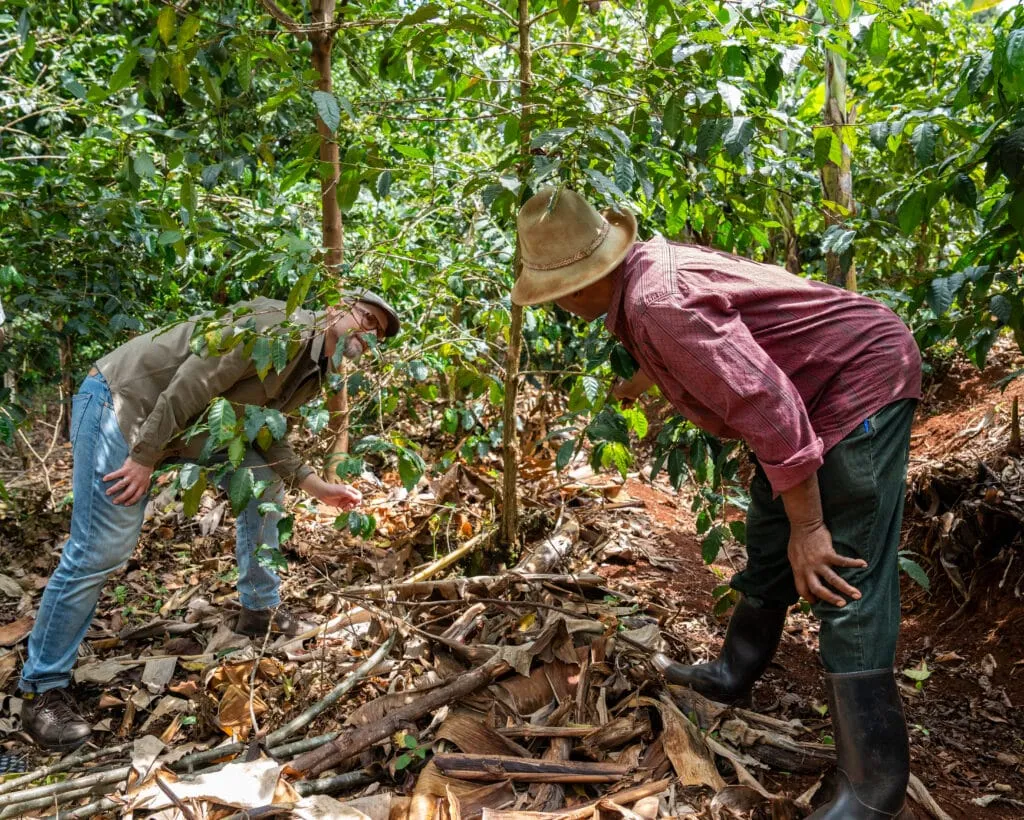
In the rolling hills of Embu County, Kenya, a quiet agricultural revolution is underway. Smallholder coffee farmers are embracing eco-friendly farming practices, and the results are nothing short of remarkable. A recent study published in *Frontiers in Sustainable Food Systems* has shed light on the transformative potential of these methods, offering a beacon of hope for the future of coffee production in East Africa.
The study, led by Changpyo Lee of the Coffee Project Team at Goodneighbors Global Impact in Seoul, Republic of Korea, focused on a combination of eco-friendly practices, including no-tillage, organic mulching, composting, and the use of Indigenous Microorganisms (IMOs). These practices are increasingly promoted as climate-adaptive alternatives to conventional farming systems, but until now, empirical evidence of their effectiveness in African smallholder contexts has been limited.
The research team selected 34 early adopters from a pool of 100 trained farmers, ensuring that they had complete yield records. Using a paired-plot design, they compared eco-friendly and conventional management within the same farms, measuring per-tree yield and the incidence of Coffee Berry Disease (CBD) and Coffee Leaf Rust (CLR).
The results were striking. Eco-friendly management significantly increased coffee yield during the 2024/2025 main harvest, with an average gain of 1.12 kg per tree compared to conventional plots. “This is a substantial increase, especially considering that input costs were comparable between the two systems,” Lee noted. “It shows that productivity improvements can be achieved without increasing production expenses.”
Disease suppression was even more dramatic. In 2024, eco-friendly plots saw an 89% reduction in CBD incidence and a 93% reduction in CLR, with very large effect sizes. Although overall disease pressure declined in 2025, eco-friendly plots maintained lower CBD levels and comparable CLR levels relative to conventional plots.
The study also found that early adopters exhibited greater yield gains, suggesting cumulative benefits as soil biological processes stabilized. This finding underscores the importance of long-term commitment to eco-friendly practices and highlights the potential for even greater gains in the future.
The commercial implications of this research are significant. As climate variability, soil degradation, and increasing pest and disease pressure threaten the sustainability of Arabica coffee production, eco-friendly farming practices offer a promising path forward. By enhancing productivity and disease resilience, these methods can help smallholder farmers adapt to changing conditions and secure their livelihoods.
Moreover, the study’s findings have broader relevance for the agriculture sector as a whole. The success of eco-friendly farming in Kenya demonstrates the potential of agroecological approaches to address some of the most pressing challenges facing global agriculture. As the world grapples with the impacts of climate change and the need for more sustainable food systems, the lessons from Embu County offer valuable insights and inspiration.
However, the researchers caution that further multi-season monitoring is required to evaluate long-term ecological stability and economic sustainability under variable climatic conditions. “While our findings are encouraging, we need to continue monitoring these systems to ensure their long-term viability,” Lee said.
As the world looks to the future of agriculture, the quiet revolution in Embu County serves as a powerful reminder of the potential for innovation and adaptation. By embracing eco-friendly farming practices, smallholder coffee farmers in Kenya are not only enhancing their productivity and resilience but also paving the way for a more sustainable and secure future for all.