
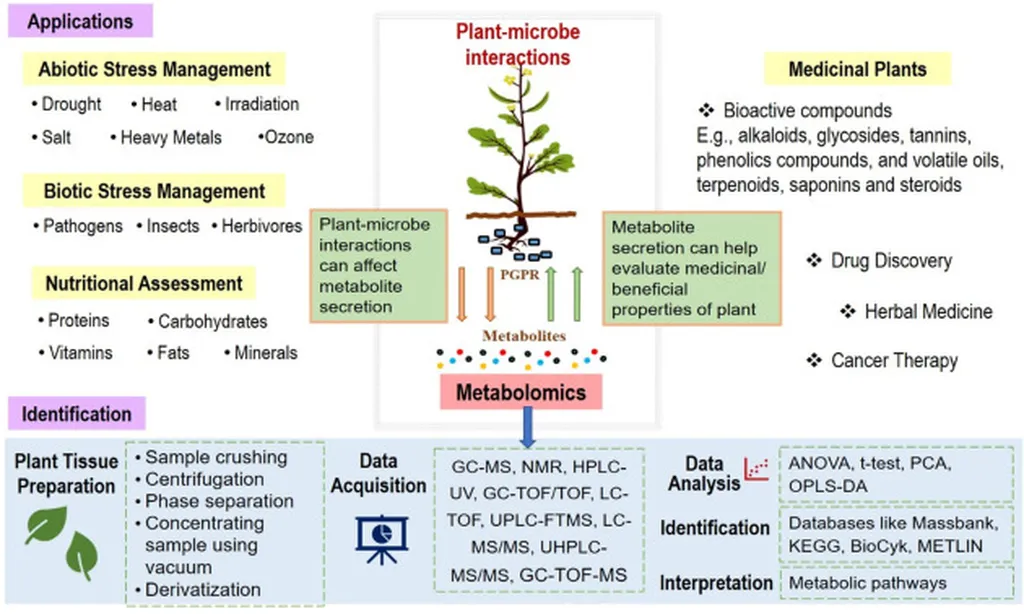
In the ever-evolving landscape of agriculture, organic farming stands as a beacon of sustainability, yet it faces significant challenges in maintaining nutritional consistency and building consumer trust. A recent study published in the *BIO Web of Conferences* sheds light on how metabolomics—a cutting-edge approach to analyzing the biochemical composition of plants—could revolutionize the organic agriculture sector. Led by Yunindanova Mercy Bientri from the Program of Agrotechnology at the Faculty of Agriculture UNS, this research explores the untapped potential of metabolomics to distinguish organic products from conventional ones, thereby enhancing their market appeal and credibility.
The study reveals a stark disparity in the application of metabolomics across different agricultural domains. While metabolomics research related to nutrition and consumer perceptions is thriving, its integration into organic farming remains largely unexplored. “The contribution of metabolomics research to organic farming studies is only about 2.35% compared to nutrition and 8.39% compared to consumer perceptions,” Bientri notes. This gap highlights a critical opportunity for organic farmers to leverage metabolomics to bolster nutritional claims and consumer trust.
Metabolomics offers a systematic approach to analyzing the biochemical composition of plants, providing a robust scientific basis for assessing the nutritional quality of organic products. By identifying unique metabolic profiles, organic farmers can differentiate their products from conventional counterparts, thereby enhancing their market value. “The integration of metabolomics will strengthen nutritional claims, scientific transparency, credibility, and consumer trust,” Bientri explains. This scientific validation is crucial for building a more positive consumer perception, which is often a hurdle for organic products.
The commercial implications of this research are profound. As consumer demand for organic products continues to grow, the ability to scientifically validate their nutritional superiority can significantly enhance market competitiveness. Farmers and agribusinesses can use metabolomics to refine their production processes, ensuring consistent quality and nutritional value. This, in turn, can lead to higher consumer satisfaction and loyalty, driving long-term growth in the organic agriculture sector.
Moreover, the study underscores the need for further research and investment in metabolomics within the context of organic farming. By bridging the gap between scientific research and practical application, the agriculture sector can unlock new avenues for innovation and sustainability. As Bientri’s research suggests, the future of organic farming lies in the integration of advanced technologies like metabolomics, which can provide the scientific evidence needed to support nutritional claims and build consumer trust.
In conclusion, the study published in the *BIO Web of Conferences* by Yunindanova Mercy Bientri offers a compelling case for the adoption of metabolomics in organic agriculture. By harnessing the power of this advanced analytical tool, farmers and agribusinesses can enhance the nutritional quality of their products, strengthen consumer trust, and drive commercial success. As the agriculture sector continues to evolve, the integration of metabolomics represents a pivotal step towards a more sustainable and scientifically validated future for organic farming.