
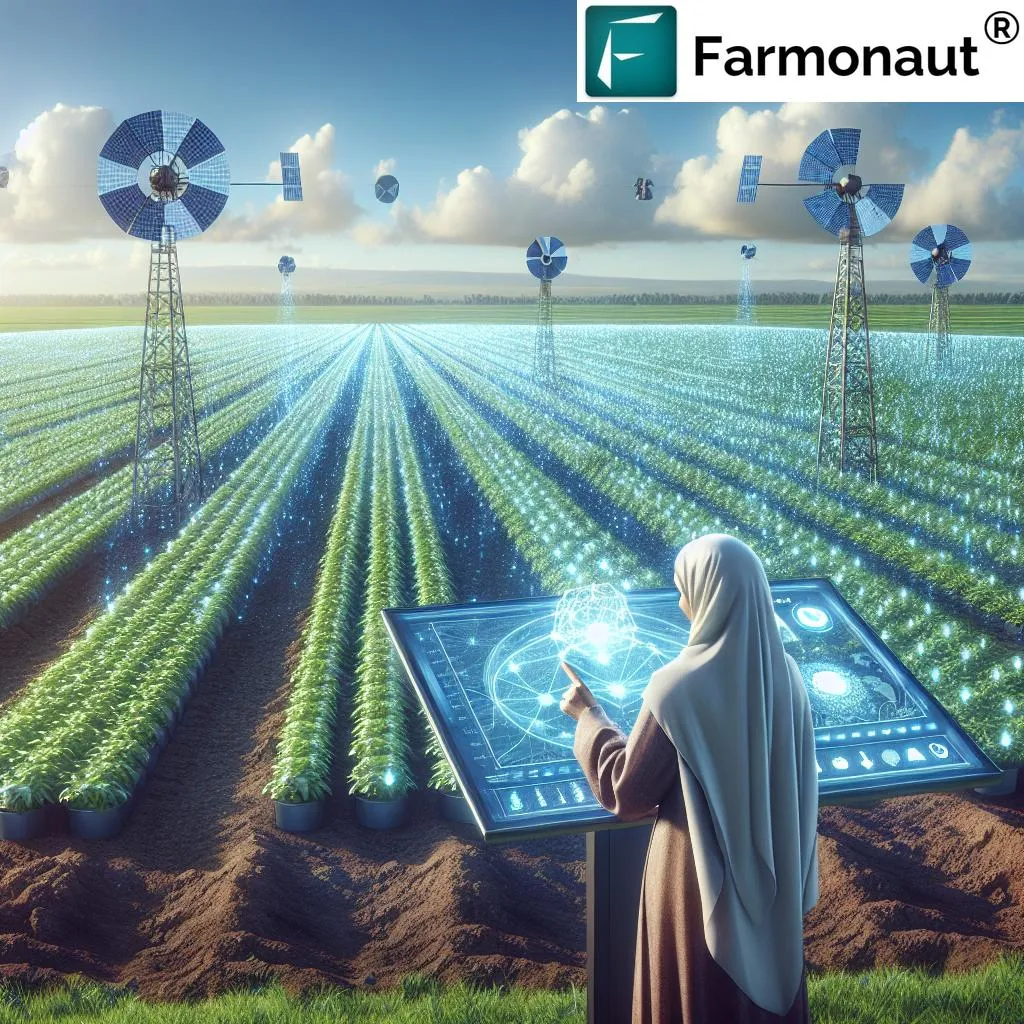
In the quest for precision agriculture, researchers have developed a groundbreaking framework that could revolutionize how farmers monitor and manage water stress in crops. Published in the journal *Agronomy*, the study introduces a multimodal optical biosensing and 3D convolutional neural network (3D-CNN) fusion approach to phenotype physiological responses of basil under water-deficit stress. This innovative method promises to enhance real-time, non-destructive monitoring, potentially transforming precision irrigation practices.
Water availability is a critical factor in plant growth and health, particularly for crops like basil (*Ocimum basilicum* L.). Traditional methods of assessing water stress, such as visual inspections or biochemical analyses, are often destructive and lack the capability for real-time assessment. The new framework addresses these limitations by integrating RGB, depth, and chlorophyll fluorescence (CF) imaging to capture a comprehensive range of morphological and photosynthetic information.
The study, led by Yu-Jin Jeon from the Department of Smart Farm Science at Kyung Hee University in South Korea, demonstrates that the fusion of 130 optical parameter layers enables the 3D-CNN model to learn spatial and temporal–spectral features associated with resistance and recovery dynamics. The model achieved an impressive 96.9% classification accuracy, outperforming both 2D-CNN and traditional machine-learning classifiers. This high accuracy suggests that the framework can provide farmers with precise and timely data on crop water stress, enabling more informed decision-making.
One of the most compelling aspects of this research is its potential to enhance the commercial viability of precision agriculture. By providing real-time, non-destructive monitoring, farmers can optimize irrigation schedules, reduce water waste, and improve crop yields. “This technology has the potential to significantly impact the agriculture sector by making water management more efficient and sustainable,” said Jeon. “It’s not just about saving water; it’s about ensuring that crops receive the right amount of water at the right time, which can lead to better quality and higher yields.”
The study also highlights the importance of interpretable data. Feature-space visualization using t-SNE confirmed that the learned latent representations reflected biologically meaningful stress–recovery trajectories rather than superficial visual differences. This interpretability is crucial for farmers and agronomists, as it allows them to understand the underlying physiological responses of their crops and make data-driven decisions.
The implications of this research extend beyond basil. The multimodal fusion framework can be adapted for a wide range of crops, making it a versatile tool for precision agriculture. As the agriculture sector continues to face challenges related to water scarcity and climate change, technologies like this could play a pivotal role in ensuring food security and sustainability.
In the broader context, this research paves the way for future developments in plant physiological monitoring. The integration of advanced imaging techniques with machine learning models opens up new possibilities for real-time, non-destructive assessment of crop health. As these technologies become more accessible and affordable, they could become standard tools in the arsenal of modern farmers, helping them to navigate the complexities of precision agriculture with greater ease and efficiency.
The study, published in *Agronomy* and led by Yu-Jin Jeon from the Department of Smart Farm Science at Kyung Hee University, represents a significant step forward in the field of precision agriculture. By combining multimodal optical biosensing with advanced machine learning, researchers have created a framework that could transform how farmers monitor and manage water stress in crops. As this technology continues to evolve, it has the potential to make a profound impact on the agriculture sector, enhancing sustainability and productivity in an era of increasing environmental challenges.