
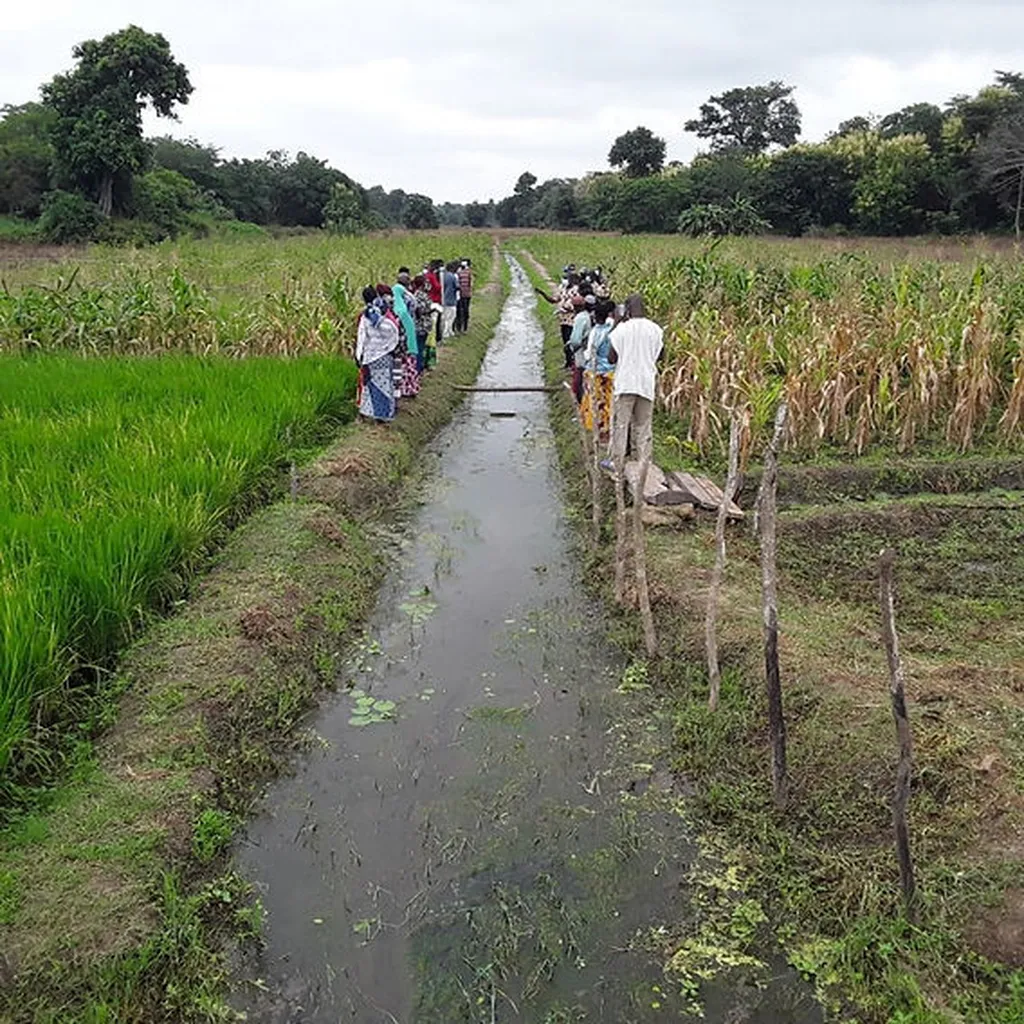
In the heart of Southern Benin, where the Lower Ouémé Valley sprawls with its fertile soils and abundant water resources, a silent battle for sustainable rice cultivation is being waged. As climate change tightens its grip, farmers and researchers alike are seeking innovative solutions to ensure food security and economic stability. A recent study published in the Proceedings of the International Association of Hydrological Sciences offers a beacon of hope, demonstrating how integrated land management and irrigation strategies can revolutionize rice production.
The study, led by M. K. Soudé from the Ecole Doctorale des Sciences Agronomiques et de l’Eau (EDSAE) at the Université d’Abomey-Calavi, compared two land management approaches—Smart-Valleys (SV) and conventional methods—alongside three irrigation levels: Low Variable Irrigation (IR1), Low Constant Irrigation (IR2), and Intermittent Irrigation (IR3). The findings are nothing short of transformative for the agriculture sector.
Smart-Valleys management emerged as a clear winner, significantly boosting both yield and water productivity. “The Smart-Valleys approach not only enhances rice yields but also optimizes water use, which is crucial in a climate-vulnerable region like the Lower Ouémé Valley,” Soudé explained. The study revealed that the SV-IR2 combination maximized paddy rice yields by a staggering 4.7 tonnes per hectare, while the SV-IR3 combination optimized water productivity by 1.06 kilograms per cubic meter.
These results underscore the importance of adopting integrated approaches that combine effective land management with optimal irrigation strategies. For the agriculture sector, this means a potential shift towards more sustainable and profitable rice production systems. “By leveraging these findings, farmers can achieve higher yields while conserving water, a critical resource in the face of climate change,” Soudé added.
The economic implications are profound. An integrated approach that maximizes both yield and water productivity can lead to significant cost savings and increased profitability for farmers. This research could pave the way for similar studies in other regions, fostering a global movement towards sustainable agriculture.
As the world grapples with the challenges of climate change, the insights from this study offer a roadmap for the future of rice cultivation. By embracing innovative land management and irrigation practices, the agriculture sector can not only enhance food security but also ensure economic stability for farmers. The journey towards sustainable rice production has just begun, and the Lower Ouémé Valley stands as a testament to the power of science and innovation in shaping a resilient future.