
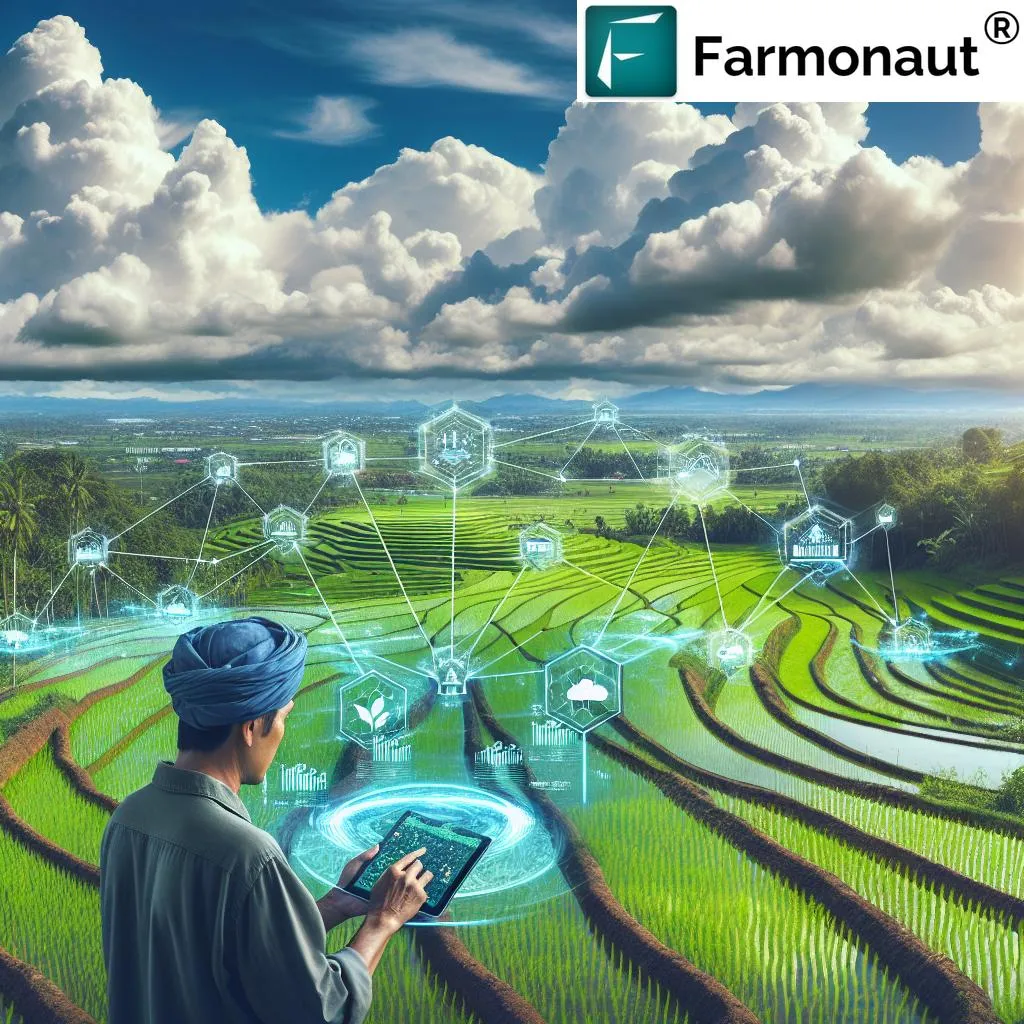
In the heart of Thailand, a groundbreaking study is reshaping our understanding of how modern agricultural practices and technology can foster mathematical literacy and community learning, particularly in drought-prone areas. Led by Anek Putthidech from the Department of Mathematics at Rajamangala University of Technology Suvarnabhumi, the research, published in the journal ‘Agriculture’, delves into the intricate web of relationships between new farming theories, smart agriculture, and cognitive skills development.
The study, which surveyed 320 farmers, employed Structural Equation Modeling (SEM) to map out the connections between New Theory Agriculture (NT), Smart Agriculture (SA), Mathematical Literacy (ML), Data-Driven Decision-Making (DD), and Community Learning (CL). The findings reveal a compelling narrative: NT encourages SA engagement, which in turn facilitates both ML and DD. Moreover, engagement in SA is closely linked to improvements in ML, which strengthens DD abilities.
“Mathematical Literacy acts as a bridge between Smart Agriculture and Data-Driven Decision-Making,” Putthidech explains. “This bridge is crucial as it directly affects Community Learning Outcomes.” The study underscores the transformative potential of NT and smart technology in enhancing farmers’ resource management and evolving mathematical and data skills beyond formal education.
The commercial implications for the agriculture sector are substantial. As farmers become more adept at using data and technology, they can make more informed decisions, leading to improved yields, resource management, and ultimately, profitability. The study suggests that investing in smart agricultural technologies and promoting mathematical literacy among farmers could yield significant returns, both economically and socially.
The research also highlights the importance of community learning. As farmers share their newfound knowledge and skills, the entire community benefits, creating a ripple effect that could drive rural development and capacity building. This aligns with the growing trend of digital agriculture and the push for more sustainable and efficient farming practices.
Looking ahead, the study opens up avenues for future research. Longitudinal or experimental studies could provide deeper insights into how these connections evolve over time. Moreover, the findings could inform community education programs, digital agriculture policies, and rural capacity development initiatives.
In a world grappling with climate change and food security challenges, this research offers a beacon of hope. By harnessing the power of technology and education, we can empower farmers, strengthen communities, and pave the way for a more sustainable future. As Putthidech puts it, “This is not just about farming; it’s about building resilience and fostering growth in our communities.”