
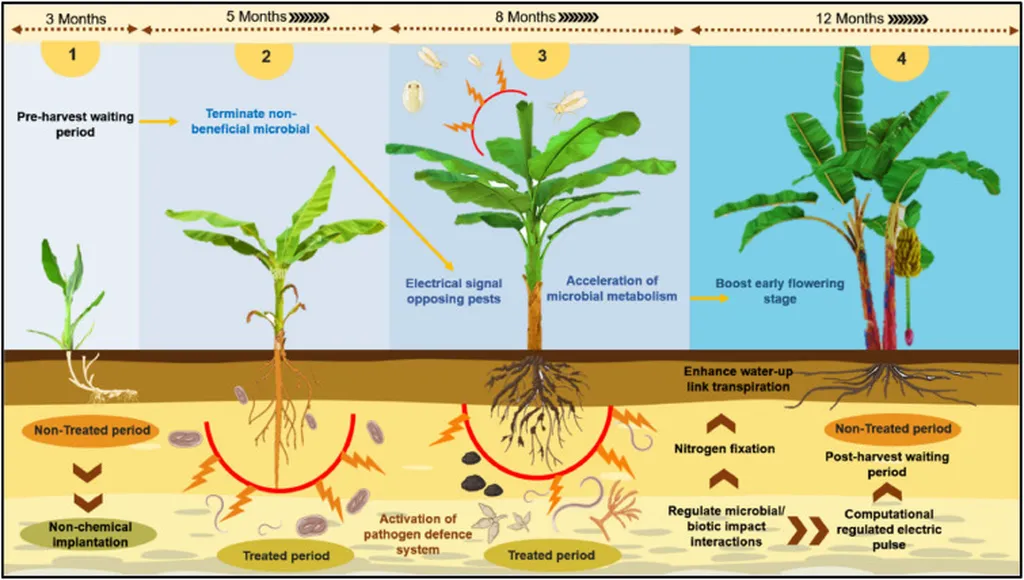
In the rapidly evolving world of smart agriculture, technology is transforming the way we farm, promising increased efficiency and economic benefits. However, as our farmlands become increasingly connected through networks of devices and sensors, the electromagnetic fields (EMFs) they emit are raising questions about their impact on crops. A recent review published in *Applied Sciences* delves into the molecular mechanisms behind how plants interact with these EMFs, shedding light on a topic that could shape the future of agricultural technology.
The study, led by Margarita Kouzmanova from the Department of Biophysics and Radiobiology at Sofia University, explores the effects of EMFs on plants at various levels of organization—molecular, organismal, and even ecosystem levels. While the economic potential of smart agriculture is undeniable, the biological effects of EMFs on crops remain poorly understood. This review aims to bridge that gap by examining how EMFs interact with water molecules, biologically significant molecules, membranes, ion channels, and more.
“Many studies have found effects at different levels of organization, but the underlying mechanisms are still not well understood,” Kouzmanova explains. “We attempted to clarify possible mechanisms on the very basic molecular level involved in the realization of biological effects.”
The review discusses the interaction of EMFs with water molecules, which are crucial for plant life. It also explores how EMFs affect ion transport, oxidative processes in cells, and photosynthesis—key processes that drive plant growth and development. Understanding these interactions could help farmers and agritech developers optimize their use of EMFs to enhance crop yields while minimizing potential adverse effects.
One of the most intriguing aspects of this research is its potential to inform the development of new agricultural technologies. By understanding how EMFs influence plant biology, researchers can design smarter, more efficient systems that harness these fields for the benefit of crops. This could lead to innovations in precision agriculture, where EMFs are used to monitor and control plant growth with unprecedented accuracy.
However, the review also highlights the challenges in defining the conditions under which EMFs have beneficial or adverse effects. “We discuss the obstacles to defining the conditions for the manifestation of beneficial or adverse effects and setting exposure limits,” Kouzmanova notes. This underscores the need for further research and careful consideration as the agriculture sector continues to embrace smart technologies.
As smart agriculture becomes more prevalent, the insights from this review could be instrumental in shaping policies and practices that balance technological advancement with environmental and biological sustainability. By understanding the molecular mechanisms behind EMF interactions with plants, the agriculture sector can pave the way for more innovative and responsible use of technology in farming.
Published in *Applied Sciences* and led by Margarita Kouzmanova from the Department of Biophysics and Radiobiology at Sofia University, this research offers a crucial step forward in the quest to understand and optimize the use of EMFs in agriculture. As the field continues to evolve, the findings from this review could play a pivotal role in shaping the future of smart farming.