
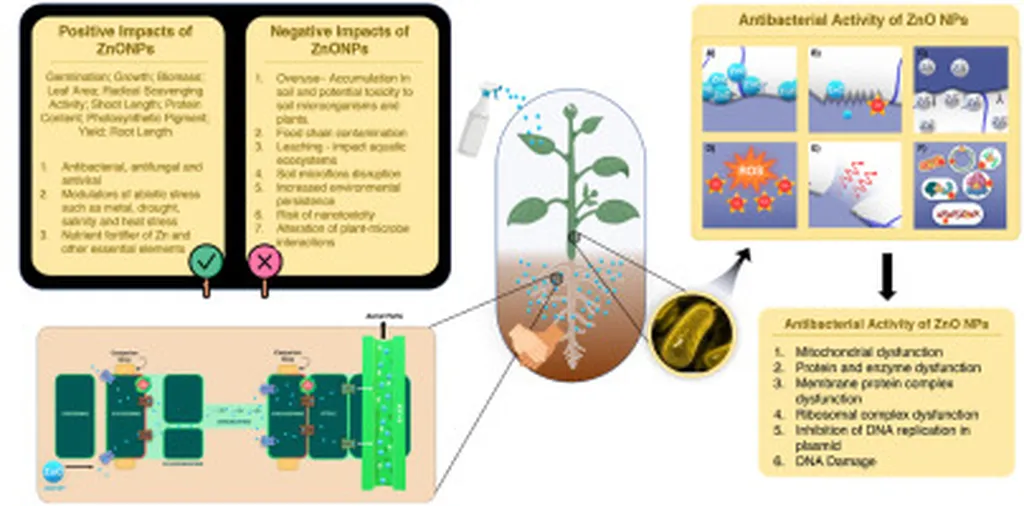
In the face of escalating climate challenges, farmers are increasingly turning to innovative technologies to safeguard crop yields and ensure food security. A recent review published in the journal ‘Plants’ sheds light on one such promising technology: zinc oxide nanoparticles (ZnO-NPs). Led by Erick H. Ochoa-Chaparro from the Food and Development Research Center in Mexico, the research delves into the eco-physiological and molecular roles of ZnO-NPs in mitigating abiotic stress in plants, offering a beacon of hope for the agriculture sector.
Abiotic stress, encompassing drought, salinity, and heavy metal pollution, poses a significant threat to global crop production. As climate change intensifies, these stresses are becoming more frequent and severe, jeopardizing food supplies and farmer livelihoods. The review highlights that ZnO-NPs can enhance photosynthetic efficiency, osmotic regulation, and ionic homeostasis in plants, bolstering their resilience against these stresses.
“ZnO-NPs activate antioxidant defense systems and regulate genes under stress conditions,” explains Ochoa-Chaparro. This translates to improved yields, nutrition, and resistance levels in a wide range of crops, from cereals and legumes to horticultural crops. The nanoparticles also show potential in regulating plant metabolism, opening avenues for further exploration.
The commercial implications of this research are substantial. As nanofertilizers, ZnO-NPs could revolutionize the agriculture industry, offering a more efficient and targeted approach to nutrient delivery. This could lead to reduced input costs, improved crop yields, and enhanced food security. Moreover, the technology aligns with the principles of climate-smart agriculture, promoting sustainable and resilient farming practices.
However, the journey from lab to field is fraught with challenges. As the review acknowledges, large-scale validation of ZnO-NPs in uncontrolled environments remains a significant hurdle. Ensuring the safety and efficacy of these nanoparticles in diverse agricultural settings will be crucial for their widespread adoption.
This research not only underscores the potential of ZnO-NPs in mitigating abiotic stress but also paves the way for future developments in nano-agriculture. As we grapple with the realities of climate change, such innovations could be the key to securing our food future. The work by Ochoa-Chaparro and his team, published in ‘Plants’ and affiliated with the Food and Development Research Center in Mexico, is a testament to the power of scientific exploration in addressing real-world challenges.