
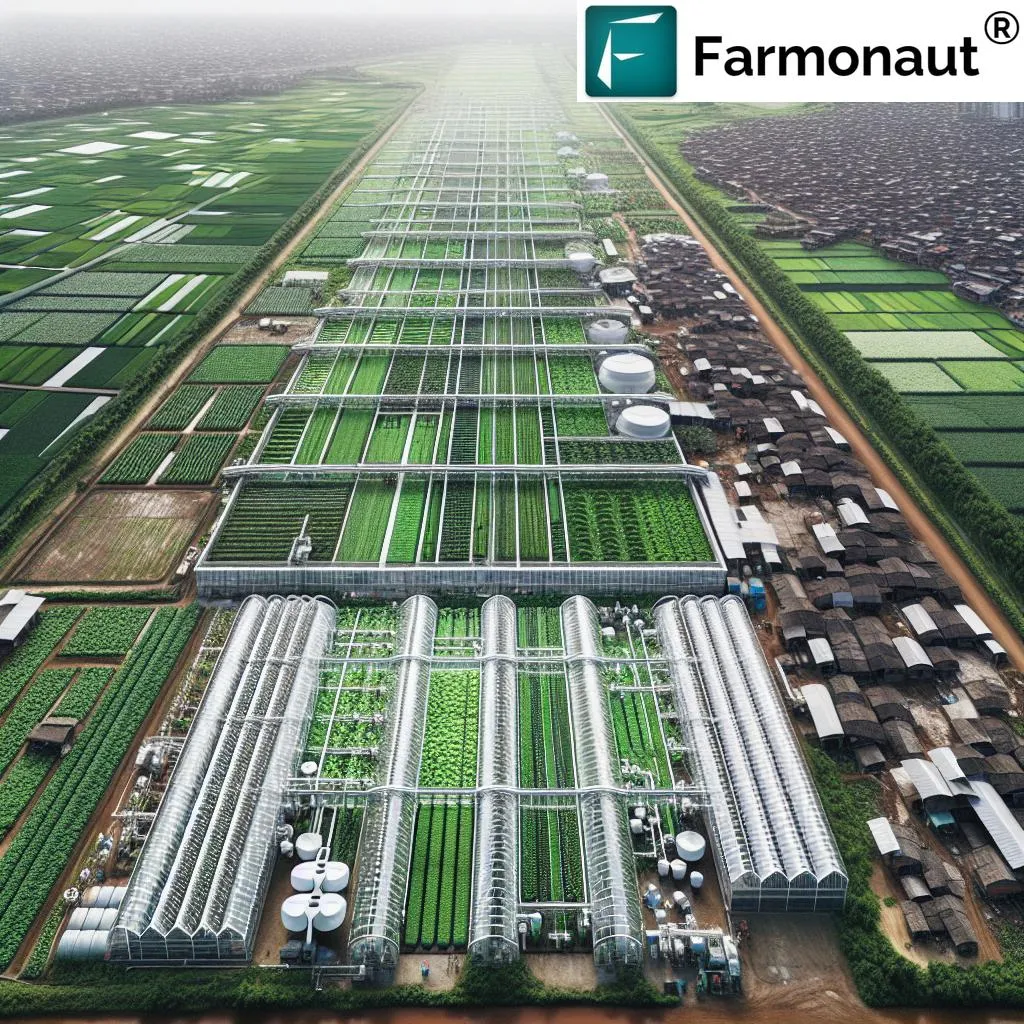
In the heart of Central China, a quiet revolution is taking place, not in the fields, but in the palm of farmers’ hands. A new Android-based decision support system, dubbed CNPDSS, is poised to transform how agricultural catchments manage non-point source nitrogen (N) and phosphorus (P) pollution. This innovation, developed by a team led by Meihui Wang from the State Key Laboratory of Earth System Numerical Modeling and Application at the Chinese Academy of Sciences, promises to strike a balance between cost-effectiveness and environmental protection, offering a beacon of hope for sustainable agriculture.
The CNPDSS is more than just an app; it’s a comprehensive tool that integrates a web-based geographic information system (GIS) with artificial intelligence-driven decision-making. It simplifies complex processes into intuitive actions, enabling non-professional users to operate it with ease. “The system uses straightforward empirical models to predict N&P loadings, avoiding excessive parameters and enhancing efficiency,” Wang explains. This simplicity is a game-changer, as it democratizes access to advanced pollution management strategies, empowering farmers and local communities to take charge of their environmental impact.
The system’s unique selling point lies in its ternary controlling strategy. It considers the entire journey of N&P through the catchment, from source reduction in farmland to process retention by ecological ditches, and finally, down-end purification by constructed wetlands. This holistic approach ensures that every stage of the pollution pathway is addressed, maximizing the effectiveness of intervention strategies.
But perhaps the most significant innovation is the use of a differential evolution algorithm (DEA) for dual-objective decision-making optimization. This algorithm allows the CNPDSS to propose cost-effective N&P control strategies tailored to specific sub-catchments. In a sector where every penny counts, this feature could be a lifeline for farmers grappling with the high costs of pollution management.
The potential commercial impacts for the agriculture sector are substantial. By minimizing N&P loadings and engineering costs, the CNPDSS could help farmers boost their bottom line while also enhancing their environmental stewardship. Moreover, the system’s adaptive design and flexible architecture mean it can be easily generalized and extended to support applications in other catchments, both in China and beyond.
The research, published in the Journal of Integrative Agriculture, demonstrates the feasibility of the CNPDSS through a case study in Central China. The results show that the system can develop cost-effective ternary N&P control strategies that meet the Chinese Surface Water Quality Standard GB3838-2002. This success story is a testament to the power of technology in driving sustainable agricultural practices.
As we look to the future, the CNPDSS could pave the way for a new era of precision agriculture. By harnessing the power of artificial intelligence and GIS, farmers can make data-driven decisions that optimize both their yields and their environmental impact. This research is a reminder that the future of agriculture is not just about growing more food; it’s about growing it smarter, cleaner, and more sustainably. And with tools like the CNPDSS, that future is already within reach.