
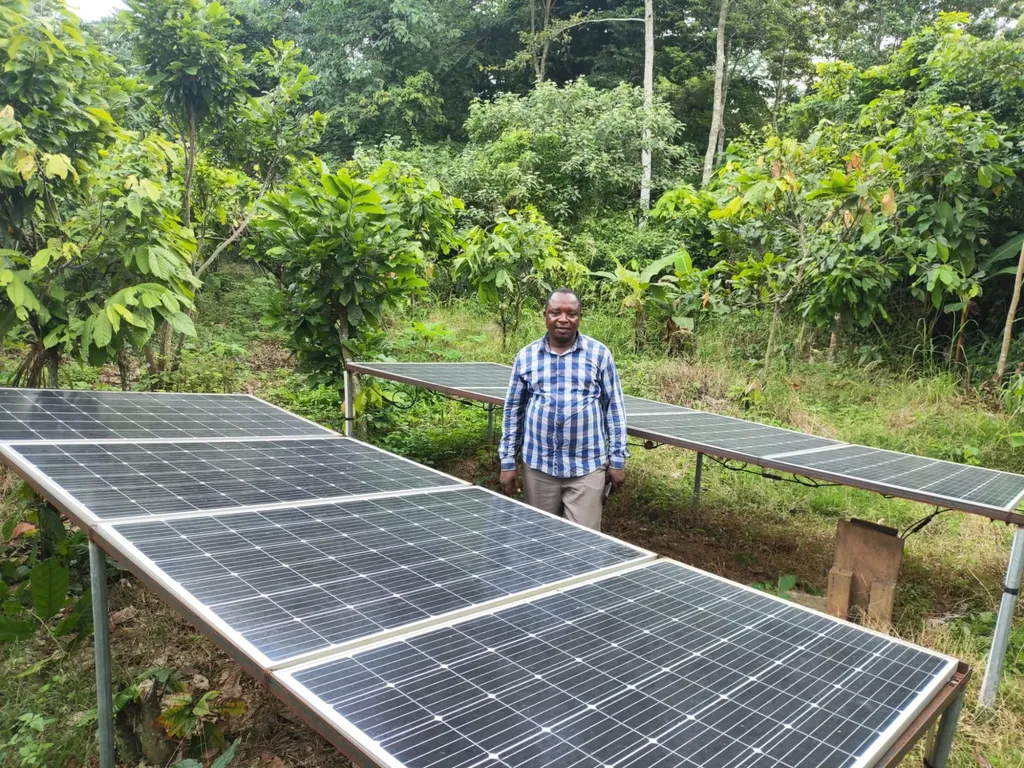
In the heart of Ghana’s cocoa belt, farmers are facing an uncertain future, with climate change disrupting weather patterns and threatening their livelihoods. A recent study published in *Agricultural Water Management* offers a glimmer of hope, revealing how solar-powered irrigation could help cocoa farmers adapt to these challenges, while also highlighting the need for tailored financial solutions to boost adoption.
The research, led by Kekeli Kofi Gbodji of the International Water Management Institute (IWMI) and the University of Nebraska, employed a discrete choice experiment to survey 550 cocoa farmers across seven regions. The goal was to understand their willingness to adopt solar-based irrigation systems, which can help secure water application and soil moisture in the face of erratic rainfall.
The findings were clear: farmers are most interested in longer-term loans to help them overcome the high upfront costs of solar irrigation systems. “Access to longer-term loans emerged as the most significant factor influencing farmers’ investment decisions,” Gbodji explained. This was followed by the appeal of cost reduction through group ownership and, lastly, the reduction of uncertainties associated with borehole drilling.
However, the study also revealed substantial heterogeneity in farmers’ preferences, based on factors like wealth, gender, farm access, cocoa farm size, and household size. This suggests that a one-size-fits-all approach to promoting solar irrigation investment is unlikely to be effective.
For the agriculture sector, these findings could have significant commercial implications. As climate change continues to disrupt traditional farming practices, the demand for innovative, sustainable solutions like solar irrigation is expected to grow. But to meet this demand, financial institutions and policymakers will need to develop targeted, flexible financing options that cater to the diverse needs of farmers.
The research also underscores the importance of considering the social and economic context of farming communities when designing climate adaptation strategies. “Our findings indicate that to promote climate-resilient and sustainable agriculture, policymakers should prioritize initiatives that alleviate financial constraints through longer-term loans,” Gbodji said.
As the agriculture sector grapples with the challenges posed by climate change, this study offers valuable insights into how solar irrigation could help cocoa farmers adapt. But it also serves as a reminder that for these technologies to reach their full potential, they must be accompanied by financial solutions that are as innovative and flexible as the technologies themselves.
In the coming years, we can expect to see more research in this area, as scientists and policymakers work to develop targeted strategies that promote the adoption of climate-resilient technologies. For now, the message is clear: to build a more sustainable and resilient agriculture sector, we must invest in innovative technologies and the financial solutions that make them accessible to all farmers.