
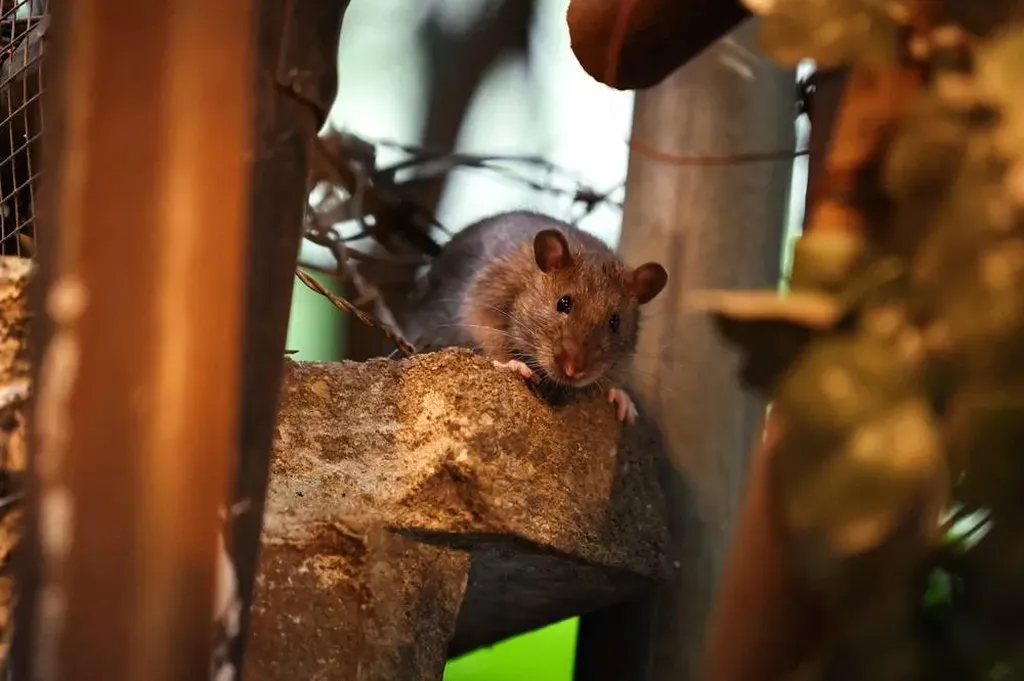
In the heart of Madrid, a silent battle is unfolding between city officials and an unlikely adversary: the brown rat. As these rodents scurry through the city’s underbelly, they’re not just a nuisance; they’re a potential threat to public health and agriculture. But what happens when the usual methods of control stop working? A recent study published in *Ecotoxicology and Environmental Safety* sheds light on this very issue, offering insights that could reshape rodent management strategies.
The study, led by Azucena Bermejo-Nogales from the Instituto Nacional de Investigación y Tecnología Agraria y Alimentaria (INIA-CSIC), delves into the world of anticoagulant rodenticides (ARs) and the mutations that make rats resistant to them. ARs work by inhibiting the enzyme vitamin K 2,3-epoxide reductase complex subunit 1 (VKORC1), causing death by internal bleeding. However, mutations in the Vkorc1 gene can confer resistance to these poisons.
Bermejo-Nogales and her team employed a novel sampling approach, dividing Madrid’s central core into a grid and collecting stool samples from alternating quadrants. They found that the Ser149Ile (S149I) mutation was more frequent in the south of the city, while the Glu155Lys (E155K) mutation, described for the first time in Spanish brown rats, was more prevalent in the north. Double mutants were found in the central area.
The team also conducted a geospatial study to relate population density, rat warnings, bromadiolone use, and trash production with Vkorc1 mutation frequency. While no statistically significant correlations were found, the higher mutation frequency appeared in areas with higher trash production. “This suggests that areas with more waste might be providing a more abundant food source, allowing rat populations to grow and potentially select for resistant individuals,” Bermejo-Nogales explained.
The study also included docking analysis to compare the effects of mutations on VKORC1 sensitivity to ARs. The results showed differences among genotypes in their binding affinities towards vitamin K and ARs. This information could be crucial for developing more effective rodent control strategies.
The implications of this research extend beyond Madrid. As Bermejo-Nogales noted, “Understanding the distribution of these mutations can help in the effective management of AR application, accounting for resistance evolution.” This is particularly important for the agriculture sector, where rats can cause significant damage to crops and stored food. By knowing where resistance is more likely to occur, farmers and pest control operators can tailor their strategies, potentially reducing costs and increasing efficiency.
The study also highlights the importance of continuous monitoring and research. As resistance evolves, so too must our methods of control. This research could pave the way for future developments in rodent management, including the potential for region-specific AR formulations or alternative control methods.
In the ongoing battle against rats, knowledge is power. And with this study, we’re one step closer to gaining the upper hand. As Bermejo-Nogales put it, “This is not just about controlling pests; it’s about protecting our food supply and public health.” And in that regard, every mutation matters.