
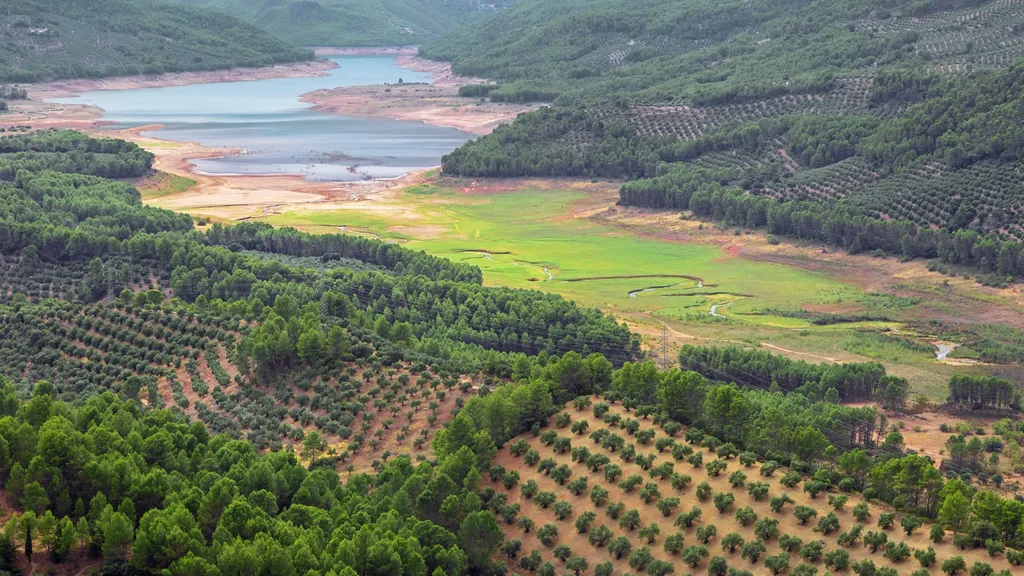
In the heart of eastern Spain, a quiet revolution is taking place in the world of olive farming. Researchers have developed a user-friendly decision support tool (DST) that promises to optimize irrigation scheduling, a critical factor in the face of water scarcity and climate variability. This innovation, published in *Agricultural Water Management*, could reshape the way smallholder growers manage their orchards, offering a beacon of hope in an increasingly unpredictable agricultural landscape.
The tool, designed by lead author L. Bonet from the Irrigation Advisory Service at the Valencian Institute for Agricultural Research (STR-IVIA), leverages a simplified, sensor-based balance model called the Soil-Atmosphere Adjusted Model (SAAM). This model adjusts irrigation volumes based on weekly variations in reference evapotranspiration (ET0) and relative soil water status (RWS) from capacitive soil moisture sensors. The tool delivers weekly irrigation recommendations via a mobile application, making it accessible and practical for smallholder growers who often lack the knowledge to use advanced irrigation technologies.
Field trials conducted during 2022 and 2023 in a commercial olive orchard demonstrated the tool’s effectiveness. The drought cycles implemented enabled the identification of optimal RWS boundaries, which were crucial for maintaining the health of the olive trees. “The SAAM algorithm not only reduced irrigation volumes by 11% compared to conventional methods but also maintained physiological parameters within non-limiting ranges,” Bonet explained. This reduction in water use is significant, especially in regions where water is a scarce resource.
The tool’s impact on commercial olive farming is substantial. By optimizing irrigation, growers can improve water productivity, which translates to better yields and more efficient use of resources. The study found no significant differences in olive or oil yields between treatments, indicating that the DST approach can maintain productivity while using less water. This is a game-changer for smallholder growers who often struggle with the dual challenges of water scarcity and economic constraints.
The modular architecture of the DST ensures robust, automated data acquisition, quality control, and real-time output via a user-friendly interface. This ease of use is critical for adoption by smallholder growers who may not have access to advanced technological expertise. “The tool’s simplicity and effectiveness make it a practical solution for farmers looking to adopt smart irrigation practices,” Bonet added.
The implications of this research extend beyond the olive orchards of Spain. As climate variability continues to threaten agricultural productivity worldwide, the need for smart irrigation solutions becomes increasingly urgent. The DST framework developed by Bonet and his team offers a scalable model that could be adapted for use in other crops and regions. This could lead to a broader adoption of smart irrigation technologies, ultimately contributing to global food security and sustainable water management.
In the face of climate change, innovations like this decision support tool are not just beneficial; they are essential. By providing growers with the tools they need to optimize water use, we can ensure that agriculture remains resilient and productive in the years to come. The research published in *Agricultural Water Management* by lead author L. Bonet from the Irrigation Advisory Service at the Valencian Institute for Agricultural Research (STR-IVIA) marks a significant step forward in this direction, offering hope and practical solutions for the future of farming.