
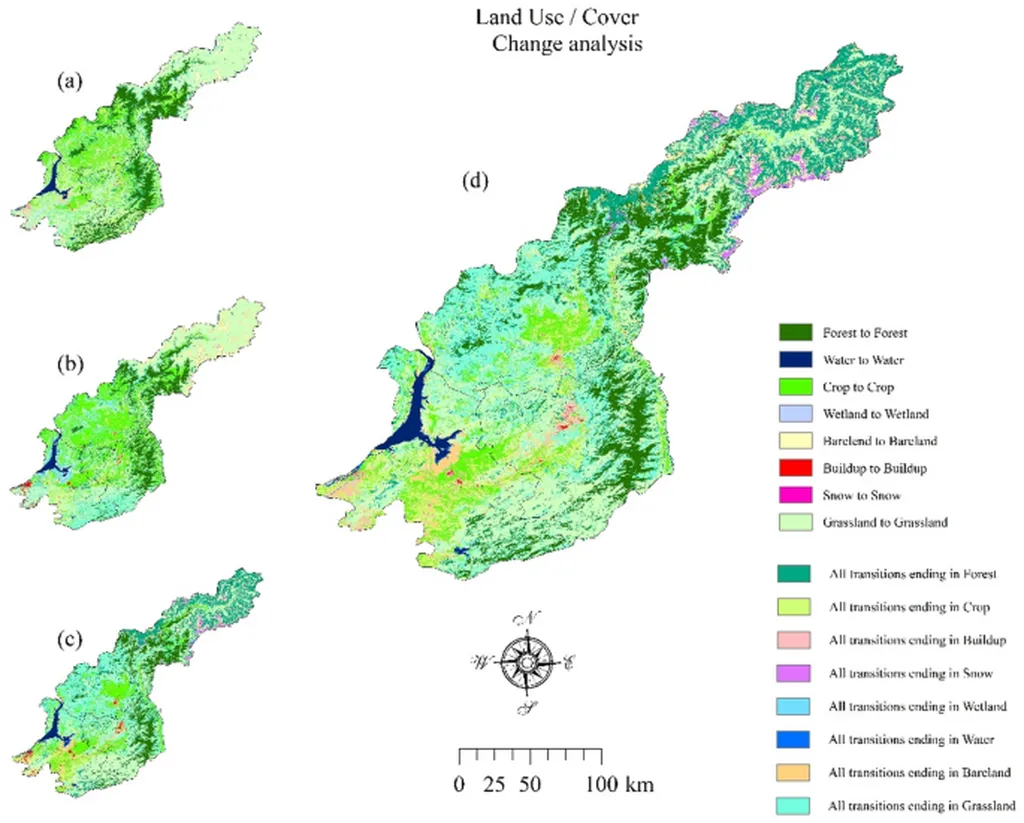
In the heart of the battle against climate change, a new study published in *Scientific Reports* sheds light on the intricate dance between urbanization, afforestation, and carbon sequestration. Led by Siyu Li from The Institute for Sustainable Development at Macau University of Science and Technology, the research offers a nuanced look at how land use and land cover (LULC) changes have shaped carbon storage dynamics over the past three decades.
The study, which spanned from 1993 to 2023, utilized advanced remote sensing techniques and the InVEST carbon model to quantify changes in carbon storage across various land types. The findings reveal a complex interplay between human activity and environmental outcomes. On one hand, afforestation efforts, particularly under the Billion Tree Tsunami (BTT) project, have significantly boosted carbon storage. Forest area increased by 54%, leading to a substantial rise in carbon storage from 19.821 million metric tons to 30.563 million metric tons.
“Afforestation has been a game-changer,” Li noted, highlighting the positive impact of large-scale tree-planting initiatives. However, the story is not all green. The study also documented a 13.8% decrease in cropland and a 19.48% decline in grassland, resulting in carbon storage losses of 1.772 million metric tons and 9.37 million metric tons, respectively. Urban expansion, marked by a staggering 1,585% increase in built-up areas, has further exacerbated the loss of carbon storage through the conversion of cropland and grassland.
For the agriculture sector, these findings underscore the need for a balanced approach to land use. While urbanization and infrastructure development are inevitable, the conversion of agricultural lands to urban areas comes at a cost—both in terms of carbon storage and potential agricultural productivity. The study suggests that integrating carbon sequestration goals into land-use planning could mitigate some of these impacts.
Spatial clustering and hotspot analyses revealed significant patterns influenced by afforestation efforts, highlighting the importance of strategic planning in carbon management. Moderate gains in wetlands and bare land carbon storage reflect the dynamic nature of regional LULC changes, offering a glimmer of hope amidst the challenges.
As we navigate the complexities of climate change mitigation, this research serves as a critical reminder of the interconnectedness of our actions and their environmental consequences. It calls for a holistic approach that balances urban growth, agricultural productivity, and carbon sequestration. By leveraging remote sensing, spatial analysis, and high-resolution mapping, we can better monitor and manage carbon storage, paving the way for more sustainable environmental planning and climate change mitigation strategies.
In the words of Li, “Understanding these dynamics is crucial for developing effective policies that can help us achieve our net-zero emissions goals while supporting sustainable development.” As we move forward, the insights from this study will undoubtedly shape future developments in the field, guiding us towards a more sustainable and resilient future.