
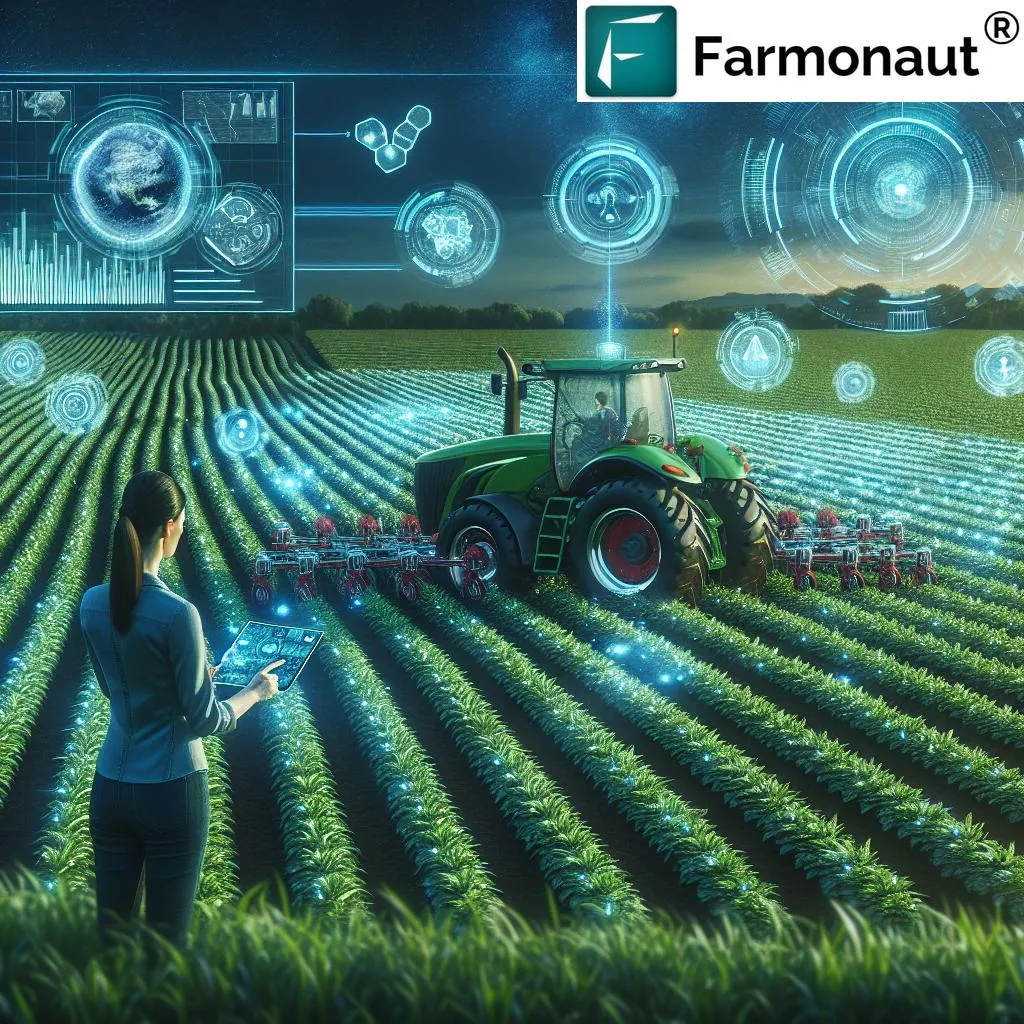
In the heart of the Amazon, where the dense rainforest meets the vast agricultural frontier, a technological revolution is quietly unfolding. Researchers are exploring how artificial intelligence (AI) could transform Rondônia’s agriculture, a sector grappling with challenges like land fragmentation and limited digital infrastructure. A recent study published in *Agro@mbiente On-line* sheds light on the potential of AI-driven innovations to boost productivity, enhance sustainability, and improve economic feasibility in this dynamic region.
The study, led by Leonardo Lopes Almeida from Centro Universitário Aparício Carvalho (FIMCA), conducted a comprehensive literature review following the PRISMA protocol. The research focused on AI applications mediated by drones, smart sensors, and predictive analysis systems in Rondônia’s agriculture. Despite the scarcity of empirical studies directly in Rondônia, the findings from other tropical contexts are promising. “Although few empirical studies have been carried out directly in Rondônia, evidence from other regions and tropical contexts indicates potential gains of up to 10 bags per hectare in grain production and reductions of up to 90% in pesticide use with AI-based solutions,” Almeida noted.
These potential gains are not just theoretical. The study suggests that AI could significantly enhance productivity in key crops such as coffee, cocoa, and soybeans. For instance, the use of drones equipped with AI algorithms can provide real-time data on crop health, enabling farmers to make informed decisions that optimize yields. Smart sensors can monitor soil moisture and nutrient levels, ensuring that crops receive the precise care they need. Predictive analysis systems can forecast weather patterns and pest outbreaks, allowing farmers to take preemptive measures.
The economic implications are substantial. According to the study, the return on investment for AI technologies can be realized within three harvests, depending on the scale of production. This is a game-changer for an industry that has long relied on traditional methods. However, the study also highlights the need for public policies and digital inclusion to ensure that small and medium-sized producers can access these technologies. “Small and medium-sized producers remain dependent on cooperatives and credit policies to enable access,” Almeida explained.
Beyond productivity, AI contributes to low-carbon agricultural practices and the mitigation of environmental impacts. By reducing the need for chemical inputs and optimizing resource use, AI-driven agriculture can help preserve the delicate ecosystems of the Amazon. This dual focus on economic and environmental sustainability is crucial for the long-term viability of Rondônia’s agriculture.
The study’s findings suggest that AI is not just a tool for efficiency but a catalyst for innovation. As the agricultural sector in Rondônia continues to evolve, the integration of AI technologies could pave the way for a more resilient and sustainable future. The research underscores the importance of continued investment in regional research and the development of supportive policies to harness the full potential of AI in agriculture.
As the world looks towards sustainable and technologically advanced agricultural practices, Rondônia stands at the forefront of this transformation. The insights from this study could shape future developments in the field, inspiring other regions to embrace AI-driven innovations. The journey towards a smarter, more sustainable agriculture is just beginning, and the lessons learned in Rondônia could illuminate the path forward for the global agricultural community.