
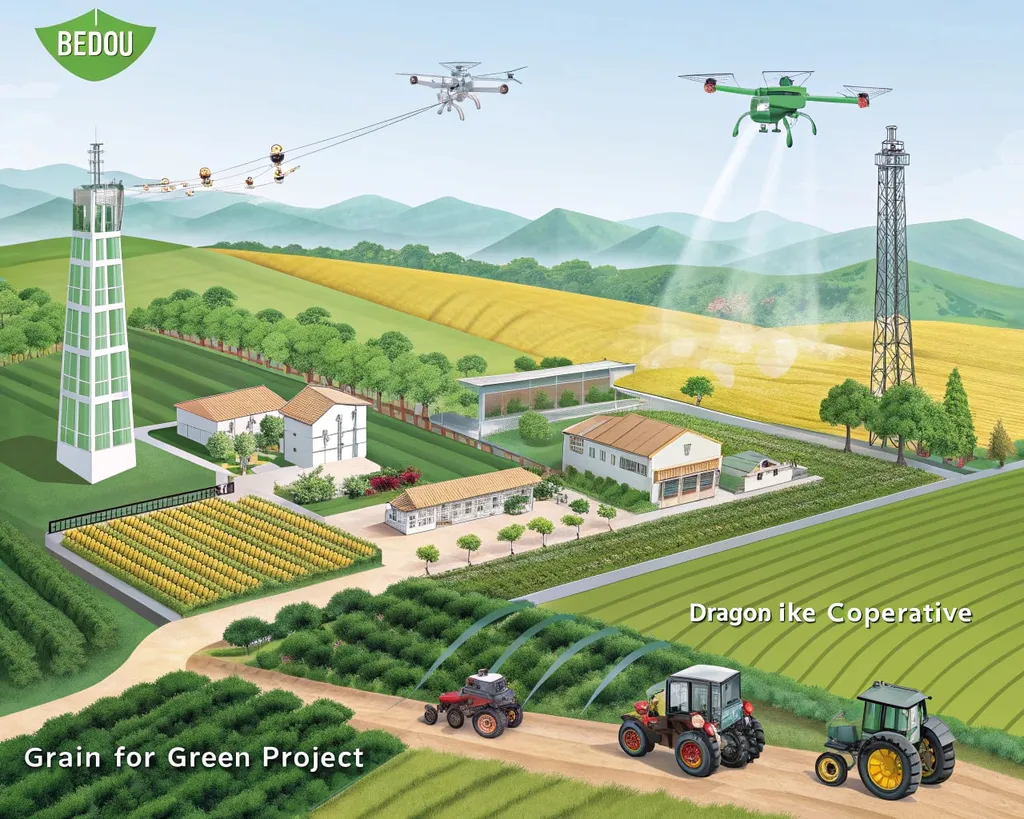
In a groundbreaking study published in *Scientific Reports*, researchers have unveiled the profound impact of digital transformation on the development of a strong agricultural sector in China. The research, led by Jijie Dong from the School of Marxism at China Agricultural University, systematically explores how agricultural digitization drives productivity and efficiency, offering critical insights for the global agriculture sector.
The study constructs a comprehensive evaluation system covering five key dimensions: digital infrastructure, technology applications, service platforms, talent cultivation, and policy environment. Using the entropy method, the researchers measured the level of agricultural digitization in various provinces of China from 2014 to 2023. The findings reveal a sustained growth trend in agricultural digitization across the eastern, central, and western regions, with the eastern provinces leading the way. “The level of agricultural digitization development is highest in the east, followed by the central region, and while the starting point is lower in the west, it also experiences annual increases,” noted Dong.
The research also employed the Constant Returns to Scale (CRS) model to evaluate fluctuations in overall agricultural productivity. The total factor productivity of agriculture increased from 1.031 in 2014 to 1.089 in 2023, indicating a significant enhancement in China’s agricultural production efficiency. “This indicates that after controlling for individual fixed effects, agricultural digitization has shown a strong driving effect on the level of building an agricultural powerhouse,” Dong explained.
One of the most striking findings is the regression coefficient of the core variable, which shows that for every 1 unit increase in the level of agricultural digital development index, the total factor productivity index of agriculture will significantly increase by 2.789 units. This coefficient is significant at the 1% level, highlighting the substantial impact of digitization on agricultural productivity.
The study’s implications for the agriculture sector are far-reaching. By encouraging digital advancement in agriculture from multiple dimensions, stakeholders can drive significant improvements in production efficiency and overall agricultural strength. “The impact of agricultural digitization exceeds core mediating variables such as agricultural production efficiency and agricultural technological innovation capability,” Dong emphasized.
The research also provides a theoretical basis for precise policy formulation, offering a systematic framework for measuring agricultural digitization and revealing its internal mechanisms. Future research directions include constructing comprehensive evaluation indicators for agricultural power that cover multiple dimensions such as economy, society, and ecology, and exploring more effective instrumental variables to address endogeneity challenges.
As the agriculture sector continues to evolve, this study underscores the critical role of digital transformation in shaping the future of agricultural development. By leveraging advanced technologies and data-driven approaches, stakeholders can unlock new opportunities for growth and innovation, ultimately contributing to a more robust and sustainable agricultural sector.