
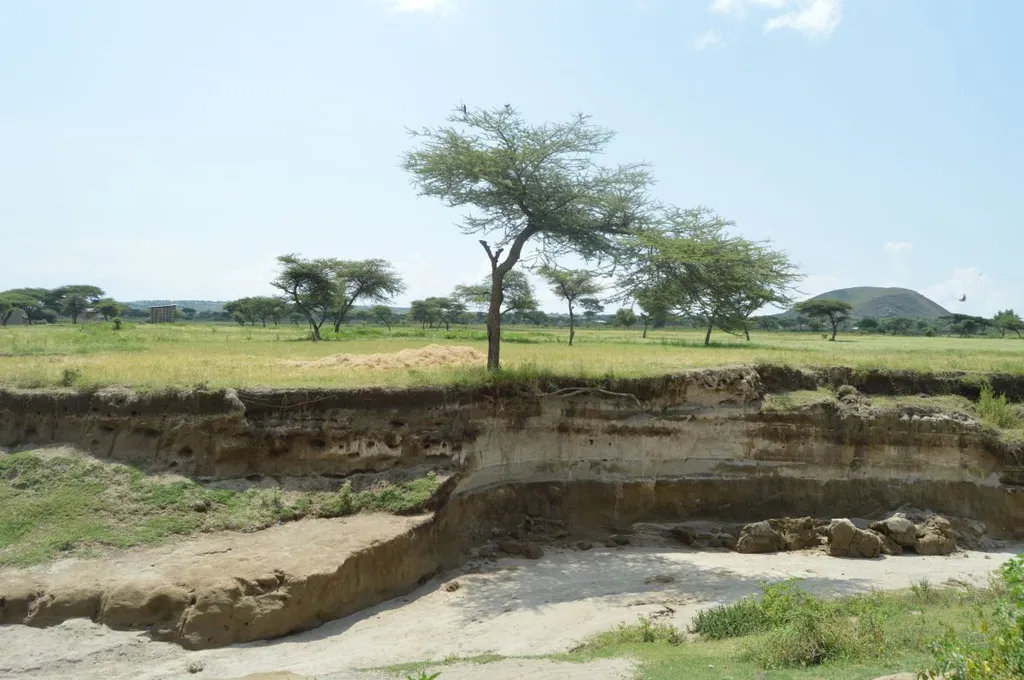
In the heart of Ethiopia, where the Haro, Upper Segen, and Turkute Rivers converge, a unique sediment-dammed lake has formed, offering a stark reminder of the delicate balance between nature and human activity. The Burji-Kelale Sediment-Dammed Lake, born from the confluence of these rivers, is now under threat due to severe soil erosion, a problem exacerbated by climate change, deforestation, and unsustainable agricultural practices. A recent study published in *Discover Geoscience* sheds light on the intricate dynamics of soil erosion and sedimentation in this region, providing crucial insights into the lake’s formation and its future sustainability.
The study, led by Yonas Hagos from the Department of Geology and Environmental Geosciences at the University of Dayton, employs the Revised Universal Soil Loss Equation (RUSLE) integrated with Geographic Information Systems (GIS) and remote sensing to analyze soil erosion patterns from 2002 to 2023. The findings reveal an average annual soil loss of 8.2 t ha−1 yr−1, with some areas experiencing maximum losses of up to 1694 t ha−1 yr−1. The watershed, in total, loses approximately 3.06 million tons of soil annually.
The study highlights a significant sedimentation event that occurred in 2012/13, which led to the formation of the sediment-dammed lake. “The accelerated erosion during this period resulted in excessive deposition, obstructing river flow and forming the lake,” explains Hagos. This event underscores the urgent need for effective erosion control strategies to mitigate the ongoing degradation of the lake and its surrounding watershed.
The implications of this research extend beyond environmental conservation, with significant commercial impacts for the agriculture sector. Soil erosion not only degrades the land but also reduces agricultural productivity, posing a threat to the livelihoods of local farmers. The study recommends a multi-faceted approach to address these challenges, including the implementation of interconnected pond systems, large-scale reforestation, and the integration of modern and Indigenous land management practices.
“By adopting these strategies, we can enhance ecosystem resilience and ensure the long-term sustainability of the Burji-Kelale Sediment-Dammed Lake and its surrounding watershed,” says Hagos. This research not only provides a comprehensive understanding of the current state of soil erosion and sedimentation in the region but also offers a roadmap for future developments in sustainable land management.
As the world grapples with the escalating impacts of climate change, studies like this one are crucial in informing policy decisions and guiding agricultural practices. The findings from this research could shape future developments in the field, promoting innovative solutions that balance ecological preservation with economic viability. By addressing the root causes of soil erosion and sedimentation, we can pave the way for a more sustainable future for both the environment and the agriculture sector.