
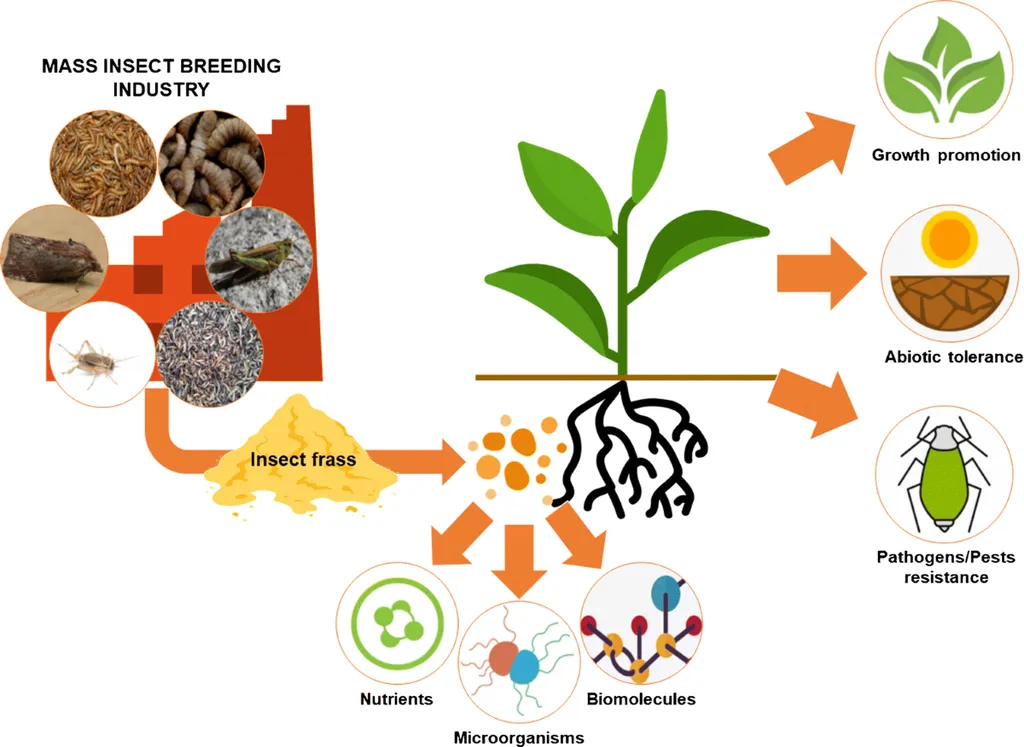
In the quest for sustainable agriculture, researchers have turned to an unlikely ally: mealworm frass. A recent study published in *Applied Biological Chemistry* has shed light on the potential of this novel biofertilizer to revolutionize the way we nourish our crops. The research, led by Phanumat Ainta from the Department of Plant and Soil Science at Chiang Mai University, delves into the nutrient profile and microbial composition of mealworm frass (MF), offering promising insights for the agriculture sector.
Modern agriculture is grappling with the environmental impacts and price volatility of synthetic fertilizers. Mealworm frass, a byproduct of mealworm farming, presents a sustainable alternative. “The uniform nutrient distribution and high organic matter content in mealworm frass make it an excellent candidate for biofertilization,” explains Ainta. The study found that MF contains essential nutrients like nitrogen, phosphorus, and potassium, with a low carbon-to-nitrogen ratio, indicating its potential to rapidly release nutrients for plant uptake.
The research team characterized the MF-associated microbiome, identifying several plant growth-promoting genera. These microbes, including Streptomyces and Microbacterium, contribute to nutrient mineralization and plant growth promotion through various mechanisms. “The presence of these beneficial microbes enhances the biofertilization potential of mealworm frass,” notes Ainta.
In greenhouse trials, the researchers evaluated the effects of MF on Chinese kale growth and yield. The results were promising: MF combined with 50% chemical fertilizer yielded the highest fresh weight and crop quality, outperforming chemical fertilizer and chicken manure alone. This suggests that MF could be a valuable component in integrated farming systems, reducing the reliance on synthetic fertilizers.
The commercial implications of this research are significant. As the agriculture sector seeks to adopt more sustainable practices, mealworm frass-based biofertilizers could emerge as a viable solution. “This study provides a mechanistic understanding of how mealworm frass can improve soil nutrient profiles and plant growth,” says Ainta. “Further scale-up studies are recommended to fully justify the use of MF biofertilizer as a substitute for chemical fertilizers towards circular economy and agricultural sustainability principles.”
The findings of this study could shape future developments in the field of biofertilization. As researchers continue to explore the potential of mealworm frass and other organic amendments, the agriculture sector may witness a shift towards more sustainable and circular practices. This research not only highlights the potential of mealworm frass as a biofertilizer but also underscores the importance of understanding the microbial mechanisms behind plant growth promotion. With further research and development, mealworm frass-based biofertilizers could play a pivotal role in the future of sustainable agriculture.