
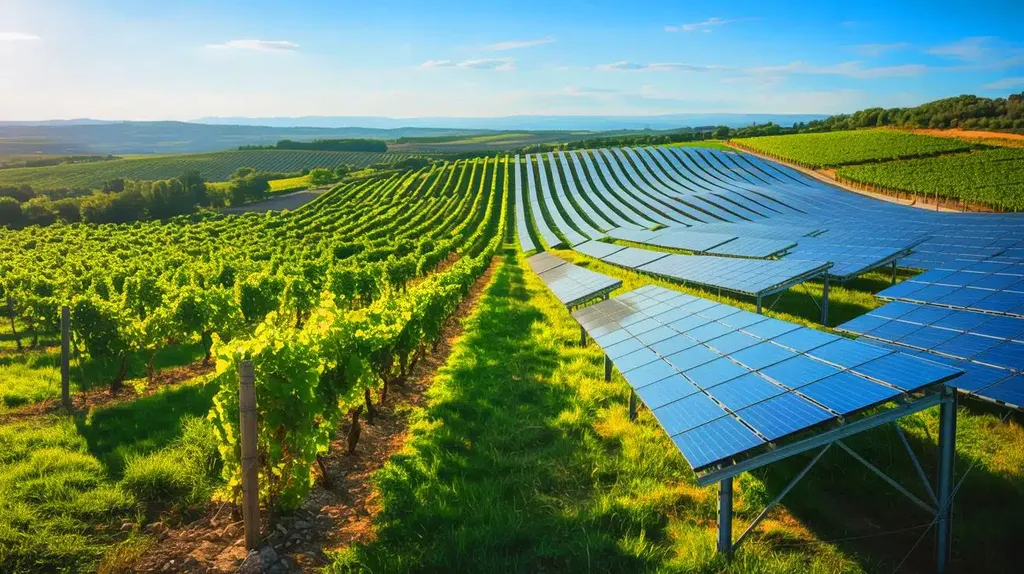
In the sun-drenched fields of the Mediterranean, a silent revolution is taking root, one that promises to merge the worlds of agriculture and renewable energy. Agrivoltaics (AV), a technology that combines photovoltaic panels with crop cultivation, is gaining traction as a sustainable solution for farmers. But how does this innovative approach interact with fertilizers, a cornerstone of modern agriculture? A recent study published in *npj Sustainable Agriculture* sheds light on this very question, offering insights that could reshape farming practices in the Mediterranean basin and beyond.
The study, led by Lia Rapella of the LMD-IPSL at Ecole Polytechnique, applied a regional AV model over the Iberian Peninsula from 1991 to 2020. Using the ORCHIDEE land surface model, the researchers explored the effects of AV under varying synthetic fertilizer scenarios. Their findings reveal a complex interplay between AV, crop productivity, and environmental impacts.
“AV can enhance productivity and reduce environmental costs, particularly in water-scarce conditions,” Rapella explains. This is a significant revelation for the agriculture sector, where water scarcity is a pressing concern. By integrating AV systems, farmers could potentially boost crop yields while conserving water, a double win for sustainability.
However, the study also highlights trade-offs that arise at critical fertilizer levels, which vary by crop type and climate. This nuance underscores the need for a region-specific strategy that considers local climate, crop responses, and environmental impacts. “A one-size-fits-all approach won’t work,” Rapella cautions. “We need tailored solutions that optimize the sustainability potential of AV for each region.”
The commercial implications of this research are substantial. For the agriculture sector, AV technology could open new avenues for sustainable farming, reducing reliance on synthetic fertilizers and mitigating their environmental impacts. This could translate into cost savings for farmers and a smaller environmental footprint for the industry.
Moreover, the integration of AV systems could create new revenue streams for farmers through the sale of clean energy. This dual-income model could make agriculture more resilient and profitable, especially in regions where water scarcity and climate change pose significant challenges.
The study also has broader implications for the renewable energy sector. As the world transitions to cleaner energy sources, AV offers a unique opportunity to co-locate energy production with agriculture. This could help alleviate land-use conflicts and promote more sustainable land management practices.
Looking ahead, this research could shape future developments in the field of agrivoltaics. By providing a comprehensive analysis of AV’s interaction with fertilizers, the study offers a roadmap for optimizing AV systems to maximize productivity and sustainability. It also highlights the need for further research to understand the long-term impacts of AV on soil health, biodiversity, and other ecological factors.
As the agriculture sector grapples with the challenges of climate change and resource scarcity, innovations like agrivoltaics offer a beacon of hope. By harnessing the power of the sun and integrating it with sustainable farming practices, farmers can not only boost their yields but also contribute to a greener, more sustainable future. And as Rapella’s research shows, the key to unlocking this potential lies in understanding the complex interplay between technology, climate, and crop responses.