
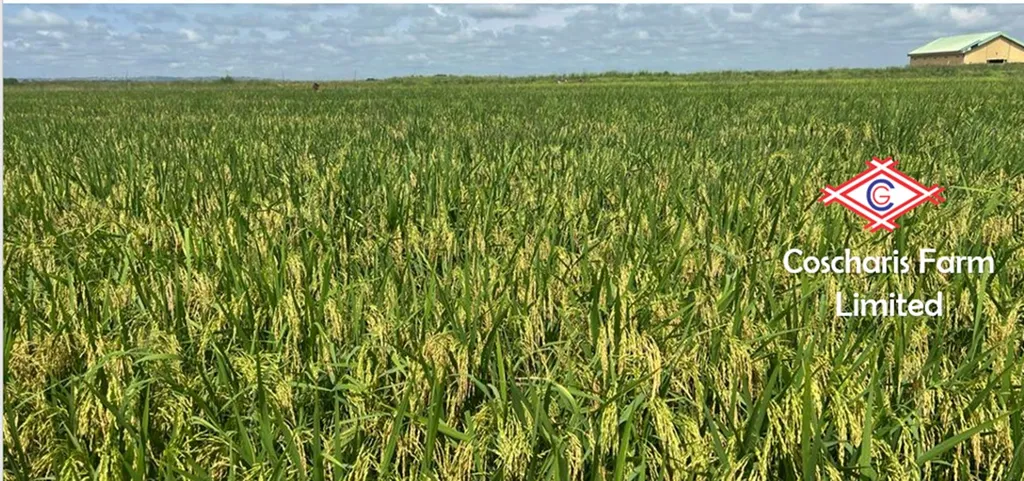
In the heart of Nigeria, researchers are cooking up a technological revolution for one of the world’s most vital crops: rice. A new study published in *Discover Internet of Things* introduces a blockchain-based precision farming framework that could reshape how we cultivate this staple food, offering a blueprint for secure, data-driven agriculture.
At the helm of this innovation is Zauwali Sabitu Paki, a computer scientist from Abubakar Tafawa Balewa University. His team has developed a system called RiceBlock, which integrates Internet of Things (IoT) sensors, blockchain technology, and deep learning to optimize rice farming. The framework collects real-time agricultural data, secures it using blockchain, and employs advanced analytics for yield prediction and decision-making.
The results are impressive. RiceBlock outperformed existing models in accuracy, boasting an R² value of 0.97 and a remarkably low Root Mean Square Error (RMSE) of 1.38. “This level of precision is a game-changer,” says Paki. “It allows farmers to make informed decisions, reduce waste, and ultimately increase their yields.”
The commercial implications for the agriculture sector are substantial. Precision agriculture has long promised to enhance efficiency, but data security and integrity have remained persistent challenges. By leveraging blockchain, RiceBlock ensures that the data collected from IoT sensors is tamper-proof, providing a reliable foundation for analytics. This could be particularly impactful in regions where data manipulation or cyber threats pose significant risks.
Beyond security, the framework’s deep learning model offers predictive insights that could transform farming practices. “Imagine a future where farmers can anticipate yield outcomes with near-perfect accuracy,” Paki muses. “This isn’t just about increasing production; it’s about sustainability. By optimizing resource use, we can mitigate the environmental impact of agriculture.”
The potential ripple effects of this research extend far beyond rice fields. The integration of blockchain and IoT in agriculture could set a precedent for other crops, fostering a new era of secure, data-driven farming. As the global population grows and climate change intensifies, such innovations will be crucial in ensuring food security.
Paki’s work, published in *Discover Internet of Things*, underscores the importance of interdisciplinary collaboration in addressing agricultural challenges. By combining computer science, agriculture, and environmental science, his team has created a framework that could redefine precision farming. As the world grapples with the complexities of sustainable agriculture, innovations like RiceBlock offer a beacon of hope, demonstrating how technology can be harnessed to feed the planet responsibly.