
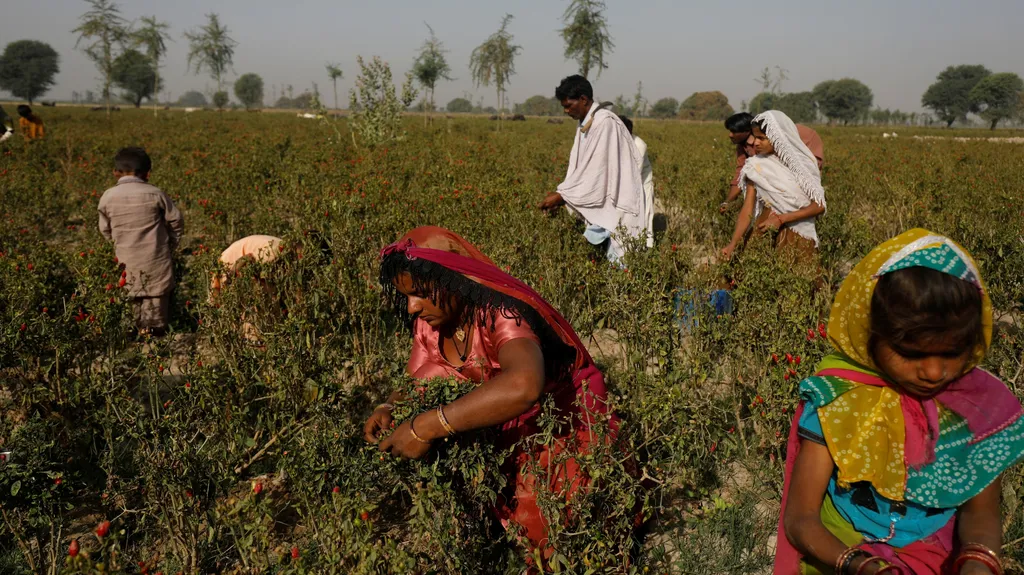
In the heart of Pakistan’s agricultural landscape, a silent exodus is underway. Smallholder farmers, the backbone of the country’s food production, are leaving their lands not by choice, but under mounting structural pressures. A groundbreaking study published in *Agricultural and Food Economics* has shed light on this phenomenon, using an innovative blend of machine learning and econometric analysis to uncover the key drivers behind this trend.
The research, led by Ghazi Abbas from the School of Economics and Management at Dalian University of Technology, analyzed data from 500 current and former farmers. The team employed CatBoost, a powerful machine learning algorithm, to identify seven critical factors associated with farmers’ exit from agriculture. “We wanted to understand the underlying mechanisms pushing smallholders out of farming,” Abbas explained. “Our goal was to provide a data-driven, interpretable tool to inform policy and practice.”
The study revealed that reliance on credit, high debt, distant markets, and natural hazards significantly increase the likelihood of farmers exiting agriculture. Conversely, larger landholdings, non-farming income, and livestock ownership act as protective factors. “It’s not just about the size of the land,” Abbas noted. “Diversified income sources and access to markets play a crucial role in farmers’ decisions.”
The commercial implications of these findings are substantial. For one, they highlight the urgent need for financial institutions to reconsider their lending practices. As the study shows, reliance on credit is a significant push factor for exit. By offering more favorable terms or alternative financial products, banks could help alleviate this pressure. “There’s a real opportunity here for financial services to innovate and support smallholders,” Abbas suggested.
Moreover, the findings underscore the importance of market access. Farmers located far from markets are more likely to exit, suggesting that investments in infrastructure could help retain these vital producers. “Improving market access isn’t just about building roads,” Abbas said. “It’s about creating efficient, inclusive value chains that benefit smallholders.”
The study also offers a roadmap for future research and policy interventions. By framing agricultural exit as a form of structural exclusion, it calls for a more holistic approach to rural development. This could include faith-sensitive financial products, as religious constraints were found to influence farmers’ financial decisions.
The use of machine learning in this context is particularly noteworthy. By making the model interpretable through SHapley Additive Explanations (SHAP) analysis, the researchers have provided a transparent, scalable tool for understanding and addressing agricultural exit. “We believe this approach can be applied in other contexts,” Abbas said. “It’s a powerful way to uncover complex social and economic dynamics.”
As Pakistan’s agricultural sector continues to evolve, this research offers a timely reminder of the structural challenges facing smallholder farmers. By leveraging data and innovative analytical tools, we can begin to address these challenges and ensure a more inclusive, sustainable future for all.