
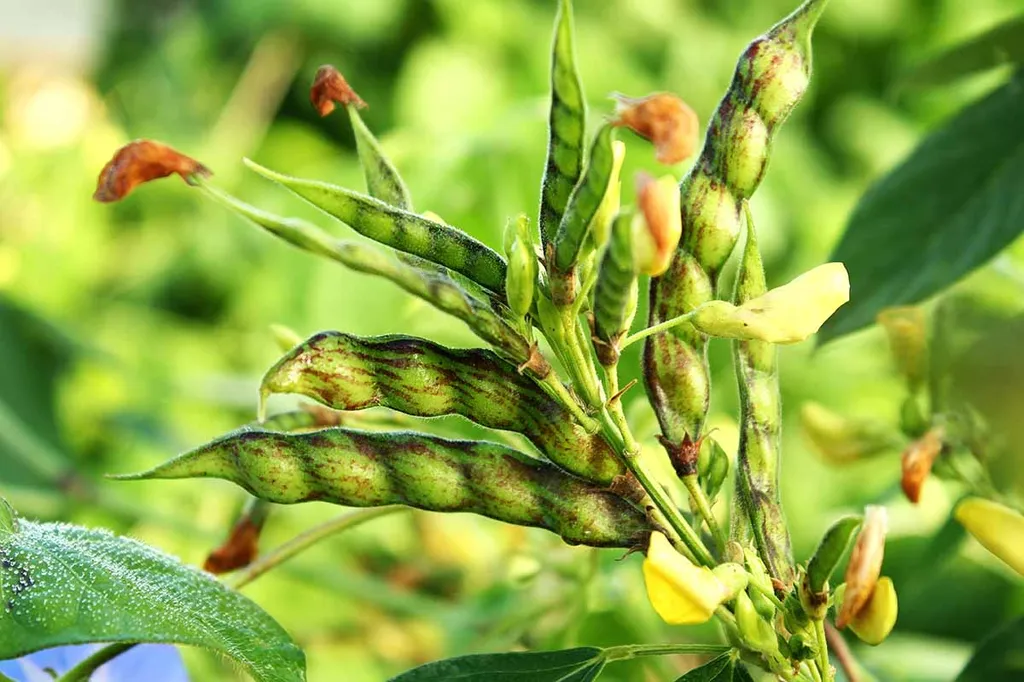
In the quest for sustainable agricultural practices, a recent study published in *Heliyon* has shed light on the potential of green manure to boost the growth and essential oil production of marjoram (*Origanum majorana* L.). The research, led by Jandeilson Pereira dos Santos from the Department of Agriculture/Phytochemistry Laboratory at the Federal University of Lavras, Brazil, explores the use of *Cajanus cajan* (pigeon pea) as a green manure, offering a promising alternative to traditional animal manure and inorganic fertilizers.
The study, conducted in a randomized block design, evaluated various doses of *C. cajan* as green manure against a control treatment and an inorganic fertilizer. The results were striking. All doses of pigeon pea green manure promoted greater dry matter accumulation in marjoram compared to the control. Notably, a 600 g plant−1 dose of *C. cajan* led to significant increases in dry matter accumulation in the leaves, stem, and shoot parts of marjoram by 338%, 555%, and 414%, respectively.
“This study demonstrates that green manure can be a game-changer for sustainable agriculture,” said dos Santos. “The use of *C. cajan* not only enhances the vegetative growth of marjoram but also improves the quality and yield of essential oils, which are highly valuable in the essential oil industry.”
The research also revealed that a 450 g plant−1 dose of *C. cajan* resulted in a 14% and 18% increase in total chlorophyll content compared to the 150 g plant−1 dose and the control, respectively. This suggests that green manure can enhance the photosynthetic efficiency of plants, leading to better growth and yield.
One of the most significant findings was the impact of green manure on the essential oil (EO) yield. The 600 g plant−1 dose of *C. cajan* and the inorganic fertilizer both led to a substantial increase in EO yield, reaching 0.050 and 0.056 mg plant−1, respectively. This represents an increase of 406% and 471% compared to the control. The study also identified α-terpineol as the major compound in the essential oil, with higher concentrations found in plants treated with the highest dose of green manure.
The commercial implications of this research are profound. The essential oil industry, which relies heavily on the production of aromatic plants like marjoram, stands to benefit significantly from the adoption of green manure practices. Enhanced growth and essential oil yield can lead to increased profitability for farmers and a more sustainable supply chain for the industry.
Moreover, the study highlights the potential of *C. cajan* as a fundamental green manure strategy for the sustainable production of aromatic plants. This could pave the way for similar research on other crops, potentially revolutionizing agricultural practices worldwide.
As the global push for sustainable agriculture intensifies, this research offers a promising avenue for farmers and agritech innovators. By embracing green manure practices, the agriculture sector can enhance productivity while minimizing environmental impact, ultimately contributing to a more sustainable future.
The study, published in *Heliyon* and led by Jandeilson Pereira dos Santos from the Federal University of Lavras, Brazil, provides a compelling case for the adoption of green manure in sustainable agricultural practices. Its findings could shape future developments in the field, offering new opportunities for growth and innovation in the essential oil industry and beyond.