
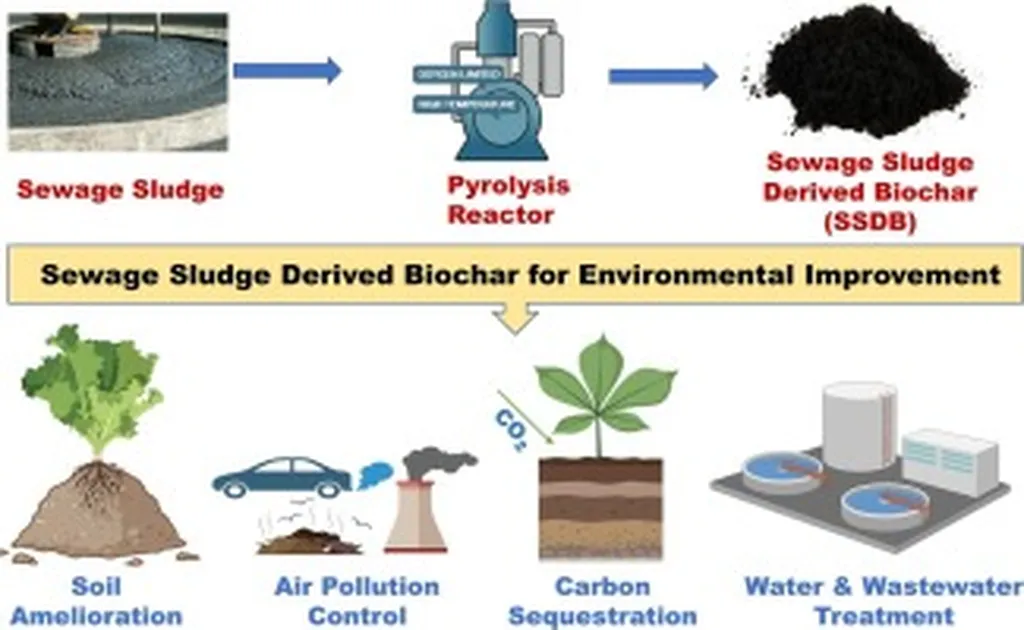
In the quest for sustainable agriculture, researchers are turning to an unconventional yet promising resource: sewage sludge. A recent study published in *Current Research in Environmental Sustainability* sheds light on the evolving landscape of sewage sludge application for soil carbon sequestration, offering insights that could reshape agricultural practices and environmental policies.
The study, led by Haotian Chen from the Institute of Crop Sciences at the Chinese Academy of Agricultural Sciences, conducted a comprehensive bibliometric analysis of 3,794 articles spanning from 1991 to 2024. The findings reveal a significant shift in research focus post-2010, with China, the United States, and Spain emerging as key contributors to the field.
“Our analysis highlights the exponential growth in research on sewage sludge application, reflecting its increasing relevance in sustainable agriculture,” Chen noted. The study identified three dominant thematic clusters: sludge stabilization and soil property improvement, contaminant risk and remediation strategies, and soil organic carbon (SOC) dynamics and sequestration mechanisms.
The potential of composted and pyrolyzed sludge in enhancing SOC while mitigating ecological risks has been underscored by highly cited studies. However, the research also points out critical gaps, particularly the lack of long-term field trials under realistic agronomic conditions.
For the agriculture sector, these findings present both opportunities and challenges. The use of sewage sludge as a soil amendment could enhance soil fertility and promote carbon sequestration, potentially leading to more sustainable and productive farming practices. However, the presence of pollutants in sewage sludge poses environmental risks that must be carefully managed.
“Future research should address methodological limitations and strengthen interdisciplinary integration to balance SOC sequestration goals with environmental safety,” Chen emphasized. This call to action underscores the need for collaborative efforts among researchers, policymakers, and agricultural practitioners to harness the benefits of sewage sludge while minimizing its risks.
As the agriculture sector grapples with the dual imperatives of productivity and sustainability, the insights from this study could pave the way for innovative solutions. By integrating sewage sludge into agricultural practices, farmers could enhance soil health and carbon sequestration, contributing to a more resilient and sustainable food system.
The study’s findings also highlight the importance of long-term field trials and interdisciplinary research in advancing our understanding of sewage sludge application. As the global agricultural community seeks to adopt more sustainable practices, the insights from this research could play a pivotal role in shaping future developments in the field.
In the words of Haotian Chen, “The future of sustainable agriculture lies in our ability to innovate and adapt, and sewage sludge application offers a promising pathway towards achieving our goals.”