
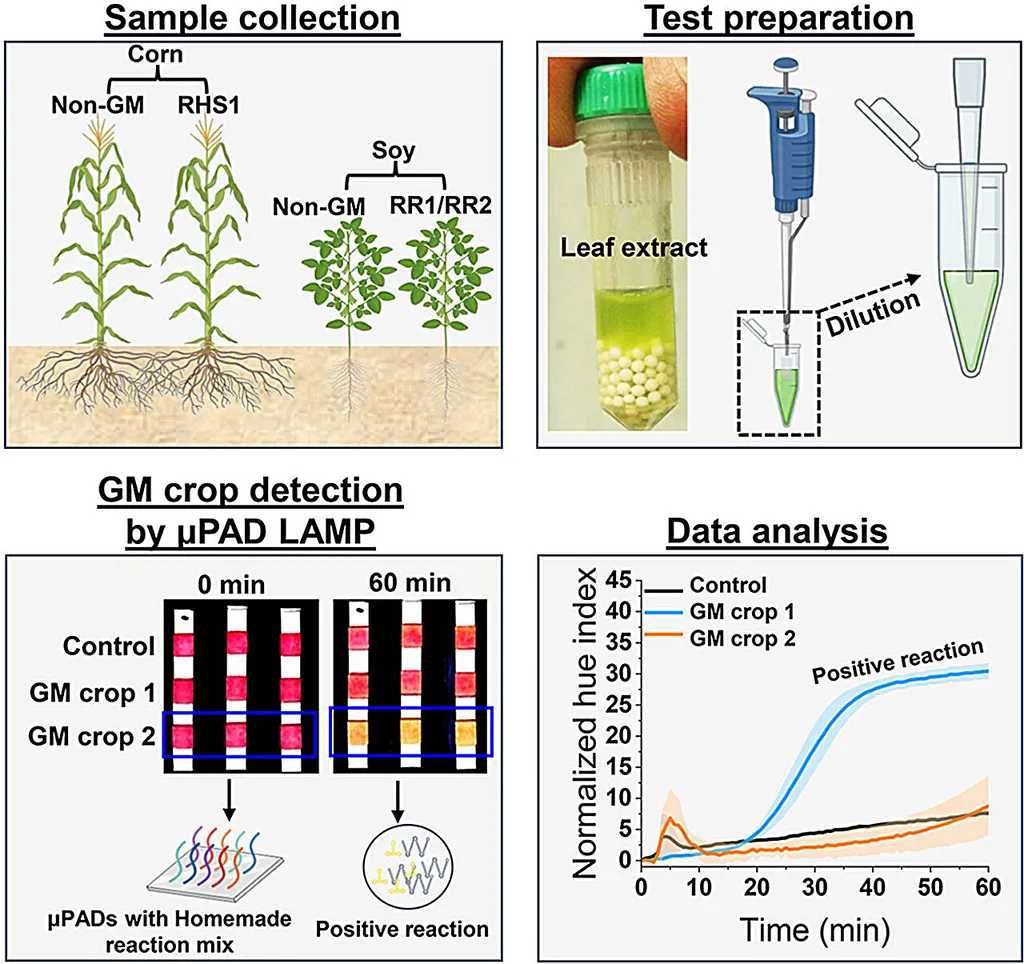
In the heart of Bihar, India, a quiet revolution is brewing in the fields of sustainable agriculture. Sneha Shikha, a researcher at Bihar Agricultural University, is at the forefront of this change, exploring how biosensing technology could transform the way farmers detect and manage plant diseases. Her recent study, published in *Frontiers in Bioengineering and Biotechnology*, sheds light on the potential of biosensors to revolutionize plant pathogen detection, offering a faster, more cost-effective, and environmentally friendly approach to crop protection.
Plant pathogens—ranging from fungi to viruses—pose a significant threat to global food security. Traditional detection methods, such as PCR and ELISA, are reliable but often require lab settings, specialized equipment, and time-consuming processes. These limitations can delay critical interventions, leading to crop losses and increased chemical usage. Shikha’s research highlights how biosensors could bridge this gap by providing real-time, on-site detection of pathogens at very low concentrations, often before symptoms become visible to the naked eye.
Biosensors work by integrating bioreceptors—such as antibodies, enzymes, or DNA probes—with transducers that convert biological interactions into measurable signals. These signals can be detected through electrochemical, optical, or piezoelectric means, depending on the design. Recent innovations, such as nanomaterial-enhanced platforms and CRISPR-based biosensors, have further improved their sensitivity, portability, and ease of use. “The integration of nanotechnology and microfluidics has been a game-changer,” Shikha explains. “These advancements allow for highly sensitive detection in compact, field-deployable devices, making them accessible even to smallholder farmers.”
One of the most exciting aspects of this research is its potential to integrate with digital agriculture tools. By coupling biosensing with artificial intelligence (AI) and the Internet of Things (IoT), farmers could gain predictive insights into disease outbreaks, enabling precision agriculture practices. This could lead to targeted applications of pesticides, reduced chemical dependency, and ultimately, more sustainable farming practices. “Imagine a future where sensors in the field continuously monitor crop health and alert farmers to potential threats before they escalate,” Shikha envisions. “This could drastically reduce yield losses and minimize the environmental impact of agriculture.”
However, challenges remain. Ensuring long-term stability, affordability, and scalability—especially for smallholder farmers—is crucial for widespread adoption. Addressing these gaps will require collaboration between researchers, policymakers, and industry stakeholders. “We need to make sure these technologies are not just innovative but also practical and accessible,” Shikha emphasizes. “Only then can they truly make a difference in sustainable agriculture.”
The commercial implications of this research are vast. For the agriculture sector, biosensing technology could lead to significant cost savings by reducing crop losses and optimizing resource use. It could also open new markets for agri-tech companies developing and distributing these devices. As the global push for sustainable agriculture intensifies, biosensors could become a cornerstone of modern farming, helping to secure food supplies while protecting the environment.
Shikha’s work at Bihar Agricultural University is a testament to the power of innovation in addressing real-world challenges. As biosensing technology continues to evolve, it holds the promise of reshaping plant disease management, minimizing chemical dependency, and strengthening climate-resilient agriculture. The future of farming may well lie in the hands of these tiny, yet mighty, sensors.