
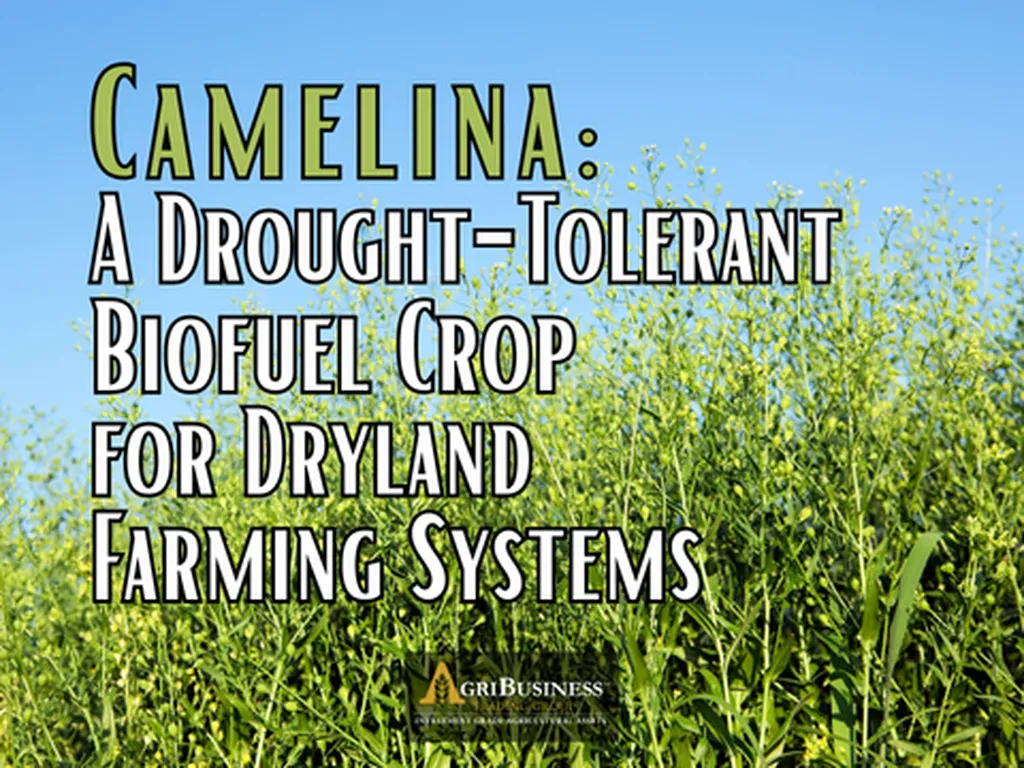
In the face of a warming world, farmers and researchers are turning to resilient crops that can withstand the pressures of climate change. Among these, camelina (Camelina sativa) is emerging as a promising candidate, thanks to its ability to thrive under elevated CO₂ levels and fluctuating temperatures. A recent review published in *Ratarstvo i Povrtarstvo* sheds light on how this hardy oilseed crop responds to these environmental shifts, offering insights that could reshape agricultural practices and biofuel production.
Camelina’s resilience lies in its ability to adapt to higher CO₂ levels, which boost photosynthesis, biomass accumulation, and water-use efficiency. However, these benefits come with trade-offs. Elevated CO₂ can alter carbon allocation within the plant and even downregulate Rubisco activity, the enzyme crucial for photosynthesis. “The response varies by genotype, which means some varieties may handle these changes better than others,” explains lead author Manore Daniel of Wachemo University in Ethiopia. This genetic variability could be key to breeding more resilient strains.
But the story doesn’t end with CO₂. Rising temperatures pose a significant threat, impairing photosynthesis, accelerating respiration, and disrupting reproductive processes. In extreme cases, yields can drop by up to 84.5%, and the composition of the oil camelina produces can change. Elevated CO₂ can partially mitigate some of these effects by expanding the optimal temperature range for photosynthesis, but the combined stressors often lead to intensified yield losses.
Nutrient uptake is another critical factor. While elevated CO₂ enhances nitrogen assimilation, it may reduce the availability of phosphorus and other micronutrients, potentially impacting plant health and productivity. These findings highlight the complex interplay between environmental factors and plant physiology, underscoring the need for tailored adaptation strategies.
So, what does this mean for the agriculture sector? The research suggests that breeding for stress tolerance, adjusting planting schedules, and implementing precision irrigation and nutrient management could help farmers maximize camelina’s potential. Emerging technologies like high-throughput phenotyping and artificial intelligence could accelerate the identification of resilient genotypes, paving the way for more sustainable biofuel and oilseed production.
As climate change continues to reshape the agricultural landscape, crops like camelina offer a glimmer of hope. By understanding and leveraging its physiological responses to elevated CO₂ and temperature, researchers and farmers can work together to ensure food and energy security in an uncertain future. The review, led by Manore Daniel and published in *Ratarstvo i Povrtarstvo*, provides a crucial foundation for these efforts, highlighting the need for coordinated, multidisciplinary approaches to sustainably advance camelina as a climate-resilient crop.