
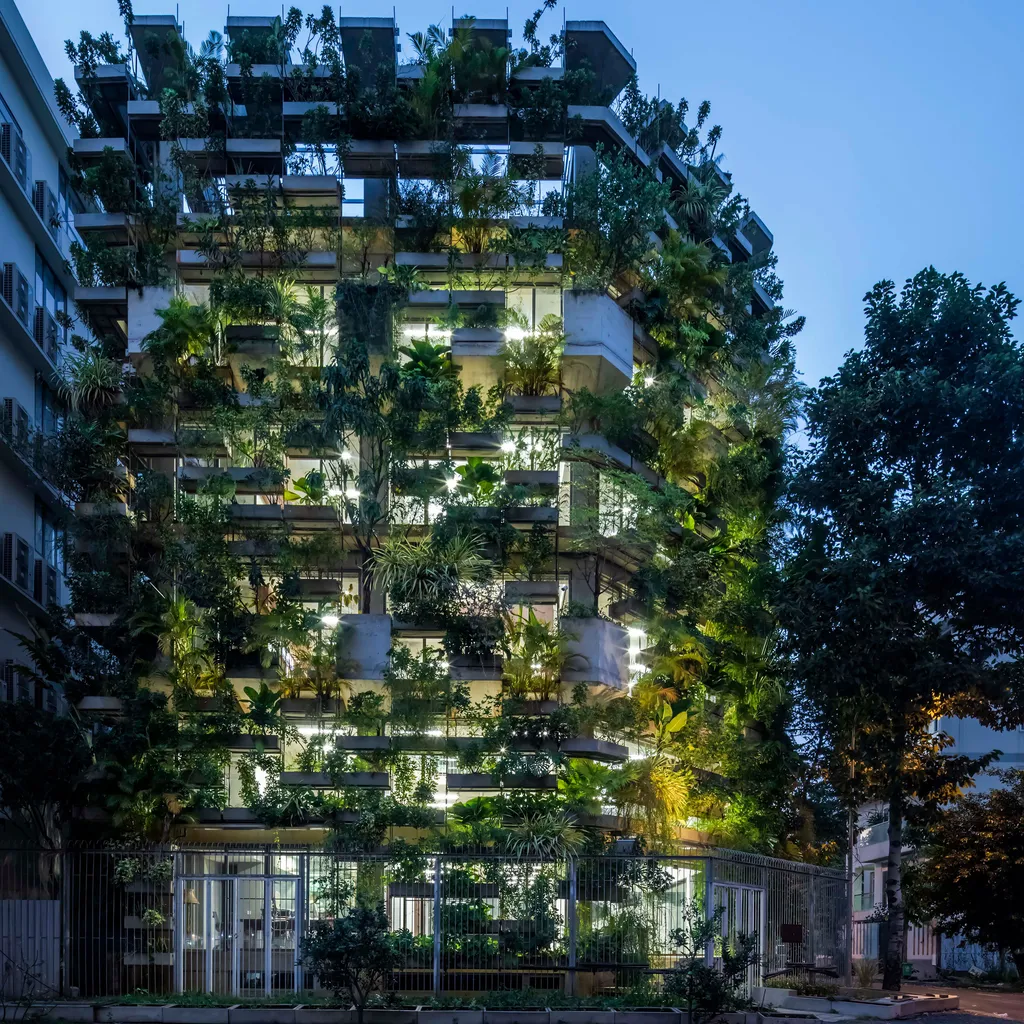
In a recent workshop titled “Urban Agriculture—The Future of Farming within the City, Innovating for Sustainable Development,” urban planners and agricultural experts convened to discuss the pressing need for innovative farming practices within Ho Chi Minh City. Organized by the Ho Chi Minh City People’s Committee, the event highlighted the city’s rapid urban, industrial, and service-sector growth, which has led to shrinking land availability. Experts emphasized the necessity for specific policies to encourage farmers and cooperatives to transition crops and adopt new technologies.
The workshop showcased several successful models of urban agriculture in Ho Chi Minh City. One notable example is the 12-hectare organic vegetable farm of Nhat Thong Agriculture Co., Ltd. in Nha Be Commune, situated amidst a densely populated residential area. Mr. Pham Huu Thoi, the company’s director, highlighted the farm’s proximity to the city’s largest consumer market, allowing products to be sold immediately after harvest and maintaining optimal quality. “We developed this organic agricultural park so that Ho Chi Minh City residents can reconnect with nature without traveling far. Land in the city is limited, and costs are high, but I believe every urban area needs a clean agricultural buffer zone,” he said.
Another success story is the Tuan Ngoc Agricultural Cooperative in Long Truong Ward, which has adopted a high-tech agricultural model. Founded in 2017 with an area of less than 1,000 square meters and seven members, the cooperative has expanded over eight years to operate three farms in Ho Chi Minh City, totaling 9,000 square meters. The cooperative has also begun expanding into neighboring localities, including Dong Nai and Lam Dong. Their hydroponic vegetables are grown in greenhouse environments, with humidity, temperature, and light levels fully controlled through automated systems. The cooperative has made significant investments in digital transformation, including electronic logbooks, greenhouse monitoring systems, and order management platforms.
At the Nong Phat cantaloupe farm in Dong Thanh Commune, high-tech agricultural methods are used to cultivate cantaloupes in greenhouses, with each plant grown in an individual pot. Walkways are covered with mats to prevent weeds and protect the plants from soil and sand splashing. Mr. Trang Quoc Dung, the farm owner, noted that the cantaloupes are in high demand by major domestic supermarkets and are also exported, generating hundreds of millions of VND in profit per hectare.
Dr. To Thi Thuy Trang of the Ho Chi Minh City Institute for Development Studies emphasized that the development of modern, sustainable urban agriculture leveraging high-tech and biotechnology methods is an inevitable direction for Ho Chi Minh City, given its limited agricultural land. The city possesses distinct advantages for urban agriculture, including easy access to skilled labor and investment capital, as well as a large consumer market with strong demand for clean, high-quality agricultural products.
However, establishing high-tech agricultural farms requires substantial investment. Mr. Lam Ngoc Tuan, Director of Tuan Ngoc Agricultural Cooperative, noted that a high-tech greenhouse costs around VND1 billion (US$37,932), while the available support loan for each member is only about VND100 million (US$3,793). He expressed the hope that mechanisms to support land access for high-tech agriculture in Ho Chi Minh City will be implemented soon, rather than forcing cooperatives to seek production land in other provinces.
Architect Ngo Anh Vu, M.Sc., of the Ho Chi Minh City Institute for Urban Planning and Construction, emphasized the need to swiftly establish and refine mechanisms and incentive policies for urban agriculture at multiple levels. The key focus should be operating according to circular economy principles, optimizing land use, and minimizing environmental pollution.
Deputy Director of the Ho Chi Minh City Department of Agriculture and Environment, Vo Thanh Giau, stated that as the city expands its urban space and develops key economic and service sectors, agriculture is also undergoing a strong transformation toward modern, high-tech, and multi-value production. Ho Chi Minh City currently has more than 2,300 organizations and individuals certified under VietGAP, covering nearly 4,800 hectares of cultivated land. In terms of organic agriculture, the city has seven facilities certified to meet national standards, totaling 4.59 hectares.
To achieve further progress, the department has proposed that the city address existing obstacles and difficulties, enabling businesses and cooperatives to access capital and scientific-technical support, thereby fostering investment in sustainable agricultural production.
Speaking at the workshop, Vice Chairman of the Ho Chi Minh City People’s Committee, Bui Minh Thanh, emphasized that the city’s agricultural development must be built on a foundation of science, technology, and innovation, particularly in biotechnology, automation, artificial intelligence (AI), big data, and traceability systems. The city plans to