
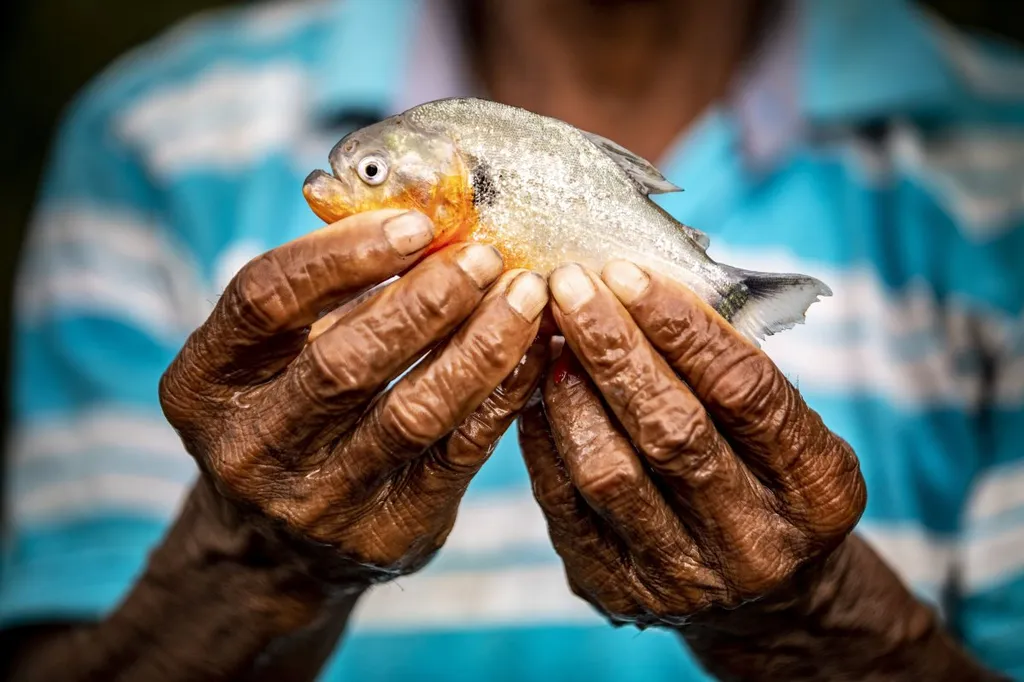
In the vast and varied freshwater ecosystems of the United States, a silent shift is underway, one that could reshape the future of biodiversity and, consequently, the agricultural sector. A recent study published in *Basic and Applied Ecology* has shed light on the intricate dance between nonnative fish species and the local contributions to beta diversity (LCBD) in U.S. freshwater systems. The research, led by Congjun Xu of the Jiangsu Collaborative Innovation Center of Regional Modern Agriculture & Environmental Protection at Huaiyin Normal University, offers a nuanced look at how invasive species are altering the ecological landscape.
Beta diversity, a measure of the variation in species composition among ecosystems, is a critical metric in conservation biology. The study’s focus on LCBD provides a site-specific lens through which to view the conservation value of different watersheds. By analyzing an extensive dataset comprising over 800 freshwater fish species across 1,873 communities, the researchers employed Boosted Regression Trees (BRT) to identify the key drivers behind changes in LCBD.
The findings are both revealing and concerning. While most watersheds experienced only minor shifts, significant regional disparities emerged, particularly along the western and eastern coasts of the U.S. The study found that watersheds with a high proportion of nonnative species exhibited reduced LCBD, indicating a loss of unique biodiversity. “The relationship between nonnative species and LCBD is nonlinear,” explained lead author Congjun Xu. “As the level of invasion increases, the decline in LCBD becomes more pronounced.”
This nonlinear relationship is starkly illustrated by two watersheds with the highest proportions of nonnative species (83.3% and 82.9%), which experienced substantial decreases in LCBD. The implications of these findings extend beyond ecological theory, touching on practical aspects of environmental management and agricultural sustainability.
For the agriculture sector, the health and biodiversity of freshwater ecosystems are paramount. Healthy ecosystems support a wide range of ecosystem services, including water purification, flood control, and soil conservation, all of which are crucial for agricultural productivity. The introduction of nonnative species can disrupt these services, leading to economic losses and increased management costs.
The study’s use of BRTs to explain 69.12% of the deviance in LCBD changes provides a powerful tool for predicting and managing the impacts of invasive species. By identifying high-LCBD watersheds, conservation efforts can be targeted more effectively, ensuring the preservation of unique biodiversity and the ecosystem services they support.
Looking ahead, this research could shape future developments in conservation planning and environmental management. By prioritizing high-LCBD watersheds, policymakers and conservationists can work to maintain ecosystem functionality and mitigate the impacts of invasive species. As Congjun Xu noted, “Our findings offer critical insights for conservation planning, emphasizing the need to prioritize high-LCBD watersheds to maintain ecosystem functionality.”
In an era of rapid environmental change, understanding the impacts of nonnative species on freshwater biodiversity is more important than ever. This study not only advances our scientific knowledge but also provides a roadmap for safeguarding the natural resources that underpin agricultural productivity and environmental health. As we navigate the complexities of a changing world, such insights will be invaluable in shaping a sustainable future.