
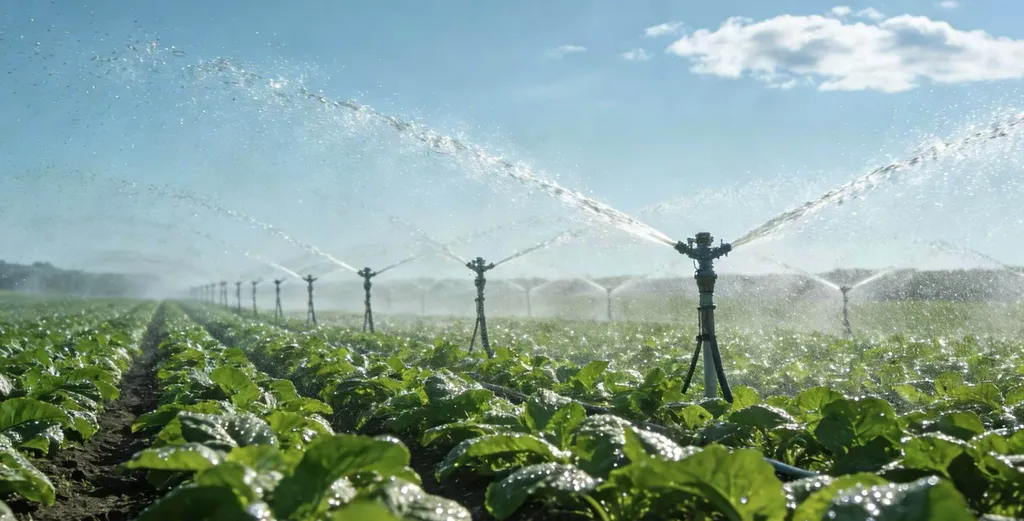
In the heart of Kazakhstan, a groundbreaking study is reshaping the way we think about irrigation, offering a beacon of hope for farmers grappling with water scarcity. The research, led by Ulzhan Onglassyn from the Department of Water Resources and Reclamation at the Kazakh National Agrarian Research University in Almaty, Kazakhstan, and published in *Frontiers in Sustainable Food Systems*, presents a compelling case for integrating water-saving technologies with adjusted irrigation regimes to enhance efficiency.
The study focuses on the Kurty irrigation massif, a region where water resources are stretched thin, and agricultural productivity is under threat. Onglassyn and her team have demonstrated that by combining advanced irrigation technologies with optimized watering schedules, farmers can significantly reduce water consumption without compromising crop yields. This integrated approach not only conserves precious groundwater but also promises to boost the economic viability of agricultural operations in water-scarce regions.
“Our findings suggest that the key to sustainable irrigation lies in a holistic approach,” Onglassyn explains. “By leveraging modern technologies and fine-tuning irrigation regimes, we can achieve a delicate balance between water conservation and agricultural productivity.”
The commercial implications of this research are substantial. For farmers, adopting these strategies could mean lower operational costs and increased resilience against droughts, which are becoming more frequent due to climate change. For the broader agricultural sector, the study offers a roadmap for enhancing water use efficiency, a critical factor in ensuring food security in the face of growing global demand.
One of the most promising aspects of the research is its potential to influence future developments in irrigation technology. As Onglassyn notes, “The integration of hydraulic modules and smart irrigation systems can revolutionize how we manage water resources. This isn’t just about saving water; it’s about creating a sustainable future for agriculture.”
The study’s focus on groundwater conservation is particularly timely, given the increasing pressure on these resources worldwide. By demonstrating that efficient irrigation practices can alleviate the strain on groundwater supplies, the research provides a practical solution that could be replicated in other regions facing similar challenges.
As the agricultural sector continues to evolve, the insights from this study could pave the way for innovative irrigation practices that prioritize sustainability and efficiency. For farmers and policymakers alike, the message is clear: the future of agriculture lies in smart, integrated water management strategies.