
In the heart of Mexico, a groundbreaking study is challenging the status quo of maize cultivation, offering a glimpse into the future of sustainable agriculture. Researchers, led by Gustavo G. Medina-Mendoza from the Instituto Politécnico Nacional-ESIQIE-UPALM, have delved into the metabolomic profiles of two native maize varieties, Zamorano yellow (MZ) and Chalqueño red (PR), grown under agroecological and conventional farming systems. Their findings, published in *Food Chemistry: X*, could reshape our understanding of maize quality and sustainability.
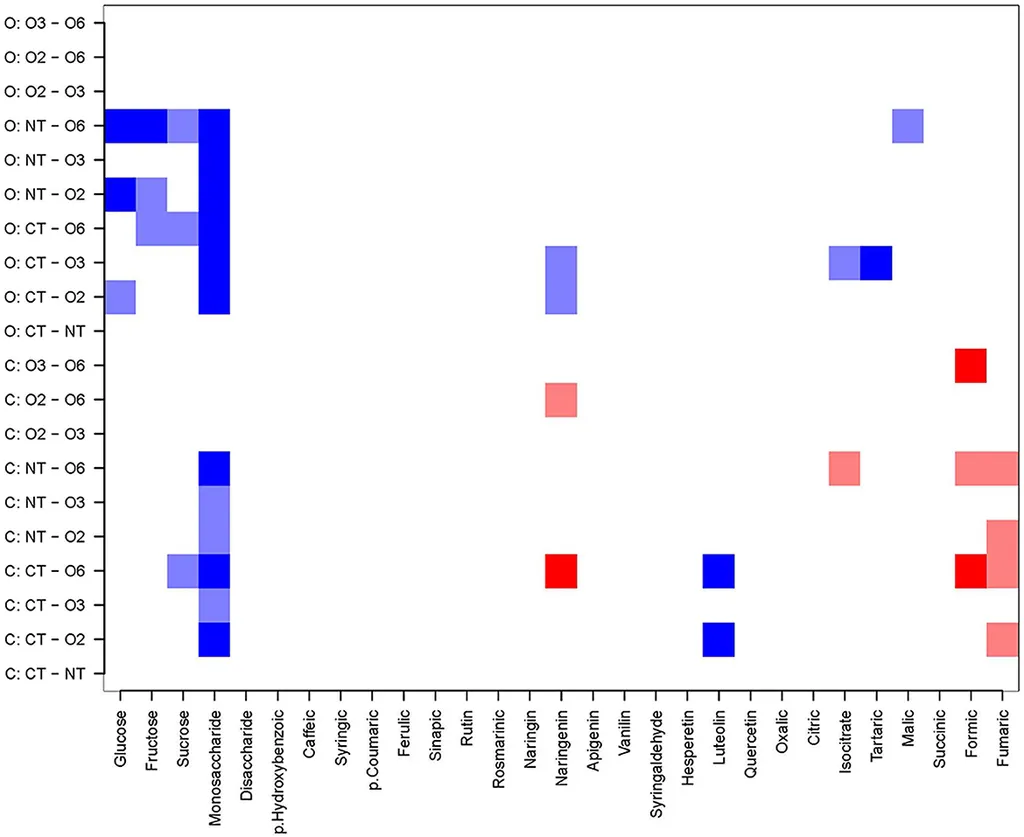
The study employed 1H NMR spectroscopy, a powerful tool for identifying and quantifying metabolites, coupled with multivariate analysis techniques like PCA and OPLS-DA. This approach allowed the team to discern distinct metabolic profiles between the two farming systems. “We observed clear metabolic discrimination between agroecological and conventional management,” Medina-Mendoza explained. “Agroecological practices seem to enhance the nutritional quality of maize, a finding that could have significant implications for the agriculture sector.”
The research revealed that agroecological management boosted the abundance of key metabolites. In Zamorano yellow maize, it influenced the tricarboxylic acid cycle, pyruvate, and glyoxylate metabolism, increasing the abundance of 17 metabolites. Meanwhile, in Chalqueño red maize, it affected amino acid biosynthesis and sugar metabolism, with 15 metabolites seeing an uptick.
These findings are not just academically intriguing; they hold substantial commercial potential. As consumer demand for sustainably produced, nutritionally rich foods grows, so too does the need for farming practices that deliver on both fronts. Agroecological systems, which eschew chemical inputs in favor of ecological processes, have long been touted for their environmental benefits. But this study suggests they may also enhance crop quality, a double win for farmers and consumers alike.
The implications for the agriculture sector are profound. If agroecological practices can consistently improve maize quality, they could become a cornerstone of sustainable farming, driving a shift away from conventional, input-heavy systems. This could open up new markets for farmers, with premium prices for sustainably grown, high-quality maize.
Moreover, the study’s use of metabolomics and advanced statistical analysis sets a new standard for assessing crop quality. As Medina-Mendoza noted, “This approach could be applied to other crops and farming systems, providing a robust tool for evaluating and improving agricultural practices.”
The research also underscores the importance of preserving native crop varieties. The unique metabolic responses of Zamorano yellow and Chalqueño red maize to agroecological management highlight the value of genetic diversity in agriculture. As climate change and other pressures threaten food security, this diversity could be a vital resource for developing resilient, high-quality crops.
In the broader context, this study is a testament to the power of interdisciplinary research. By combining agricultural science, chemistry, and advanced analytics, the team has uncovered insights that could shape the future of farming. It’s a reminder that the most pressing challenges often require the most creative and collaborative approaches.
As the agriculture sector grapples with the need for sustainability and quality, this research offers a promising path forward. It’s a call to action for farmers, researchers, and policymakers to embrace agroecological practices and invest in the tools needed to assess and enhance crop quality. The future of maize, and perhaps all crops, could be greener, more nutritious, and more sustainable than we ever imagined.