
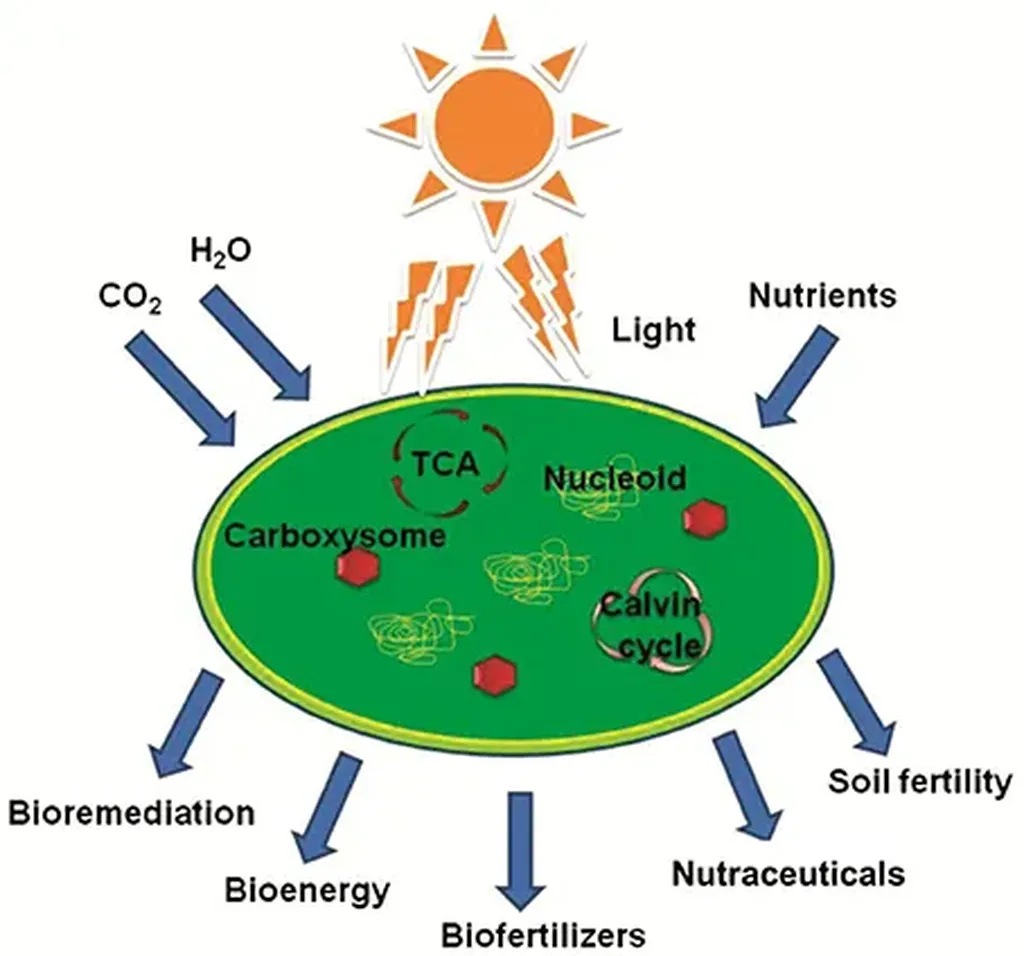
In the quest for sustainable agriculture, scientists are turning to an unlikely ally: microalgae and cyanobacteria. These tiny organisms are emerging as powerful tools to reduce dependency on chemical fertilizers and pesticides, offering a greener path forward for farmers worldwide. A recent review published in *Frontiers in Plant Science* synthesizes the latest advancements in using these microorganisms as biofertilizers, biostimulants, and biopesticides, highlighting their potential to revolutionize agricultural practices.
Microalgae and cyanobacteria are nature’s multitaskers. They can fix atmospheric nitrogen, solubilize phosphorus, and supply essential micronutrients, all of which contribute to improved soil fertility and structure. “These organisms produce exopolysaccharides, organic acids, and siderophores that enhance nutrient availability and soil health,” explains lead author Zhongliang Sun from the School of Life Sciences at Yantai University in China. This natural nutrient recycling not only boosts crop yields but also reduces the environmental impact of conventional farming methods.
Beyond nutrient provision, these microorganisms are packed with bioactive compounds that can stimulate plant growth and resilience. Phytohormones, amino acids, and antioxidants produced by microalgae and cyanobacteria promote seed germination, root growth, and nutrient uptake. They also help plants withstand abiotic stresses like drought and salinity, making them invaluable in an era of climate change. “The metabolites from these organisms act as natural biostimulants, enhancing plant performance under challenging conditions,” Sun adds.
The benefits don’t stop at plant health. Microalgae-derived allelochemicals and antimicrobial compounds can suppress plant pathogens, offering a sustainable alternative to chemical pesticides. This dual role as biostimulants and biopesticides could significantly reduce the agricultural sector’s reliance on synthetic inputs, cutting costs and environmental harm.
The integration of microalgae cultivation with wastewater and flue gas utilization further amplifies their sustainability. By recycling nutrients and sequestering CO2, these systems align with the principles of a circular bioeconomy, where waste is minimized, and resources are used efficiently. “This approach not only enhances agricultural productivity but also contributes to environmental restoration and climate change mitigation,” Sun notes.
However, the path to widespread adoption is not without challenges. High biomass production costs, inconsistent performance under field conditions, and regulatory uncertainties remain significant hurdles. To overcome these barriers, future research must focus on developing low-cost cultivation and harvesting technologies, validating performance at field scale, and standardizing product formulations.
The commercial implications for the agriculture sector are substantial. As farmers increasingly seek sustainable and cost-effective solutions, microalgae-based fertilizers and biostimulants could become a cornerstone of modern farming. By reducing input costs and enhancing crop resilience, these innovations could improve profitability while promoting environmental stewardship.
This research underscores the transformative potential of microalgae and cyanobacteria in shaping the future of agriculture. As scientists and farmers collaborate to overcome existing challenges, the transition to a more sustainable and resource-efficient agricultural system becomes increasingly attainable. The journey toward climate-smart and resource-sustainable agriculture is well underway, and microalgae are leading the charge.