
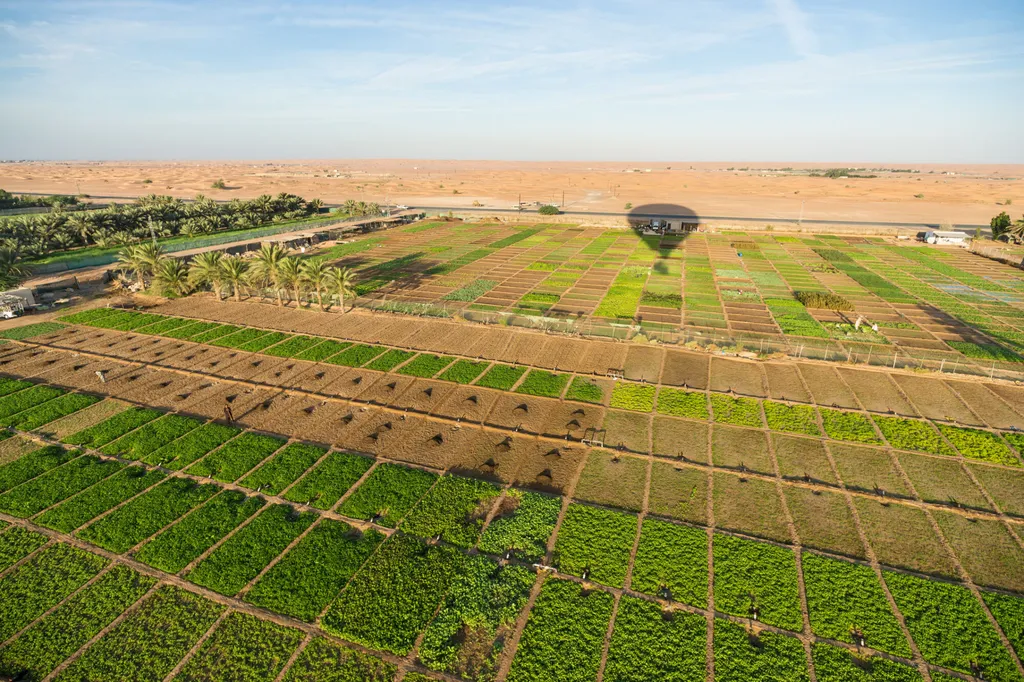
In the heart of Morocco’s Souss-Massa region, a groundbreaking study is reshaping how farmers and agronomists approach maize cultivation under the looming shadow of climate change. Published in *Frontiers in Agronomy*, the research led by Mohamed Amine Benaly of the International Water Research Institute at Mohammed VI Polytechnic University (UM6P) offers a beacon of hope for smallholder farmers grappling with water scarcity and rising temperatures.
The study leverages the AquaCrop model, a process-based simulation tool, to evaluate and optimize silage maize productivity under semi-arid conditions. By calibrating the model with data from 17 fields over the 2022–2024 growing seasons, Benaly and his team have demonstrated its remarkable accuracy in predicting canopy cover, soil water content, and biomass yield. “The model’s performance was exceptional,” Benaly noted, with coefficients of determination (R²) soaring above 0.93 and Nash-Sutcliffe Efficiency (NSE) exceeding 0.94. This precision is a game-changer for farmers, providing a reliable tool to navigate the complexities of climate change and water management.
The research delves into various management practices, offering actionable insights for enhancing water productivity and crop yield. Synthetic mulch, for instance, emerged as a powerful ally, reducing actual evapotranspiration by 17% and boosting water productivity by 35%. “This is a significant improvement,” Benaly explained, “especially in regions where water is a scarce resource.” Similarly, advancing the sowing date by 40 days led to an 8% increase in above-ground biomass and a 14% rise in transpiration-based productivity, demonstrating the potential of strategic timing in agricultural practices.
Irrigation management also took center stage in the study. Triggering irrigation at 120% depletion of readily available water (RAW) reduced soil evaporation by 41%, improved water productivity by 14%, and maintained 95% of the reference yield compared to traditional practices. Moreover, a 75% deficit-irrigation strategy struck an optimal balance, reducing water use by 26% while preserving 94% of biomass yield. These findings underscore the importance of tailored irrigation strategies in maximizing productivity and conserving water resources.
The commercial implications of this research are profound. For the agriculture sector, the ability to predict and optimize crop management practices can lead to significant cost savings and increased profitability. Farmers can make informed decisions about when to sow, how to irrigate, and whether to use mulch, ultimately enhancing their resilience to climate change. “This research provides a robust framework for farmers to adapt to changing conditions,” Benaly said, highlighting the practical applications of the study.
Looking ahead, the successful application of the AquaCrop model in the Souss-Massa region sets a precedent for similar studies in other semi-arid areas. The model’s ability to simulate various scenarios and management practices offers a powerful tool for agronomists and policymakers alike. As climate change continues to constrain agricultural productivity, such innovative approaches will be crucial in ensuring food security and sustainable farming practices.
In the words of Benaly, “The future of agriculture lies in our ability to adapt and innovate. This research is a step in that direction, providing valuable insights and tools for farmers to thrive in a changing climate.” With the AquaCrop model as a guiding light, the path forward for semi-arid agriculture is not only clearer but also more promising than ever before.