
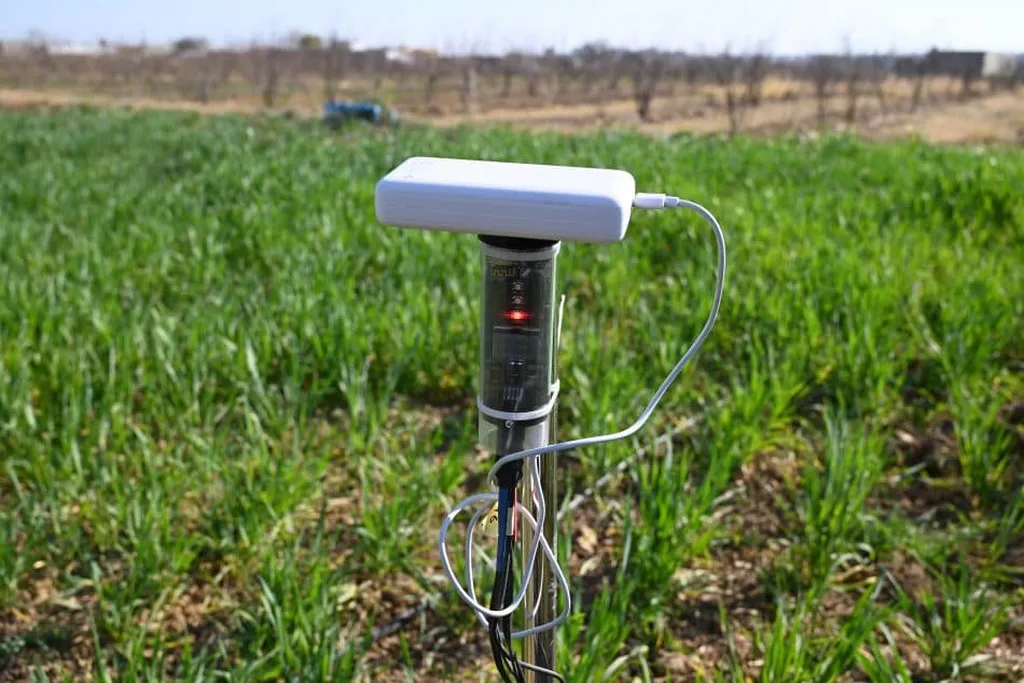
In the heart of Pakistan, where water scarcity looms large and agricultural productivity hangs in the balance, a beacon of hope emerges from the intersection of technology and innovation. Researchers have developed a groundbreaking solution to monitor and control water usage, leveraging the power of IoT and LoRa protocol, promising to revolutionize the way we manage this precious resource.
The solution, detailed in a recent study published in the *International Journal of Computing and Related Technologies*, addresses the critical need for effective water management in Pakistan. The country faces severe water shortages, exacerbated by mismanagement, inadequate infrastructure, and climate change. The research, led by Abdul Razzak from the Computer Science Department at Sindh Madressatul Islam University in Karachi, offers a promising path forward.
At the core of this innovation lies the use of LoRa modulation techniques and IoT-enabled sensors and gateways. These technologies enable the transmission of water usage data over long distances with extremely low power consumption. “This project can be implemented for Pakistan Aqua Industry initially for housing and can be extended for industrial level for more effective Surveillance and Control,” Razzak explained.
The implications for the agricultural sector are profound. Accurate monitoring of water usage not only ensures fair billing but also promotes water conservation, a critical factor for sustainable agriculture. Farmers, who are often at the mercy of water shortages, can benefit from precise data to optimize their water usage, leading to increased productivity and reduced costs.
The research employed the V-Model or Verification and Validation Model, ensuring rigorous testing and development of both hardware and software components. Over a two-week period, the team analyzed data and concluded that Low-Power Wide-Area Network (LPWAN) technology is highly reliable for water management due to its low power consumption, cost-effectiveness, and wide area coverage.
“This research work reviewed many research papers and found that none of them have used LPWAN technology for proper water usage,” Razzak noted. The study highlights the potential of LPWAN technology to transform water management practices, offering a scalable solution that can be implemented at both household and industrial levels.
The commercial impact of this innovation extends beyond mere water conservation. Accurate billing ensures financial transparency, benefiting both water providers and consumers. For the agricultural sector, this means more efficient water use, reduced operational costs, and ultimately, higher yields.
As we look to the future, the integration of IoT and LoRa protocol in water management systems could set a new standard for sustainability and efficiency. The research by Razzak and his team not only addresses immediate challenges but also paves the way for long-term solutions that could be replicated in other water-scarce regions around the world. This breakthrough underscores the transformative power of technology in addressing some of our most pressing environmental and economic challenges.