
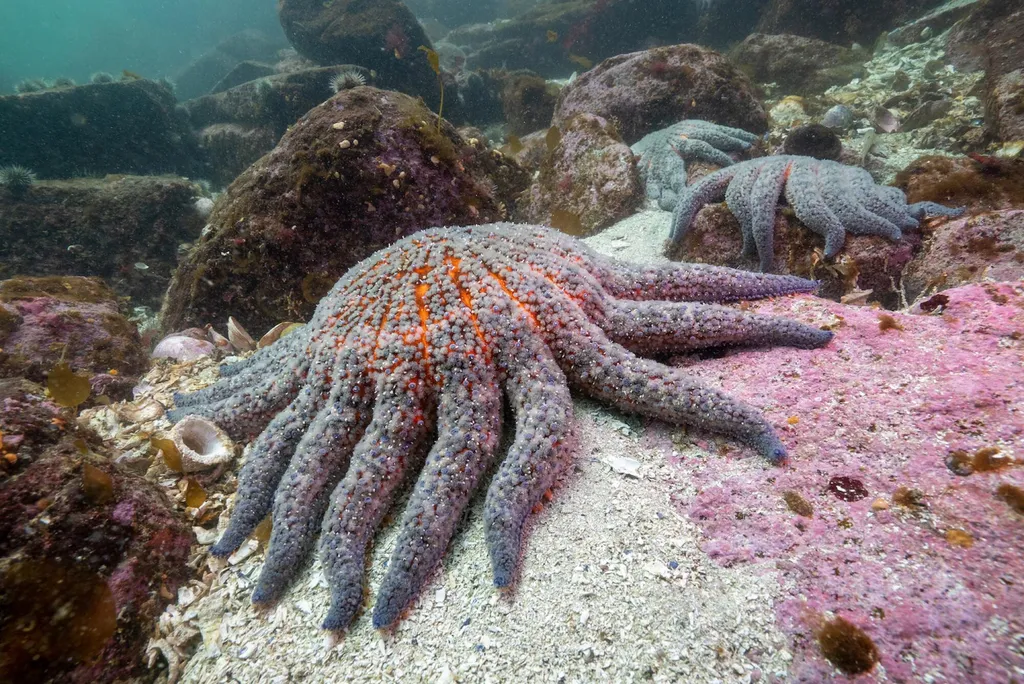
The devastating sea star wasting disease epidemic that began in 2013 has not only ravaged marine ecosystems but also serves as a stark reminder of the broader implications for agriculture and investors. The collapse of keystone species like sea stars can have cascading effects on marine food webs, which in turn can impact commercial fisheries and aquaculture. For instance, the decline of sunflower sea stars has led to unchecked sea urchin populations, resulting in “urchin barrens” that devastate kelp forests. These forests are crucial habitats for many fish species, including those that are commercially significant. The loss of these habitats can lead to decreased fish populations, affecting the seafood industry and the livelihoods of those dependent on it.
The rise of environmental stressors such as pollution, lowered ocean oxygen levels, and warming water temperatures is making marine life more vulnerable to disease. These stressors are not confined to marine environments; they are part of a global trend influenced by climate change and human activities. For the agriculture sector, this means that similar stressors can affect terrestrial ecosystems, leading to increased vulnerability of crops and livestock to pests and diseases. Investors in agriculture must consider the long-term impacts of environmental degradation and climate change on food security and agricultural productivity.
The hunt for the cause of sea star wasting disease has been complex, highlighting the challenges of identifying and addressing marine epidemics. The initial suspicion of a densovirus was later disproven, and the focus shifted to a bacterium called Vibrio pectenicida. This bacterium is part of a group known for causing diseases in humans and marine life, and it thrives in warmer waters. The implications for agriculture are significant, as rising temperatures and changing environmental conditions can lead to the emergence of new pests and diseases that threaten crops and livestock. Investors in agricultural technologies and biosecurity measures may find new opportunities in developing solutions to mitigate these risks.
The agricultural sector and investors must also consider the broader economic and environmental impacts of marine and terrestrial epidemics. The loss of keystone species and the degradation of ecosystems can have far-reaching consequences for global food security and economic stability. Investments in sustainable agriculture practices, biotechnology, and environmental conservation can help mitigate these risks and promote resilience in the face of emerging threats. As researchers continue to unravel the mysteries of sea star wasting disease, the lessons learned can inform strategies to protect both marine and terrestrial ecosystems, ensuring a more sustainable future for agriculture and investment.