
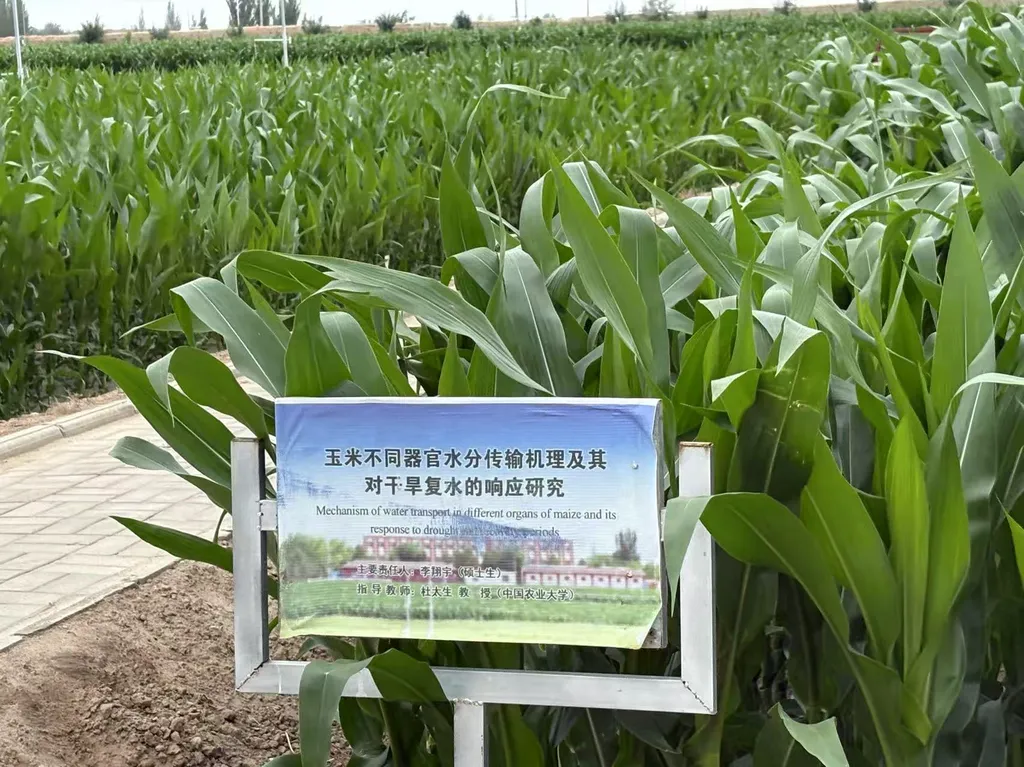
In the arid landscapes of northern China, where water is a precious commodity, farmers are turning to smart irrigation systems to boost crop yields while conserving this vital resource. A recent study published in *Frontiers in Sustainable Food Systems* sheds light on the factors driving the adoption of these innovative technologies, offering insights that could reshape agricultural practices in water-scarce regions worldwide.
The research, led by Shaochun Zhang from the College of Economics and Management at Huazhong Agricultural University, focuses on maize farmers in Inner Mongolia. By analyzing survey data from 803 farmers using drip irrigation, Zhang and his team uncovered a compelling link between land policy and the adoption of smart irrigation systems. “Our findings demonstrate that land consolidation and large-scale operation significantly promote the uptake of smart irrigation technologies,” Zhang explains. “However, the effectiveness of these policies varies depending on institutional support, regional suitability, and water resource endowment.”
The study highlights the critical role of land consolidation—a process that merges small, fragmented plots into larger, more manageable ones—in facilitating the adoption of water-efficient technologies. “When farmers have access to larger, contiguous plots, they are more likely to invest in smart irrigation systems,” Zhang notes. “This is because larger farms can more easily justify the initial investment in these technologies, which often require significant upfront costs.”
The implications for the agriculture sector are profound. As global food systems grapple with the challenges of climate change and resource constraints, the adoption of smart irrigation systems represents a critical step toward achieving both food security and environmental sustainability. By optimizing water use, these technologies not only enhance crop yields but also reduce the environmental impact of agriculture, a win-win for farmers and the planet alike.
The study also underscores the importance of tailored policy approaches. “Our research shows that one-size-fits-all solutions are unlikely to succeed,” Zhang cautions. “Policies must be adapted to the specific needs and conditions of each region. For instance, areas with abundant water resources may require different incentives compared to those facing severe water scarcity.”
Looking ahead, the findings of this study could shape future developments in precision agriculture and sustainable food systems. By providing empirical evidence on the interplay between land policy and technology adoption, the research offers valuable guidance for policymakers, agricultural practitioners, and technology providers. As the world seeks to balance the demands of food production with the need for resource conservation, the insights from this study will be instrumental in driving innovation and fostering sustainable agricultural practices.
In an era where water scarcity and climate change are increasingly threatening food security, the adoption of smart irrigation systems represents a beacon of hope. By linking land policy to food system sustainability, this research not only advances our understanding of agricultural innovation but also paves the way for a more resilient and sustainable future.