
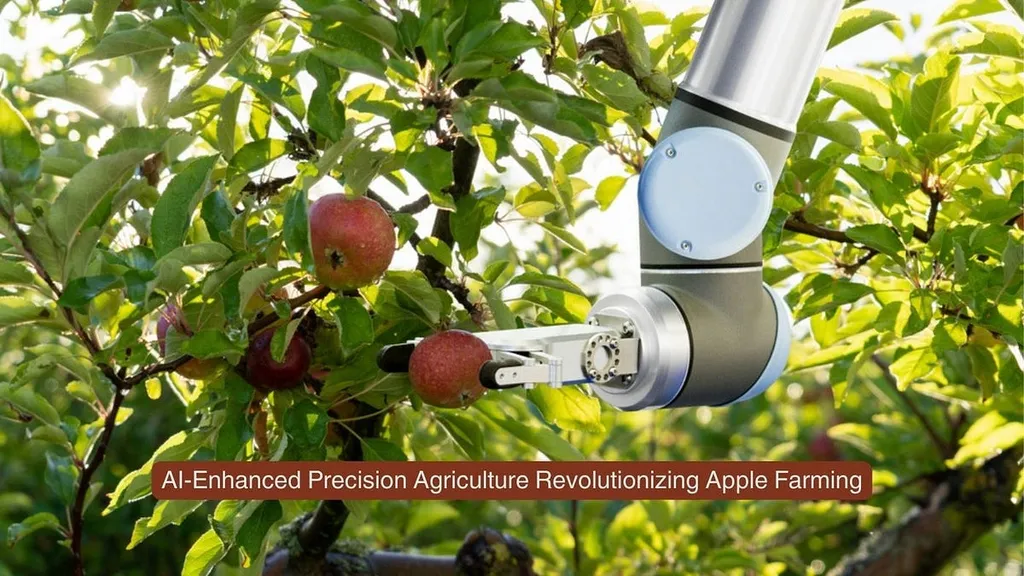
In the heart of every orchard, a quiet revolution is taking place, one that promises to reshape the future of apple breeding. A comprehensive review published in *Frontiers in Plant Science* sheds light on how advanced data-driven technologies are accelerating the pace of innovation in apple cultivation. The research, led by Fazeel Abid from the Department of Computer Science and Information Technology at The University of Lahore, Pakistan, synthesizes the latest advancements in high-throughput phenotyping, machine learning, and genome editing, offering a glimpse into a future where digital technologies and agriculture converge to create more resilient and productive orchards.
The apple industry, a cornerstone of global agriculture, faces significant challenges from climate change, evolving pathogens, and shifting consumer preferences. Traditional breeding methods, while effective, are notoriously slow and resource-intensive, often hindered by the apple’s long juvenile period and high genetic diversity. “The traditional approach to apple breeding is akin to navigating a maze blindfolded,” Abid explains. “With the integration of advanced technologies, we are essentially turning on the lights, allowing us to see the path more clearly and navigate it more efficiently.”
The review highlights the transformative potential of high-throughput phenotyping (HTP), which employs cutting-edge sensor technologies like RGB-D imaging, hyperspectral imaging, and LiDAR to collect vast amounts of trait data. This data is then analyzed using machine learning (ML) and deep learning (DL) algorithms, which have demonstrated remarkable accuracy in tasks such as cultivar identification and non-destructive quality prediction. “The precision and speed at which these algorithms can analyze data is unprecedented,” Abid notes. “It’s like having a team of expert botanists working around the clock, but without the need for sleep or coffee breaks.”
One of the most promising developments in this field is the use of CRISPR/Cas9 genome editing, which allows for precise and efficient genetic modifications. Unlike traditional genetic modification techniques, CRISPR/Cas9 enables transgene-free editing, accelerating the path to commercialization. This technology has already shown success in introducing desirable traits such as disease resistance, enhanced shelf life, and improved nutrient uptake. “CRISPR/Cas9 is a game-changer,” Abid states. “It allows us to make targeted changes to the genome with a level of precision that was previously unimaginable. This means we can develop new apple varieties that are not only more resilient but also better suited to meet consumer demands.”
The integration of these technologies through the agricultural internet of things (AIoT) is another key area of focus. AIoT systems can collect, analyze, and act on data in real-time, enabling farmers to make more informed decisions and optimize their operations. “The agricultural internet of things is like the nervous system of the orchard,” Abid explains. “It connects all the different components and allows them to work together seamlessly. This integration is crucial for maximizing the benefits of these advanced technologies.”
The review also identifies critical research gaps, including the need for standardized open-access datasets and integrated end-to-end system validation. Addressing these gaps will be essential for realizing the full potential of these technologies and ensuring their widespread adoption in the agriculture sector.
The implications of this research extend far beyond the orchard. The technologies and methodologies discussed in the review have the potential to revolutionize the entire agriculture sector, making it more efficient, sustainable, and resilient. As the global population continues to grow and climate change poses increasingly complex challenges, the need for innovative solutions in agriculture has never been greater. “This is not just about apples,” Abid emphasizes. “It’s about creating a more sustainable and efficient food system. The technologies we are developing have the potential to benefit a wide range of crops and agricultural practices.”
In the coming years, we can expect to see these advanced data-driven technologies become increasingly integrated into apple breeding and genetic modification programs. The synergistic application of high-throughput phenotyping, machine learning, and genome editing, coupled with the agricultural internet of things, is poised to revolutionize the speed, precision, and resilience of apple improvement programs worldwide. As these technologies continue to evolve, they will undoubtedly shape the future of agriculture, paving the way for a more sustainable and productive food system.