
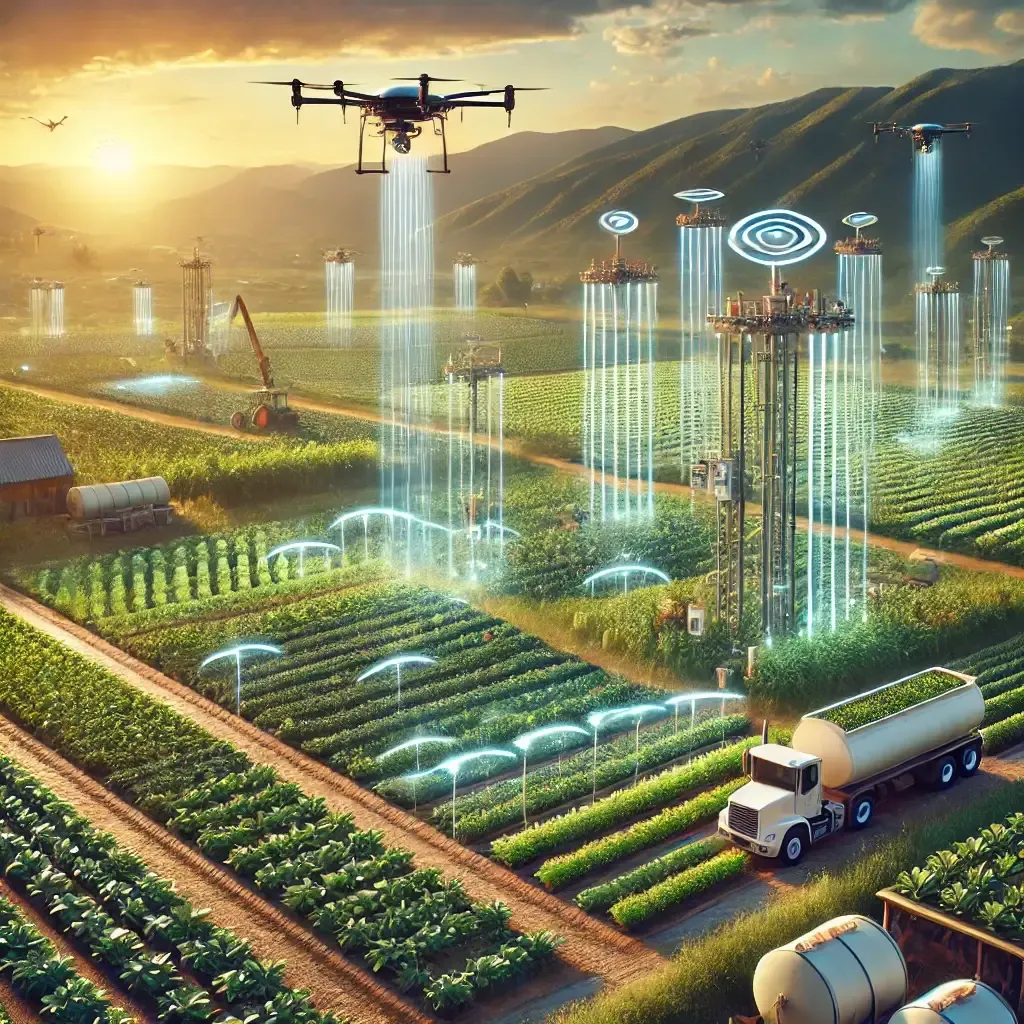
In the ever-evolving landscape of precision agriculture, a groundbreaking study has emerged, promising to revolutionize the way farmers make critical decisions about crop selection and fertilizer use. Published in the Turkish Journal of Agriculture: Food Science and Technology, the research introduces a dual-module agricultural decision support system that harnesses the power of machine learning to provide evidence-based recommendations, potentially transforming the agricultural sector’s approach to productivity and sustainability.
The study, led by Hatice Bülbül from the Department of Information Systems Engineering at Sakarya University, addresses long-standing challenges in modern agriculture by integrating four machine learning algorithms: Random Forest, Support Vector Machine, XGBoost, and K-Nearest Neighbors. These algorithms were meticulously evaluated using extensive agricultural datasets, encompassing 2,200 crop samples and 3,100 fertilizer samples. The results are impressive, with the crop recommendation module achieving an accuracy of 99.32% and the fertilizer recommendation module reaching 98.75%.
The system’s dual functionality is a significant leap forward. “This integrated approach allows farmers to make informed decisions about both crop selection and fertilizer management, optimizing productivity while ensuring sustainability,” Bülbül explains. The system employs advanced techniques such as SMOTE for handling class imbalance, GridSearchCV for hyperparameter optimization, and SHAP analysis for model interpretability, making it not only highly accurate but also transparent and user-friendly.
The commercial implications for the agriculture sector are substantial. By providing precise, data-driven recommendations, the system can help farmers increase yields, reduce costs, and minimize environmental impact. This is particularly crucial in an era where climate change and resource depletion pose significant threats to global food security. The system’s competitive performance, as demonstrated through comparative analysis with existing literature, underscores its potential to become a valuable tool for farmers worldwide.
Moreover, the study’s findings lay the groundwork for region-specific implementations, offering a flexible and adaptable solution that can be tailored to diverse agricultural contexts. “Our framework provides a foundation for future developments in intelligent agricultural decision support systems,” Bülbül notes. This adaptability is key to addressing the unique challenges faced by different agricultural regions, from small-scale farms to large-scale industrial operations.
The integration of machine learning into agricultural decision-making processes represents a paradigm shift in the industry. As the technology continues to evolve, we can expect to see even more sophisticated systems that further enhance productivity and sustainability. The study’s emphasis on explainability and dual functionality sets a new standard for agricultural decision support systems, paving the way for smarter, more efficient farming practices.
In conclusion, this research marks a significant milestone in the field of precision agriculture. By leveraging the power of machine learning, the dual-module agricultural decision support system offers a practical and effective solution to some of the most pressing challenges in modern farming. As the agricultural sector continues to embrace technological innovation, this study serves as a testament to the transformative potential of data-driven decision-making.