
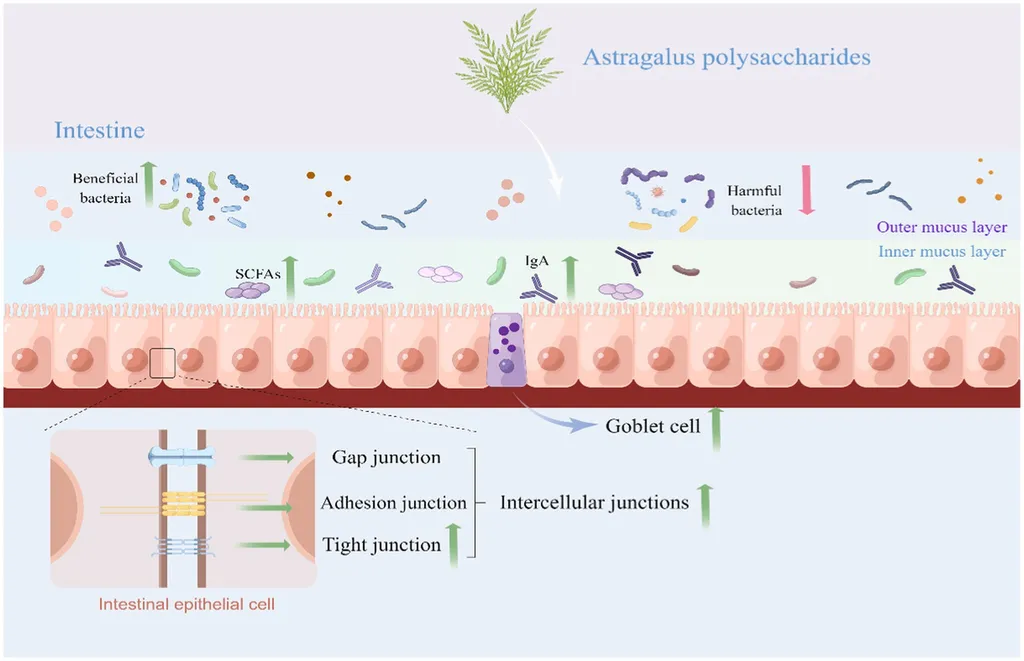
In the quest to mitigate the toxic effects of heavy metals in aquaculture, a recent study published in the *Journal of Agriculture and Food Research* offers promising insights. Researchers led by Hongming Wang from the College of Fisheries at Guangdong Ocean University have demonstrated that dietary supplementation with Astragalus polysaccharide (APS) can effectively counteract lead-induced oxidative stress, metabolic dysfunction, and intestinal microbiota imbalances in Litopenaeus vannamei, a commercially significant shrimp species.
Lead (Pb) is a well-documented toxicant that poses significant challenges to aquatic species, including shrimp. Chronic exposure to lead can induce oxidative stress, tissue damage, and neurotoxicity, ultimately impacting the health and productivity of farmed shrimp. “The problem with lead toxicity in aquaculture is multifaceted,” explains Wang. “It not only affects the physiological health of the shrimp but also disrupts their intestinal microbiota, which is crucial for their overall well-being and growth.”
The study involved rearing shrimp for 56 days under four different conditions: no lead and no APS (control group), lead exposure without APS, lead exposure with 0.2 g/kg APS, and lead exposure with 0.4 g/kg APS. The results were compelling. Lead exposure led to hepatopancreatic damage and reduced survival rates. However, dietary supplementation with 0.4 g/kg APS significantly alleviated these adverse effects, improving survival and reducing tissue damage.
One of the most striking findings was the impact of APS on oxidative stress indicators. Lead exposure increased the levels of reactive oxygen species and malondialdehyde, markers of oxidative stress, while also altering the activities of key antioxidant enzymes. “APS supplementation effectively reversed these changes, demonstrating its potent antioxidant properties,” notes Wang.
The study also delved into the effects of lead and APS on intestinal microbiota. Lead exposure significantly disrupted the microbial community, reducing the abundance of beneficial bacteria and increasing harmful taxa. “This dysbiosis can have cascading effects on the shrimp’s health and metabolism,” explains Wang. “APS supplementation helped restore the microbial balance, which is crucial for maintaining intestinal health and overall physiological function.”
Metabolomic analysis further revealed that lead exposure altered the levels of key metabolites in the intestines. APS supplementation normalized these metabolites, suggesting that it can mitigate the metabolic dysfunction induced by lead exposure.
The commercial implications of these findings are substantial. Lead contamination is a pervasive issue in aquaculture, and the development of effective mitigation strategies is crucial for the industry’s sustainability. “Our study provides a promising solution for aquaculture farmers,” says Wang. “By incorporating APS into shrimp diets, they can protect their stocks from the deleterious effects of lead and potentially enhance productivity.”
The research also opens new avenues for exploring the use of natural compounds like APS in aquaculture. “This study highlights the potential of traditional medicinal plants in modern aquaculture practices,” Wang adds. “It’s an exciting area of research that could lead to more sustainable and eco-friendly farming practices.”
As the aquaculture industry continues to grow, the need for innovative solutions to environmental challenges becomes increasingly urgent. This study not only sheds light on the detrimental effects of lead but also offers a viable strategy for mitigating its impact. By leveraging the antioxidant and detoxifying properties of APS, farmers can safeguard their shrimp stocks and contribute to the long-term sustainability of the industry.