
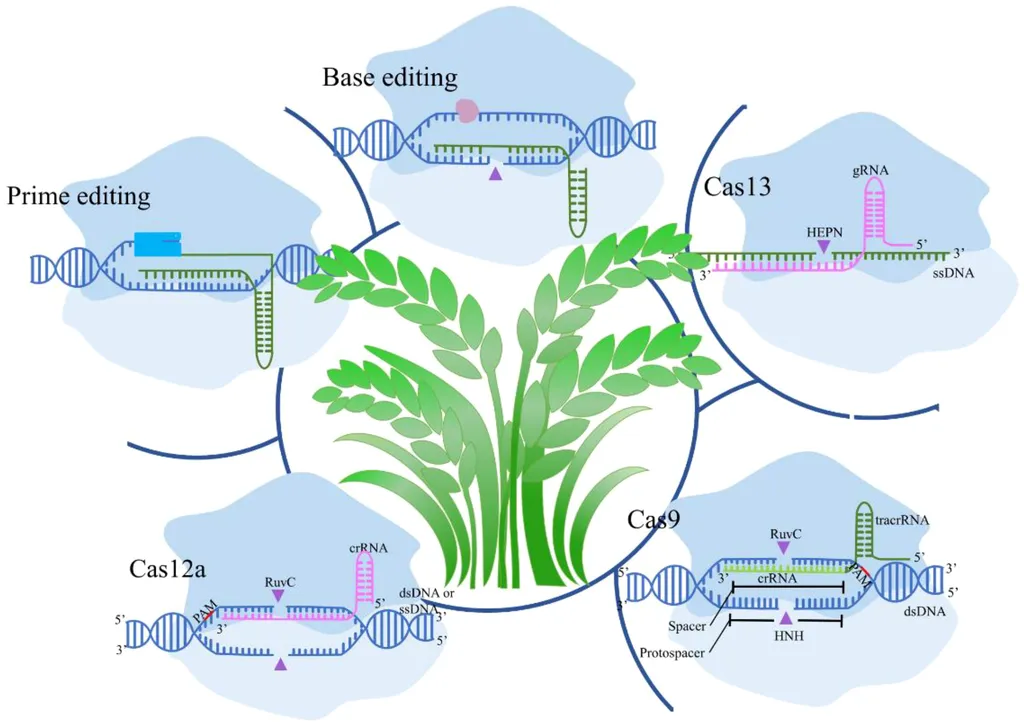
In the heart of agricultural innovation, a quiet revolution is taking root, promising to reshape the future of farming as we know it. The CRISPR-Cas9 gene-editing tool, once a staple of laboratory science, is now making waves in the fields, offering precise and efficient solutions to age-old agricultural challenges. This transformative technology is not just a scientific marvel; it’s a beacon of hope for farmers, agronomists, and food security advocates worldwide.
The CRISPR-Cas9 system, a powerful tool for editing genomes with unprecedented precision, is enabling scientists to make targeted changes to the DNA of crops. This precision editing allows for the enhancement of desirable traits, such as disease resistance, drought tolerance, and improved nutritional content, without introducing foreign DNA. The result? Crops that are not only hardier and more resilient but also more sustainable and nutritious.
Dr. Anantha Rama A, a leading researcher at the Zonal Agricultural Research Station in Hiriyur, has been at the forefront of this agricultural revolution. In a recent review published in ‘Current Innovation in Agriculture Science’, Dr. Rama A and his team delve into the multifaceted applications of CRISPR technology in agriculture. Their work highlights the potential of this technology to address some of the most pressing challenges in the agriculture sector, from improving crop yields to enhancing food security.
“The CRISPR-Cas9 system is a game-changer for agriculture,” Dr. Rama A explains. “It allows us to make precise changes to the genome of crops, enhancing their resilience and productivity. This technology is not just about improving yields; it’s about creating sustainable and nutritious food sources for a growing global population.”
The implications of this research are vast and far-reaching. For farmers, CRISPR-Cas9 technology offers the promise of crops that are more resistant to pests, diseases, and adverse weather conditions. This means reduced reliance on chemical pesticides and fertilizers, leading to more sustainable and environmentally friendly farming practices.
For the agriculture sector as a whole, the commercial impacts are significant. The development of CRISPR-edited crops could open up new markets and opportunities, driving growth and innovation in the industry. It could also lead to the creation of new agricultural products, such as crops with enhanced nutritional content or improved shelf life, further expanding the sector’s commercial potential.
However, the widespread adoption of CRISPR-edited crops is not without its challenges. Regulatory frameworks and ethical considerations must be carefully navigated to ensure the safe and responsible use of this technology. Dr. Rama A and his team emphasize the need for ongoing dialogue and collaboration among scientists, policymakers, and stakeholders to address these challenges and harness the full potential of CRISPR technology in agriculture.
As we look to the future, the CRISPR-Cas9 system holds immense promise for the agriculture sector. It is a tool that can help us meet the challenges of a changing climate, a growing population, and the need for sustainable and nutritious food sources. The work of Dr. Rama A and his team is a testament to the power of this technology and its potential to shape the future of agriculture.
In the words of Dr. Rama A, “The future of agriculture lies in our ability to innovate and adapt. CRISPR-Cas9 technology is a powerful tool that can help us achieve this goal, creating a more sustainable and secure food future for all.”