
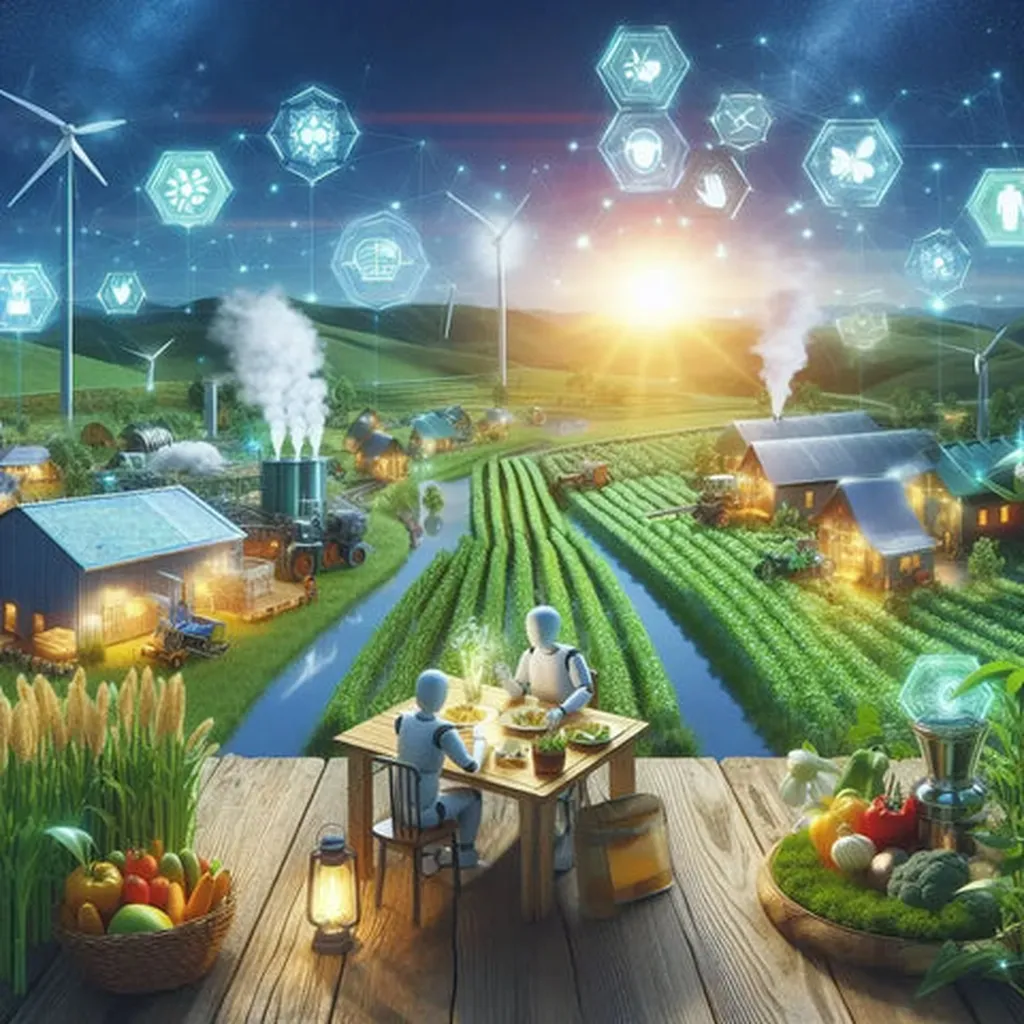
In the rapidly evolving landscape of agriculture and tourism, a new study sheds light on the transformative power of the digital economy. Researchers have uncovered how digital tools and platforms are reshaping the integration of agriculture and tourism, driving efficiency and high-quality development. The findings, published in *Frontiers in Sustainable Food Systems*, offer valuable insights for policymakers, businesses, and stakeholders in the agriculture sector.
The study, led by Tianqi Li from the Business Department at Hunan University of Humanity, Science and Technology in Loudi, China, analyzed data from 30 provinces in China over a span of 12 years, from 2012 to 2023. The research employed various statistical models, including ordinary panel regression, mediation effect, and threshold effect models, to explore the intricate relationship between the digital economy and the high-quality development of agriculture and tourism integration.
The results are compelling. The digital economy has a significant positive impact on the integration of agriculture and tourism. “The digital economy penetrates deeply into the process of agriculture and tourism integration through core resources such as digital network information, traffic, technology, and platforms,” explains Li. “It optimizes resource allocation and operation models, driving efficient collaboration and high-quality development.”
The study reveals that regions with robust agricultural resource bases and rich cultural endowments benefit the most from the digital economy. These areas experience a stronger enabling effect, leading to more efficient operations, optimized industrial structures, and improved public services. “The digital economy reduces operational costs, optimizes industrial structure, and improves public services,” Li notes, highlighting the multifaceted benefits.
One of the most intriguing findings is the dual threshold effect of the digital economy. As the level of the digital economy increases, its positive impact on the high-quality development of agriculture and tourism integration becomes significant from insignificant, and then gradually weakens after crossing the second threshold value. This suggests that while the digital economy is a powerful tool, its benefits are not limitless and must be strategically managed.
The commercial implications for the agriculture sector are substantial. By leveraging digital technologies, agricultural businesses can streamline operations, reduce costs, and enhance productivity. The integration of tourism can create new revenue streams, attract investment, and foster sustainable growth. “The digital economy is not just a tool; it’s a catalyst for innovation and development in the agriculture sector,” Li emphasizes.
As the world continues to embrace digital transformation, this research provides a roadmap for future developments. It underscores the importance of strategic planning and targeted investments in digital infrastructure to maximize the benefits of the digital economy. For the agriculture sector, this means embracing digital tools and platforms to drive efficiency, innovation, and sustainable growth.
In the words of Li, “The digital economy is reshaping the landscape of agriculture and tourism integration. By understanding and leveraging its potential, we can drive high-quality development and create a more sustainable future.” This research not only highlights the current impact of the digital economy but also paves the way for future advancements in the field.