
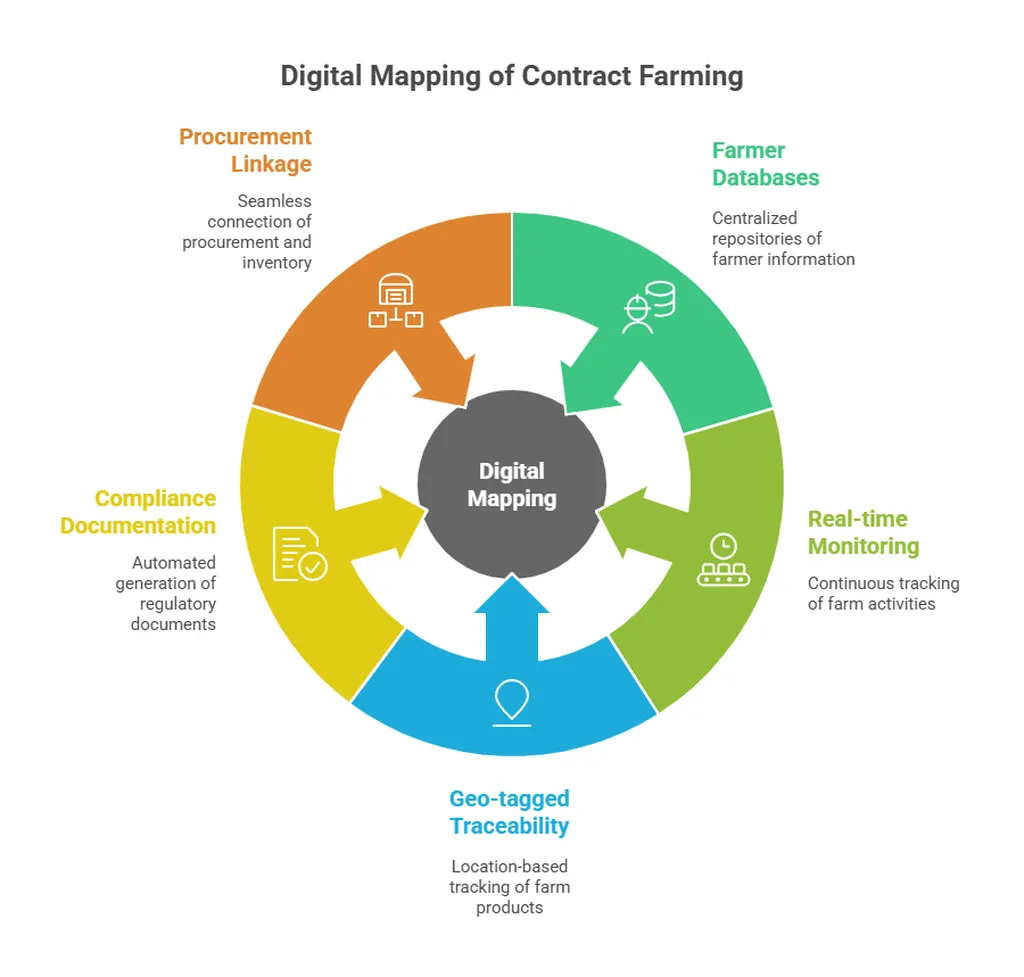
In the rapidly evolving landscape of agriculture, digital technologies are emerging as powerful tools to reshape traditional practices and foster sustainable growth. A recent study published in *Frontiers in Sustainable Food Systems* sheds light on how digital empowerment can drive farmers’ participation in contract farming, offering valuable insights for the agriculture sector. The research, led by Xiaoli Yang from the College of Economics and Management at Shenyang Agricultural University in China, analyzed data from 1,370 grape growers in Liaoning Province, providing a nuanced understanding of the pathways and mechanisms that influence farmers’ decisions.
The study reveals that digital empowerment significantly enhances farmers’ willingness to participate in contract farming. Notably, the analytical capability—farmers’ ability to interpret and utilize digital data—plays a major promoting role, while technological capability, which refers to the ability to operate digital tools, has an inhibitory effect. This counterintuitive finding suggests that while farmers may be adept at using technology, their ability to derive meaningful insights from digital data is crucial for making informed decisions.
“Our findings indicate that the analytical capability is a key driver in farmers’ decision-making processes,” said lead author Xiaoli Yang. “This highlights the importance of not just providing farmers with digital tools, but also empowering them with the skills to analyze and interpret the data they collect.”
The research further explores the mechanisms through which digital empowerment influences farmers’ decisions. It identifies a chain mediation effect where digital empowerment broadens social networks and enhances innovative awareness, ultimately promoting participation in contract farming. This suggests that digital technologies not only provide direct benefits but also foster a broader ecosystem of knowledge sharing and innovation.
Moreover, the study finds that digital empowerment has a more significant impact on large-scale farmers compared to small-scale farmers. This disparity underscores the need for targeted interventions to ensure that the benefits of digital empowerment are accessible to all farmers, regardless of their scale of operation.
The commercial implications of this research are substantial. As the agriculture sector increasingly adopts digital technologies, understanding how these tools influence farmers’ decisions can help stakeholders design more effective interventions. For instance, agricultural cooperatives and technology providers can focus on enhancing farmers’ analytical capabilities through training and education programs. Additionally, policymakers can develop targeted policies to support small-scale farmers in leveraging digital technologies, ensuring inclusive growth in the sector.
The study’s findings also have broader implications for the future of agriculture. As digital technologies continue to reshape agricultural value chains, the insights from this research can guide the development of more sustainable and efficient farming practices. By empowering farmers with the right tools and skills, the agriculture sector can achieve greater productivity, sustainability, and resilience.
In conclusion, the research by Xiaoli Yang and colleagues offers a comprehensive analysis of how digital empowerment drives farmers’ participation in contract farming. By highlighting the importance of analytical capability and the role of social networks and innovative awareness, the study provides valuable insights for stakeholders seeking to boost farmers’ decision-making. As the agriculture sector continues to evolve, the findings from this research will be instrumental in shaping future developments and ensuring sustainable growth.