
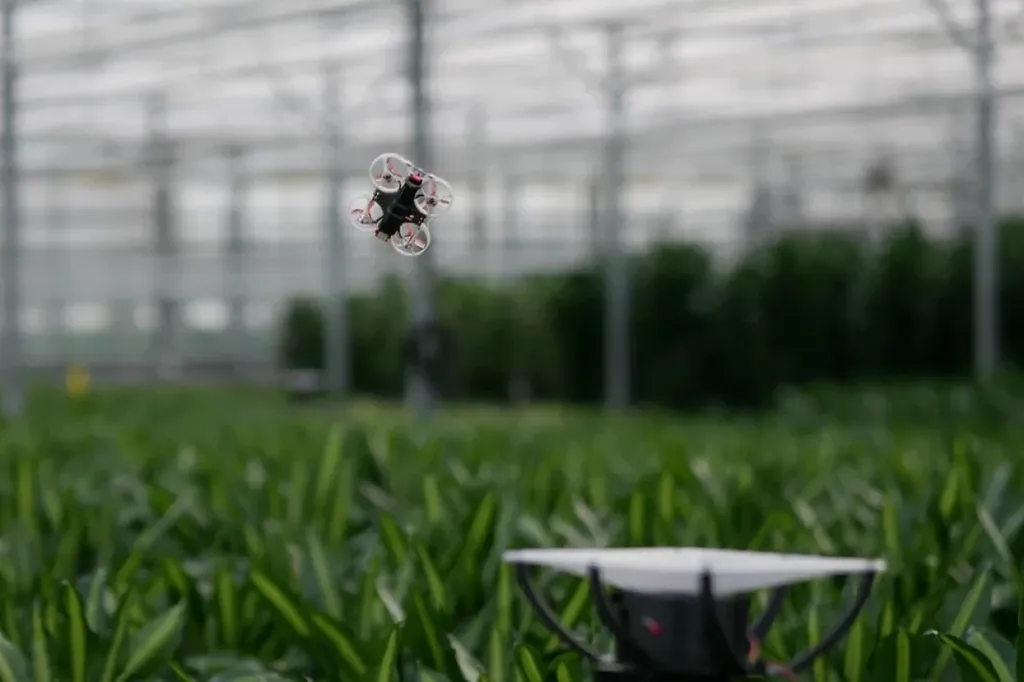
In the rapidly evolving world of agriculture technology, a Dutch agri-tech company, PATS, is making waves with its innovative pest monitoring and control platform for greenhouse growers. The company’s system is a sophisticated integration of fixed cameras and sensor units that detect and classify flying insects through automated image analysis. This data is then linked to a central dashboard, providing growers with a comprehensive overview of pest activity over time.
The platform’s design is centered around enabling condition-based interventions. It generates alerts and operational reports, allowing growers to take timely action. PATS also describes a pesticide-free interception approach using small autonomous drones to remove targeted insects from the crop environment, a significant step towards sustainable agriculture.
PATS has recently raised seed funding, which will be used to accelerate product development and international rollout. The company reports a manufacturing capacity to deliver more than 1,000 sensor systems per month from its Netherlands facility. This scaling of production is a clear indication of the company’s ambition and the potential it sees in its technology.
Originating from research at Delft University of Technology, PATS also markets complementary tools such as Trap-Eye for sticky trap monitoring and predictive modules for outbreak forecasting. These tools, combined with the main platform, aim to reduce growers’ reliance on chemical controls. By improving early detection, intervention timing, and data-driven decision making, PATS is poised to revolutionize pest control in greenhouse agriculture.
The implications of PATS’ technology are significant. It promises a more sustainable and efficient approach to pest control, which could lead to increased crop yields and reduced environmental impact. As the company scales its deployments across multiple countries, it will be interesting to see the broader impact of its technology on the agriculture industry.