
In the quest for sustainable energy solutions, researchers have turned to an unlikely duo: gamal wood and robusta coffee husk. A recent study published in *Jurnal Sylva Lestari* has unveiled promising results in the creation of hybrid biopellets, offering a glimpse into a future where agricultural waste could power our homes and industries.
The research, led by Mangifera Indica Dhaifullah Wangun Putri from the Forestry Engineering Program Study at Institut Teknologi Sumatera (ITERA), explores the potential of combining gamal wood (Gliricidia sepium) and robusta coffee husk to produce high-quality biopellets. These biopellets, a form of biomass energy, could serve as a viable alternative to fossil fuels, reducing our dependence on non-renewable resources.
The study found that biopellets made from 75% gamal wood and 25% coffee husk exhibited optimal characteristics. “The best biopellet was produced in the composition of 75% gamal wood and 25% coffee husk,” Wangun Putri explained. “It had a density of 0.85 g/cm3, moisture content of 8.03%, ash content of 3.92%, volatile substances of 78.01%, fixed carbon of 18.07%, and a calorific value of 4,176 cal/g.”
These results are significant for several reasons. Firstly, the biopellets met the standards of SNI 8021:2014 and EN 14061-2, except for ash content. This means they are suitable for use in many industrial and domestic settings. Secondly, the addition of coffee husk reduced the volatile matter in the biopellets, increasing their fixed carbon and density. This makes them more stable and efficient as a fuel source.
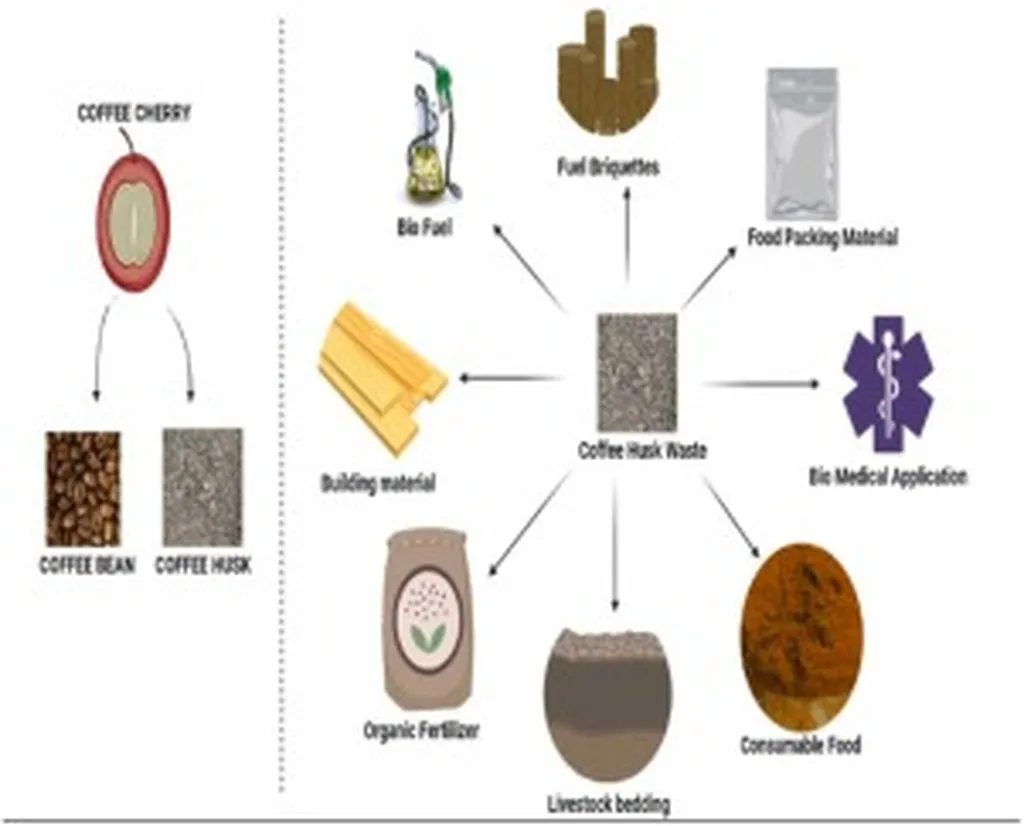
The commercial implications for the agriculture sector are substantial. Coffee husks, typically considered waste, can now be repurposed, adding value to the coffee production process. Similarly, gamal wood, a fast-growing and renewable resource, can be sustainably harvested to meet the growing demand for biomass energy.
This research could shape future developments in the field of agritech and renewable energy. As Wangun Putri noted, “The potential of agricultural waste as a source of energy is vast and largely untapped.” By exploring and optimizing the use of these resources, we can move towards a more sustainable and circular economy.
The study also opens up avenues for further research. For instance, how can the ash content in the biopellets be reduced to meet all standards? What other agricultural wastes can be combined to create high-quality biopellets? These questions, and many more, remain to be explored.
In conclusion, the hybrid biopellets from gamal wood and robusta coffee husk represent a significant step forward in the quest for sustainable energy. They offer a practical and environmentally friendly solution that could transform the agriculture sector and contribute to a greener future. As we continue to innovate and explore, the possibilities are endless.