
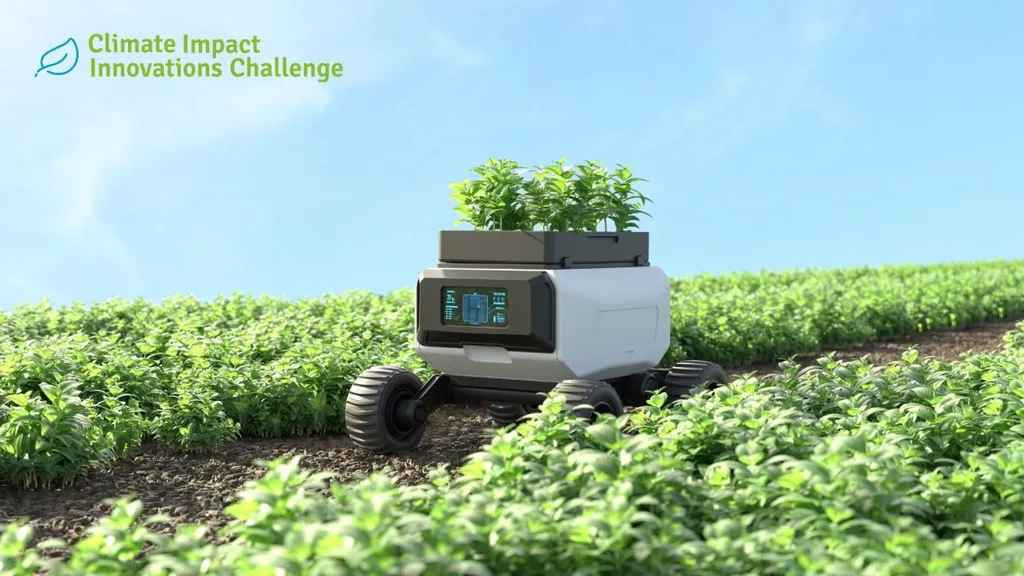
In the heart of Indonesia, a groundbreaking system is poised to revolutionize the way smallholder farmers approach crop selection, potentially transforming the agricultural landscape and boosting productivity. The Soil Fertility Detection and Crop Recommendation System, developed by Faswia Fahmi Monika and her team at the Department of Electrical Engineering, Universitas Trunojoyo Madura, integrates real-time soil sensors with a Fuzzy Mamdani inference model to provide data-driven insights for farmers.
The system, detailed in a study published in ‘EPJ Web of Conferences’, addresses a critical challenge in precision agriculture: the mismatch between soil characteristics and crop requirements. Many smallholder farmers still rely on intuition or traditional practices, leading to inefficient input use and reduced productivity. “This system aims to bridge that gap by providing accurate, real-time data and intelligent recommendations,” Monika explains.
The integrated system uses sensors to measure key soil parameters—pH, temperature, and moisture—and a Fuzzy Mamdani inference model to classify soil fertility levels. These insights are then visualized through a web-based Geographic Information System (GIS) interface, offering farmers a clear, spatial representation of their fields. “The GIS visualization effectively maps spatial variations of soil parameters and crop suitability, making it easier for farmers to make informed decisions,” Monika adds.
Field testing in Kamal Village, Bangkalan, Indonesia, demonstrated the system’s high computational precision. The average fuzzy system deviation was a mere 0.00397% compared to MATLAB simulations, and sensor calibration yielded impressive Mean Absolute Percentage Error (MAPE) values: 0.0209% for temperature, 0.0481% for pH, and 0.0929% for moisture. GPS testing using the BN220 module produced an average positional error of just 4.1 cm, ensuring accurate spatial data.
The recommendation subsystem accurately classified field conditions, identifying peanut for Field 1 and maize for Fields 2 and 3. This level of precision could significantly enhance crop yields and optimize resource use, benefiting both farmers and the broader agricultural sector.
The commercial impacts of this research are substantial. By enabling data-driven decision-making, the system can help farmers increase productivity, reduce input waste, and improve sustainability. “This technology has the potential to transform precision agriculture, making it more accessible and effective for smallholder farmers,” Monika states.
Looking ahead, this research could shape future developments in agricultural technology. The integration of real-time soil sensors with advanced modeling techniques and GIS visualization offers a powerful tool for farmers. As precision agriculture continues to evolve, systems like this could become standard practice, driving efficiency and sustainability in food production.
In the words of Monika, “The future of agriculture lies in data-driven, intelligent systems that empower farmers to make the best possible decisions for their crops and their land.” With this innovative system, that future is already within reach.